Hey there! Have you ever noticed how some brands seem to follow you around—popping up on your social media, landing in your inbox, or arriving at your door without ever hitting a store shelf?
That’s the power of Direct-to-Consumer (D2C), a game-changing approach that’s transforming how businesses connect with customers like you.
I’m here to break it all down for you. Whether you’re a curious shopper or a business owner ready to dive into D2C, this guide has everything you need.
Let’s explore what D2C means, why it’s exploding, the hurdles you might face, and how sustainable packaging can give your brand an edge.
Quick Overview: Key Points About D2C
Before we jump in, here’s a handy table with the most valuable info you’re probably looking for. It’s a snapshot of what’s ahead, so you can get the big picture fast.
| Topic | What You’ll Discover |
|---|---|
| What is D2C? | A clear definition and how it’s different from traditional retail. |
| Why D2C is Booming | The perks that make D2C a hit with businesses and shoppers like you. |
| Challenges of D2C | The obstacles you’ll need to tackle to make it work. |
| Sustainable Packaging | How eco-friendly packaging can boost your D2C brand. |
| Real-World Examples | Stories of brands that are rocking the D2C world. |
Stick with me, and I’ll walk you through each of these points step-by-step. Ready? Let’s go!
What Does D2C Mean?
So, what’s D2C all about? Direct-to-Consumer, or D2C, is a business model where companies sell their products straight to you—no middlemen like stores or wholesalers involved. Imagine this: instead of a brand shipping their goods to a retailer like Walmart, they send it directly to your doorstep after you order online. Pretty cool, right?
Here’s how it used to work. Years ago, if you wanted toothpaste, you’d stroll into a store and grab a tube from a brand like Colgate. The retailer was the go-between. But now, with D2C, that same brand can sell to you through their website or app. It’s a straight line from them to you.
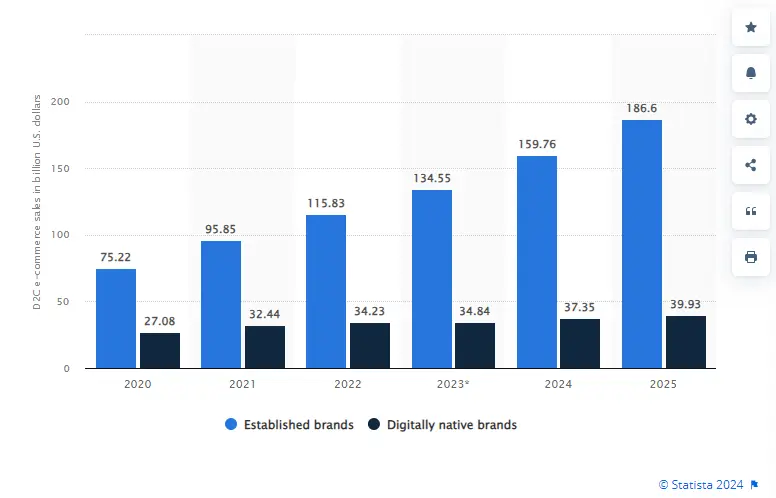
Why does this matter to you? Because D2C is growing like crazy. In 2020, D2C eCommerce sales hit $102.1 billion. By 2023, that number soared to $169.39 billion. Experts predict it’ll reach $226.93 billion by 2025. That’s a massive jump, fueled by people like you who love the ease and personal vibe of buying directly from brands.
Why Are So Many Companies Pursuing D2C?
Okay, you’re probably thinking, “Why is everyone jumping on the D2C train?” Well, there are some awesome benefits that make it a no-brainer for businesses—and a win for you too. Let’s dig into the reasons.
A. Growing Demand
First up, people want it. Demand for D2C is through the roof. Did you know 70% of Gen Z shoppers buy from D2C brands? And it’s not just them. Social media—think TikTok, Instagram, and YouTube—has made it super easy for brands to reach you directly. In fact, 85% of Gen Z says social media sways their buying choices. So, when you’re scrolling and spot a cool product, it’s likely a D2C brand catching your eye.
B. Higher Gross Margins
Here’s a money saver: D2C cuts out the middleman, boosting profits for brands and often lowering prices for you. In traditional retail, a $10 product might split $5 to the brand and $5 to the store. But with D2C, the brand could sell it for $7.50, keep more cash, and still give you a deal. Who doesn’t love that?
C. More Control Over Pricing
Ever seen a D2C brand drop a surprise sale? That’s because they call the shots on pricing. Unlike traditional setups where price changes crawl through layers, D2C brands can tweak costs, toss in freebies, or slash prices instantly to get your attention. It’s fast and flexible.
D. Selling with Your Brand Story
When you hit a D2C site, you’re not just shopping—you’re stepping into a story. Brands use their platforms to share what they stand for. Love sustainability? A D2C company can spotlight their green practices right there. Fun fact: 85% of shoppers choose based on sustainability. So, if that’s your thing, D2C brands are speaking your language.
E. More Control Over Packaging
Packaging is my jam, and in D2C, it’s a big deal. Retailers often dictate packaging rules—think plastic-heavy designs. But D2C brands? They can pick sustainable packaging that matches their vibe and yours. With eco-laws tightening, going green isn’t just smart—it’s a must.
F. Agility in Product Development and Marketing
D2C brands are quick on their feet. Want to try a new product? They can whip up a small batch, test it with you, and see what sticks. If you love it, they ramp up. If not, they pivot. This speed keeps things fresh and exciting.
G. Customer Data for Personalization
Here’s the fun part: When you buy direct, brands learn about you. They track what you like and how you shop. That data lets them tailor deals, tweak products, and make their site perfect for you. It’s like they’re reading your mind!
Challenges of Direct-to-Consumer Selling
Now, hold on a sec. D2C isn’t all sunshine and rainbows. There are some real challenges you’ll face if you’re running a D2C brand—or even just trying to understand one. Let’s break them down.
A. Customer Acquisition
Getting you to their site? It’s tricky. In regular retail, stores already have crowds walking in or browsing online. But with D2C, brands start from zero. How do they pull it off?
- Organic Search and SEO: They optimize for keywords like “sustainable packaging” so you find them on Google.
- Social Media: TikTok and Instagram ads grab your attention while you scroll.
- Influencer Partnerships: Brands team up with influencers you follow to spread the word.
- Paid Ads: They invest in ads on Facebook or Pinterest to reel you in.
It’s a hustle, but when they get it right, you’re hooked.
B. Product Distribution
Shipping can be a headache. Traditional brands send big batches to stores. D2C? They’re packing and mailing every single order to you. That means warehouses, boxes, and handling returns. Many use third-party logistics (3PL) partners to lighten the load, but it’s still a lot to juggle.
C. Scalability
Growing is tough. Early on, you might not know how much stock to make, which hikes costs for small runs. Plus, small teams wear all the hats—marketing, shipping, customer service. Tools like AI can help with tasks like writing blurbs or chatting with you, but scaling takes grit.
Sustainable Packaging for D2C Brands
Let’s talk packaging—my sweet spot. In D2C, your package is the first thing you touch from a brand. It’s not just a box; it’s a chance to wow you and show what they’re about. And trust me, sustainable packaging is where it’s at.
Why go sustainable? Because you care—and so should brands. Shoppers like you want planet-friendly products. Plus, with eco-regulations popping up worldwide, sustainable packaging is becoming a need, not a nice-to-have.

What makes packaging sustainable? Here’s your checklist:
- Eco-Friendly Materials: Think recycled or recyclable stuff. At EcoEnclose, we use 100% post-consumer waste for lots of our options.
- Custom Options: Make it yours with branded boxes or mailers that scream your style.
- Functionality: Pick packaging—boxes, bags, or mailers—that fits your products perfectly.
- Support: New to this? We’ve got your back with expert advice.
Pro Tip: Starting small? Partner with a 3PL that’s big on sustainability. They’ll streamline shipping while keeping your green goals alive.
Real-World Examples of D2C Brands
Want proof D2C works? Check out these brands killing it.
A. Nossa Family Coffee
What They Do: They sell top-notch, ethical coffee straight to you online and in their shops.
Why They Shine: Their red, 100% recycled shipping boxes are bold and eco-friendly—perfect for their sustainability vibe.
B. Sand Cloud
What They Do: They make sand-proof, fast-drying towels from Turkish cotton.
Why They Shine: Their teal recycled poly mailers catch your eye, and 10% of profits go to saving marine life. You’ll feel good buying from them.
C. Ritual
What They Do: They offer subscription vitamins and protein powders, all about transparency.
Why They Shine: Their pill bottles and padded mailers use 100% post-consumer waste. It’s next-level sustainability.
Conclusion
So, what’s the scoop? D2C lets brands connect with you directly, save money, and build a personal bond. But it’s not easy—you’ve got to nail customer acquisition, shipping, and growth.
Ready to stand out? Focus on sustainable packaging. It’s a simple way to impress you and show you care about the planet.
Need a hand? Hit us up at Pakoro. We’ll help you craft packaging that’s awesome for your brand and the earth.
There you go! You’ve got the lowdown on D2C—what it is, why it’s hot, and how to tackle its challenges. Keep this guide close, and you’ll be a D2C pro in no time—whether you’re shopping or building a brand. What’s your next move?