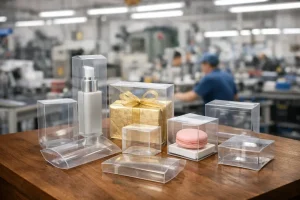
Custom boxes are made-to-fit packaging that match your size, material, and branding so you protect products, ship smarter, and create a better unboxing experience.
1. What Custom Boxes Are—and Why They Matter
A made-to-fit definition
You are not choosing from a shelf of stock sizes. You are defining a box that fits the product, the route, and the reveal. Because the fit is precise, you use less filler and reduce damage. Because the print is yours, your packaging becomes part of the product promise.
The measurable business case
Right sizing reduces volumetric freight. Stronger boards prevent crush and corner tears. Clear branding lowers returns, because customers know they received the right item. These gains stack up across months and lanes. They also make your ops team’s work calmer, because fewer parcels need re-packing.
Where you feel it day to day
Pickers pack faster. Customer support sees fewer “arrived damaged” tickets. Marketing sees more organic posts. Finance sees steadier landed costs. The benefits compound, order after order.
2. The Three Box Families You’ll Actually Use
Mailer box for DTC delight
A mailer opens with a hinged lid and feels rigid in hand. It shines in subscriptions and giftable goods. The lid creates a clean stage for your brand mark and first message. In transit, its side walls resist dents better than thin retail shells.
Shipping box for weight and distance
The classic RSC has four flaps and stacks well on pallets. It is the workhorse for heavier items and long export lanes. When you use the right flute, the box absorbs shocks without over-building the insert system. Labels sit flat, so scanners read fast in hubs.
Product box for retail presence
A folding carton presents clean edges and crisp color. It is meant to grab attention on shelf and to tell the story in a few seconds. Inside, it often pairs with a tray or a cradle. For omnichannel teams, you can place the product box inside a mailer or RSC for shipping strength.

3. Materials & Structure—Choose Strength, Then Look
Corrugated when protection leads
Corrugated board gives you a sandwich of liners and flutes. E flute prints fine detail and supports smaller items. B and C flutes add more cushion and edge crush strength. BC double-wall carries heavy parts without a huge weight penalty. Your route and stack height decide the flute before design gets fancy.
Paperboard when shelf impact leads
SBS paperboard prints with high fidelity and cuts to precise shapes. It suits retail sets and gift items. Natural kraft versions signal eco values and hide small scuffs. When you choose paperboard, plan how the inner tray or the outer shipper will add protection.
Structure that changes outcomes
Windows invite a quick look. Handles reduce drops between workstations. Locks and dust flaps keep panels tight through the shake test. Reinforced corners and edge wraps help when cartons ride mixed pallets. The dieline is your blueprint for all of this: cuts, creases, glue tabs, and safe artwork zones.

4. Size It Right and Stop Movement
Measure on the inside
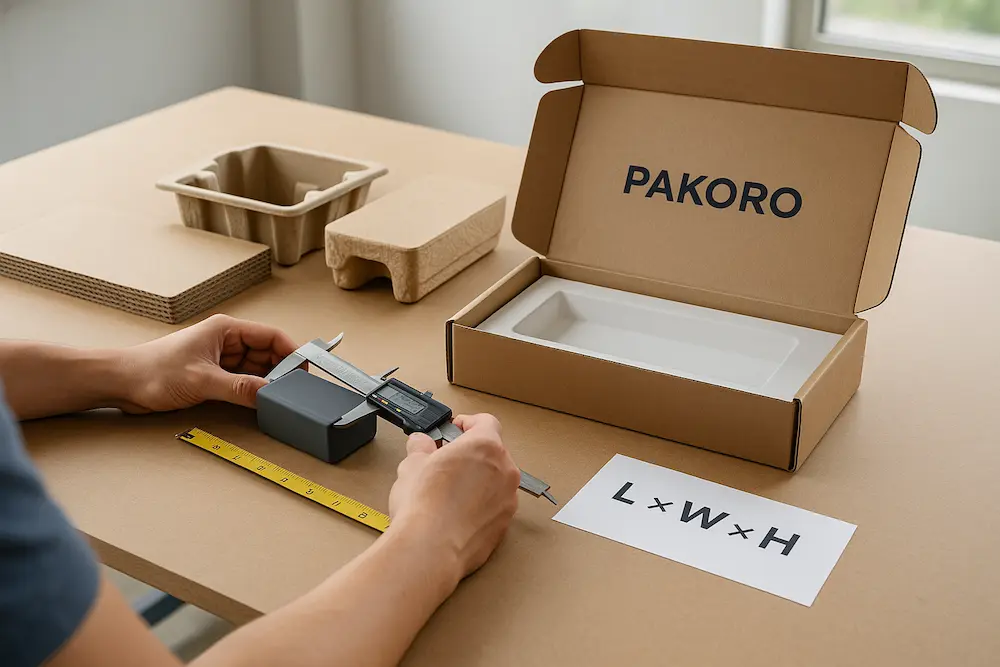
Record L × W × H by internal space, not outside. Start with the longest edge of the product. Note the tallest point if the shape is irregular. If you sell variants, share the full range so we keep one footprint when possible.
Control motion with simple inserts
Movement is the enemy of clean unboxing and carrier claims. Corrugated pads take the first hit from drops and allow airflow if items off-gas. Paperboard cradles support light retail items without heavy cost. Molded pulp aligns with sustainability targets while protecting corners well. Foam is a last resort for delicate optics or electronics.
Prove it with a shake test
Pack the item, close the box, and shake lightly. If you feel movement, add a thin pad at the source, not everywhere. Your goal is silent. Silent means fewer breakages and fewer returns.
5. Printing & Finishes That Work in Real Life
Choose the print path by volume and SKUs
Digital is quick. It loves short runs and frequent artwork changes. Offset is consistent on larger orders and tight color targets. The right choice saves time and avoids re-balancing your schedule later.
Make finishes serve the story
Matte looks modern and reduces glare in photos. Gloss pops on shelves and resists light scuffs. Soft-touch invites touch and suits giftable sets. Spot UV adds contrast to a logo or pattern. Foil and emboss give detail you can feel.
Keep color honest across stocks
CMYK handles photos well. Pantone locks brand hues across seasons and suppliers. On kraft, bright colors need a white underprint to stay true. Tell your designer early so they plan the layers and the ink limits.
6. Brand Design & File Prep—So Your Art Prints Clean
Lead with hierarchy
People scan. Put the logo first, the promise second, and the details last. Keep contrast high so the message reads in low light and on mobile screens. Leave quiet zones where hands hold the box.
Prepare files the right way
Add 1/8″ (3 mm) bleed on every edge. Keep logos in vector format. Use 300-dpi images for photos. Embed fonts and outline critical text. If you have metallics or spot varnish, name layers clearly. Your prepress team and your timeline will thank you.
Proof with intent
Approve a soft proof for layout and spelling. Request a physical sample when color, texture, or tight cuts are critical. That extra step costs less than a reprint and keeps launch dates firm.
7. Make the Unboxing a Moment, Not an Afterthought
Plan a short, repeatable sequence
Open, reveal, confirm. Those three beats guide the experience and the training. Operators learn the rhythm fast. Customers feel intention.
Use tasteful accessories with a purpose
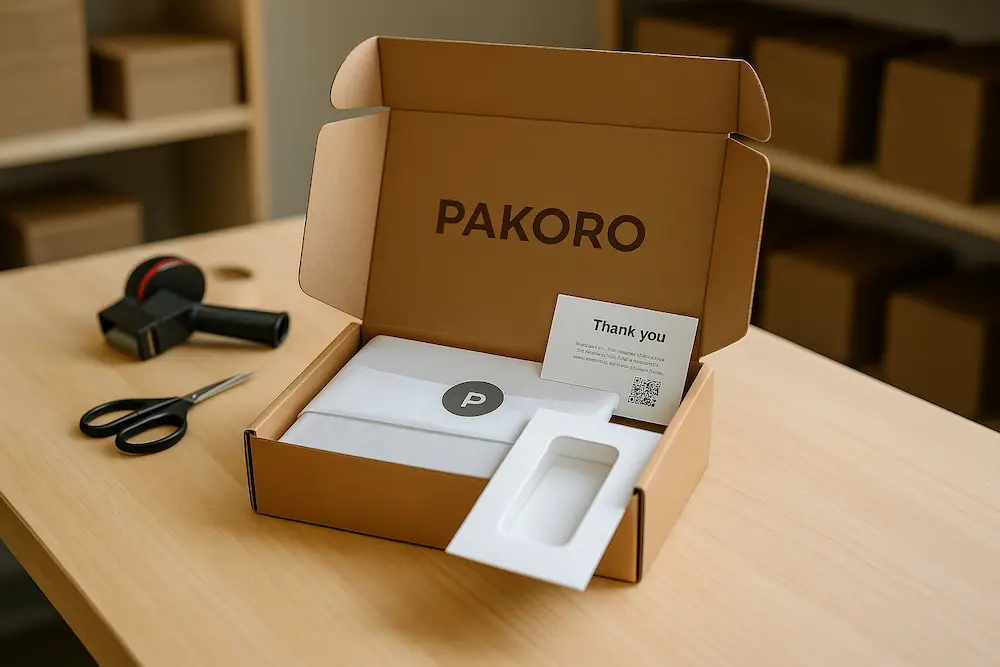
Tissue sets the tone and hides transit scuffs. A small seal tells the hand to pause. A short card gives care steps, a QR for warranty, or a thank-you. Keep copy brief. Short lines read well on camera and in real rooms.
Earn the share and reduce support tickets
A clean first view invites photos and posts. Clear instructions on the card reduce “how do I assemble or return” questions. These are small touches. They pay back for months.
8. Cost, MOQ, and Timeline—What Actually Drives Price
Understand the levers before you quote
Size drives board area. Board choice drives strength and weight. Artwork coverage, finishes, and version count affect cycle time. Quantity changes unit cost more than any other factor. When you know these levers, you can dial the result you want.
Balance small runs and speed
If you test the market, digital print and shared sizes keep setup light. If you scale a hero SKU, offset and consistent specs keep cost steady. Decide which SKUs deserve premium finishes. Keep the rest simple.
Keep schedules predictable
Share specs and artwork together. Approve the proof quickly. Lock your delivery window by aligning packaging with product build dates. Palletize with care so freight moves without rework.

9. Sustainability & Compliance—Signal Trust Clearly
Material choices that help today
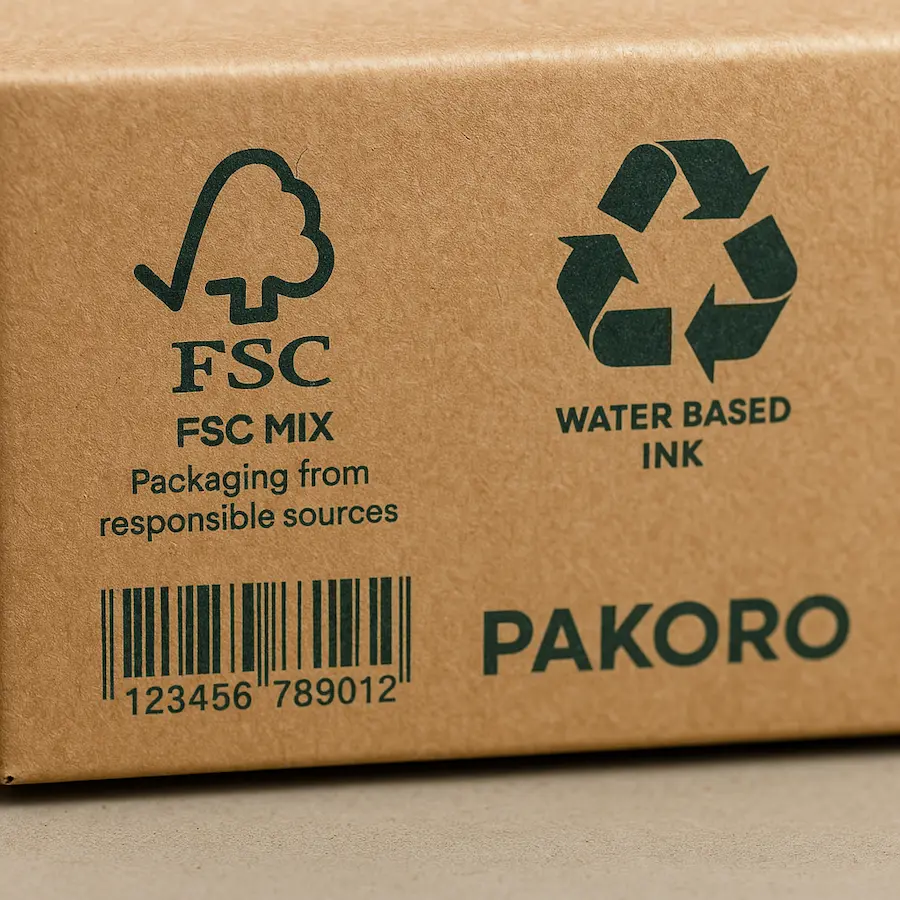
Ask for FSC or recycled content where it fits. Prefer water-based inks when possible. Right-size the box to cut air and reduce fillers. These steps are practical, not cosmetic.
Clear disposal guidance for customers
Print recyclability marks where people can see them. Place them near the barcode or the opening edge. Clarity earns trust and keeps materials in the right stream.
Regulated categories need care
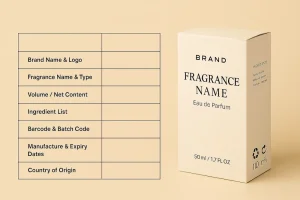
Food, cosmetics, and toys require correct labels and supporting test reports. Plan this early. Compliance copy belongs on panel edges where it is readable but not dominant.
10. Quick Scenarios to Guide Your First Choice
DTC apparel or gifts
Choose an E-flute mailer with a matte feel. Use tissue and a small seal. Keep the reveal simple. Your cost stays sane and the look stays premium.
Heavy tools or parts
Pick a BC double-wall RSC in natural kraft. Add two corrugated pads. Mark lift points with arrows. The box survives long lanes and mixed pallets.
Retail cosmetics or accessories
Use an SBS folding carton with soft-touch and a neat tray. Add a small window only if the story needs it. Keep colors honest with Pantone references.
Tight budgets, solid performance
Select a B-flute RSC with one-color print. Right-size the footprint to remove air. The result is durable and repeatable.

11. How You Order with Pakoro—Fast and Practical
Start with your goal and size
Tell us what you sell and where you sell. Share inside dimensions and any fragile points. If you have photos or CAD, include them. We read fast and propose clear options.
Lock structure, get your dieline, place the art
We recommend the box style and the board. We share a dieline. Your designer places the artwork and returns the file. If you need help, our team can mark safe zones and bleeds.
Approve, produce, and ship on time
You approve the proof or a physical sample. We build to spec, pack cleanly, and ship on the agreed plan. You receive labels and pallet maps so the inbound is smooth.
Contact Pakoro: pakoro.com • melody@pakoro.com
12. A Short Implementation Story (From Idea to Live Ship)
Week 1: Clarify and prototype
You share two SKUs and a target launch date. We size the mailer and the insert. A digital sample arrives fast. You run a quick shake test and confirm the finish you prefer.
Week 2: Validate and lock
We adjust the insert cut-outs by 3 mm to stop the last bit of motion. You approve the soft proof and a matte lid. Labels and pallet plan get a quick check with your 3PL. Production begins without drama.
Week 3–4: Produce and ship
Cartons run, cure, and stack. We photograph the first-off so you see what customers will see. Pallets leave with clear marks. When your team opens the first master case, everything is exactly where you expect it.
13. Answers to Questions We Hear Most
Mailer vs. shipping box—what is the real difference?
A mailer has a hinged lid and a premium feel. It is perfect for DTC and gifting. An RSC has flaps and stacks well for bulk freight. It carries weight with fewer inserts. When in doubt, ship a product box inside either.
Can kraft stock look vibrant?
Yes. Use a white underprint under bright zones. It keeps colors clean while the kraft tone shows through where you want it.
We have many SKUs. How do we keep cost under control?
Standardize sizes first. Use digital print for artwork changes. Reserve special finishes for hero SKUs. You will spend less and ship sooner.
We are new to packaging. Will you guide us through testing?
Of course. We start with the shake test and a drop profile that matches your carrier. We can add vibration checks when your lanes need them.
Your Next Step with Pakoro
One simple action today
Send your product size and your channel. Tell us your launch date. We will reply with a clear plan that meets your goals without waste.
A partner that scales with you
You ship one SKU this month. You ship ten next season. Specs stay clean. Reorders stay easy. That is what a good packaging partner does.