Properly storing corrugated boxes is crucial for maintaining their integrity and usability. Whether for business or personal use, following these guidelines will help you store your corrugated boxes efficiently and effectively, ensuring they remain in good condition for when you need them.
1. Why Proper Storage is Important
Corrugated boxes are a staple in both commercial and residential settings due to their durability and versatility. However, improper storage can lead to various issues such as weakening, warping, and pest infestations. By storing them correctly, you can:
- Prevent structural damage and maintain box strength.
- Save storage space through organized stacking.
- Ensure boxes are clean and free from pests and moisture.
2. Ideal Storage Conditions
- Temperature and Humidity Control: Corrugated boxes are sensitive to extreme temperatures and high humidity. Store them in a cool, dry environment with a stable temperature between 60-75°F (15-24°C) and relative humidity below 60%. This prevents the material from weakening and developing mold or mildew.
- Clean and Dry Environment: Ensure your storage area is free from moisture and dirt. Moisture can weaken the fibers of corrugated boxes, while dirt can attract pests. A clean, dry environment protects the boxes from such hazards.
3. Stacking and Organization
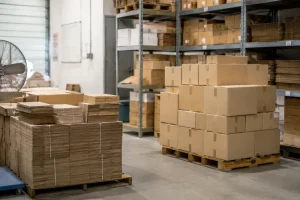
- Stacking Techniques: When stacking corrugated boxes, place heavier boxes at the bottom and lighter ones on top. Avoid over-stacking to prevent crushing the boxes at the bottom. Use interlocking stacking methods to ensure stability and reduce the risk of boxes toppling over.
- Labeling: Clearly label each box with its contents and any special handling instructions. This makes it easier to locate specific items and reduces the risk of mishandling.

4. Protection Against Damage
- Use of Pallets: Elevate your boxes off the ground by storing them on pallets. This keeps them away from potential water damage caused by spills or flooding. Pallets also improve air circulation around the boxes, reducing the risk of moisture buildup.
- Covering and Wrapping: Protect boxes from dust and moisture by covering them with plastic sheets or wrapping them in plastic wrap. This added layer of protection is especially useful in environments prone to dust or high humidity.
5. Regular Inspection and Maintenance
- Routine Checks: Conduct regular inspections of your stored boxes to ensure they remain in good condition. Look for signs of damage, moisture, or pest activity. Address any issues promptly to prevent further damage.
- Pest Control: Implement pest control measures in your storage area. Keep the space clean, seal any gaps or cracks, and use pest repellents if necessary. This helps prevent insects and rodents from damaging your boxes.
6. Seasonal Storage Tips
- Adapting to Weather Changes: Adjust your storage methods based on seasonal changes. In the summer, higher humidity levels may require increased ventilation or the use of dehumidifiers. In the winter, ensure the storage area is adequately insulated to prevent extreme cold from affecting the boxes.
End
Proper storage of corrugated boxes is essential for maintaining their durability and usability. By following these best practices—controlling temperature and humidity, organizing effectively, protecting against damage, conducting regular inspections, and adapting to seasonal changes—you can ensure your boxes remain in excellent condition. Implement these tips to extend the life of your corrugated boxes and optimize your storage space.