Are you trying to figure out how much it really costs to produce custom paper bags? If so, you’re not alone. Understanding the cost breakdown helps you make informed decisions, control budgets, and offer competitive prices. As your partner at Pakoro, I’ll walk you through the process step by step so you can estimate your costs confidently.
What contributes to paper bag manufacturing costs?
Before diving into the details, it’s helpful to know the main cost components. These are:
- Raw material costs (paper type, weight, and waste)
- Printing costs (method, colors, setup)
- Die‑cutting costs (tooling and machine time)
- Forming and assembly costs (labour, glue, handles)
- Packaging and logistics (optional but important)
By understanding each part, you can build an accurate cost model. Let’s explore these one by one.
Understanding the Paper Bag Manufacturing Process
You might be curious about what really happens between the paper roll and the finished bag. The process typically includes unwinding the paper roll, printing designs, cutting the sheet into bag blanks, and folding/gluing it into a functional bag. Each step requires specific equipment, and efficient production reduces waste and time. As you look at your own operations, think about where you can save materials and optimize workflow.

Why this matters: A well‑designed process minimizes waste and ensures consistent quality, which directly affects cost per bag. When you understand each step, you’re better equipped to budget accurately.
How to Calculate Raw Material Costs
Raw materials often make up the largest portion of your cost. You need to consider the price of the paper (usually by ton), its width, length, and weight (grammage). Then, calculate how many bags you can produce from a ton, factoring in the paper’s thickness and the bag size. Don’t forget to account for waste—around 5–10 % is common during cutting and printing.
To estimate your raw material cost per bag:
- Determine the cost per kilogram or ton of the chosen paper. Higher grades or recycled papers may cost more.
- Calculate the area needed for one bag (length × width × any gussets) and convert it to weight using the paper grammage.
- Divide the total weight of the paper roll by the weight needed per bag to estimate the number of bags you can produce.
- Add a waste factor to cover trimming and defects.
For example, if one ton of paper costs $1,200 and you can produce 60,000 bags per ton, the raw material cost is $1,200 ÷ 60,000 = $0.02 per bag. Adjust the numbers based on your materials.
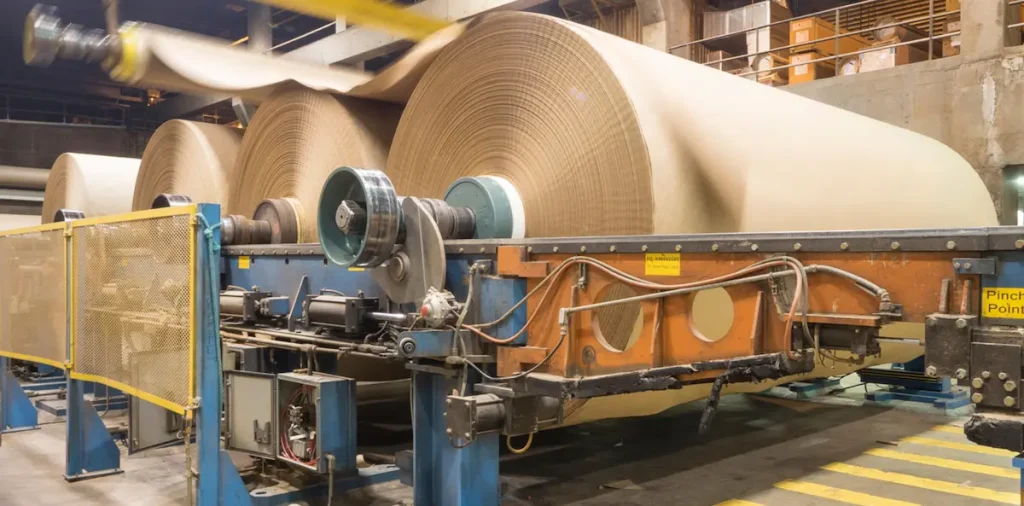
Tip: Ordering paper in bulk often reduces cost per ton. However, ensure you have sufficient storage and that the paper suits your print and weight requirements.
Estimating Printing Costs
Printing brings your brand to life, but it also adds cost. There are three common printing methods:
- Flexographic printing: Ideal for large runs with simple designs. Lower setup costs and fast speeds make it economical for high volumes.
- Offset (litho) printing: Offers excellent color accuracy and detail, which is perfect for premium bags. Setup costs are higher, so it’s best for medium to large runs.
- Digital printing: Perfect for small batches and variable designs. While cost per bag is higher, there’s virtually no setup time.
To estimate printing cost per bag, consider:
- Number of colors used: More colors mean more plates or passes, which increase ink and setup costs.
- Print area and coverage: A full‑bleed design uses more ink than a small logo.
- Machine setup time: Setting up plates or calibrating digital printers takes time, and that time costs money.
If you’re printing 50,000 bags with a two‑color design via flexographic printing, the cost might be around $0.01–0.03 per bag, depending on your supplier. Choosing a simpler design or consolidating colors can significantly reduce expenses.
Assessing Die‑Cutting Expenses
Die‑cutting shapes the printed sheets into bag blanks. This step uses metal dies to cut the paper precisely. The cost includes:
- Die tooling: A one‑time fee for creating the custom die. The cost depends on complexity and size.
- Machine time: Ongoing cost for using the cutting machine; it’s influenced by the speed, quantity, and maintenance.
Once you have a die, you can reuse it for future orders of the same bag size and design, which spreads the cost over many runs. For example, if the die costs $300 and you produce 100,000 bags over the die’s life, the cost per bag for die tooling is $0.003.
When calculating, remember to factor in wear and tear. Complex shapes may wear dies faster, increasing your per‑bag cost.
Determining Forming & Assembly Costs
Once the blanks are cut, they’re folded, glued, and assembled. If you’re adding handles or lamination, the process becomes more involved. The forming cost depends on:
- Labor vs. automation: Automated machines speed up production and lower long‑term costs, but they require investment. Manual assembly costs more per unit but offers flexibility for small runs.
- Adhesives and reinforcements: Handles, gussets, or reinforcement patches add to both material and labor cost.
- Quality control: Inspecting and packaging your bags properly ensures quality but takes time.
To calculate this cost, estimate the time needed to assemble one bag and multiply it by labor rate or machine hourly cost. For instance, if a machine produces 12,000 bags per hour and costs $120 per hour to operate, forming cost per bag is $120 ÷ 12,000 = $0.01. Add the cost of handles and adhesives to this figure.
Summarizing Total Manufacturing Cost with an Example
After calculating each component, add them to find the total manufacturing cost per bag. Let’s look at a simplified example for 50,000 medium‑size paper bags:
- Raw material: $0.02 per bag
- Printing: $0.015 per bag (two colors via flexography)
- Die‑cutting: $0.003 per bag (spreading die cost over 100,000 bags)
- Forming & assembly: $0.02 per bag (automated forming with rope handles)
- Miscellaneous (quality control, packaging, overhead): $0.005 per bag
Total manufacturing cost: $0.063 per bag
Multiply by your desired profit margin to set your selling price. Keep in mind that costs vary by region, volume, and specifications. Always request detailed quotes from suppliers.
Ready to Create Your Next Paper Bag Project?
By now, you should have a solid understanding of what goes into the cost of making a paper bag. Remember, accurate estimations lead to better pricing and profitability. If you’re planning your next packaging project or want help with custom quotes, Pakoro is here to assist.
“Quality packaging speaks volumes about your brand.”
At Pakoro, we specialize in custom paper bags, boxes, and sustainable packaging solutions. We offer competitive pricing, creative design support, and reliable production. Feel free to reach out with your project details—we’d love to discuss how we can help.