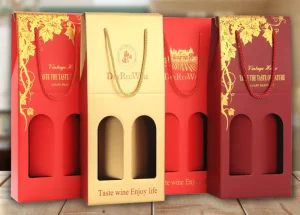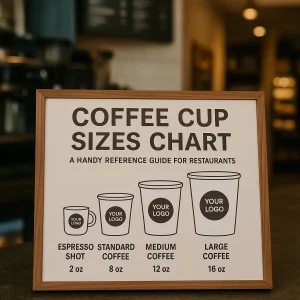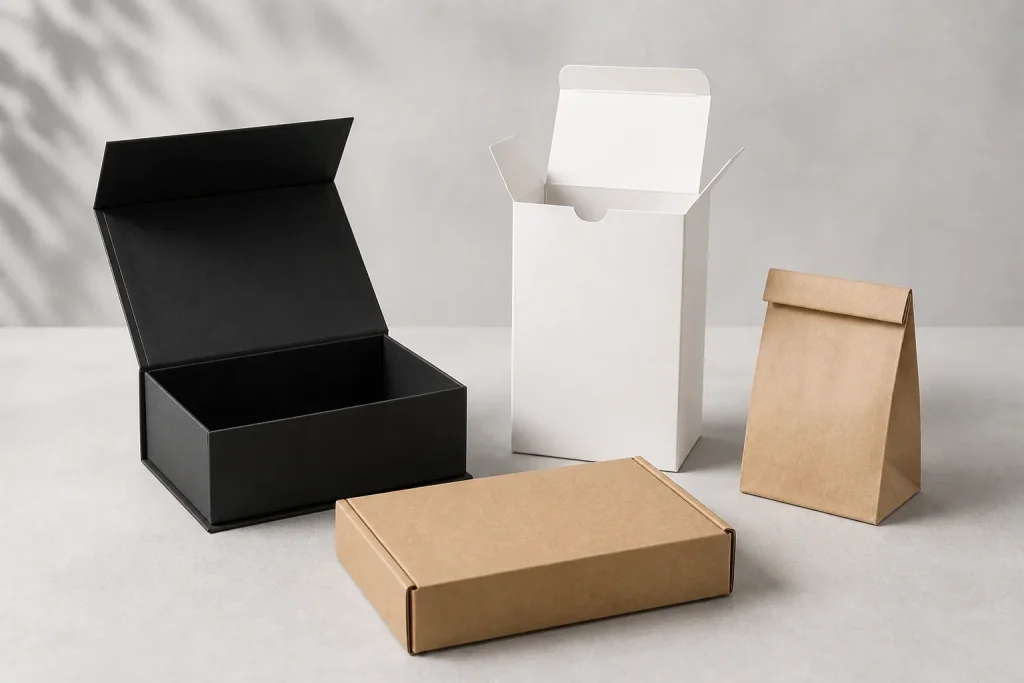
China has packaging manufacturers serving nearly every paper, board, flexible-packaging, and retail-display requirement. The right supplier depends on your product, packaging structure, order quantity, finishing requirements, quality expectations, and delivery plan—not simply the lowest quoted price.
For brand owners, importers, ecommerce businesses, retailers, and purchasing managers, this guide compares 10 packaging manufacturers in China and explains how to select a supplier with confidence.
What Is a Packaging Manufacturer?
A packaging manufacturer converts paperboard, corrugated board, paper, film, or other materials into finished packaging such as rigid boxes, folding cartons, corrugated shipping boxes, gift boxes, paper bags, labels, and inserts.
A custom packaging manufacturer typically supports a project from dieline review and material selection through printing, finishing, assembly, quality inspection, and export packing.
For example, a rigid box is a premium packaging solution made from thick greyboard wrapped with printed paper. It is commonly used for cosmetics, jewelry, electronics, gift sets, and other products where presentation and unboxing experience matter.
Top 10 Packaging Manufacturers in China
The companies below are a practical starting list for supplier research. Buyers should independently verify current capabilities, certifications, MOQ, factory location, quality systems, and export terms before placing an order.
| Supplier | Main Packaging Focus | Suitable Buyer Requirement |
|---|---|---|
| PAKORO | Custom paper boxes, gift boxes, cartons and displays | Custom branded paper packaging projects |
| Shanying International | Packaging paper and paperboard | Paper and board supply at industrial scale |
| Shandong Sun Paper | Coated board and paper products | Packaging-board sourcing |
| Xiamen Hexing Packaging Printing | Printed paper packaging | Folding cartons and printed retail boxes |
| Dongguan AM Packaging | Luxury rigid boxes | Premium presentation packaging |
| Shanghai QinQin Printing | Mailer boxes, shipping boxes and gift boxes | Custom printed ecommerce packaging |
| Suzhou Winstar International Trade | Bags and flexible packaging | Shopping bags and flexible formats |
| Shenzhen Rainbow Packaging | Flexible pouches and zipper bags | Food, pet, and consumer pouches |
| Guangzhou Bosing Paper Printing & Packaging | Paper printing and packaging | Custom printed paper packaging |
| Max Bright Packaging | Printed cardboard and gift boxes | Bespoke carton and gift-box projects |
1. PAKORO

PAKORO, operated by Shenzhen Pakoro Packaging Co., Ltd., is a China packaging manufacturer focused on custom paper packaging for international B2B buyers. Its relevant product categories include rigid boxes, folding cartons, corrugated packaging, paper gift boxes, paper bags, and point-of-purchase displays.
With years of experience in custom packaging manufacturing, PAKORO can be considered when a buyer needs a supplier that can discuss structure, printing, finishes, protective packaging, and export-ready packing as one project. Explore its custom packaging manufacturer services for broader project options.
For luxury products, buyers can also review PAKORO’s luxury gift box manufacturer solutions. For transit protection and ecommerce fulfillment, its corrugated box manufacturer page is more relevant.
2. Shanying International Holdings Co., Ltd.

Shanying International is associated with paper, paperboard, corrugated materials, and related packaging products. It may be relevant for buyers sourcing packaging substrates or high-volume paper-based packaging rather than small, highly customized premium-box programs.
When evaluating a large integrated paper supplier, clarify whether you are purchasing board material, converted packaging, or both. These are different supply models with different MOQs, lead times, and quality-control responsibilities.
3. Shandong Sun Paper Industry Joint Stock Co., Ltd.
Shandong Sun Paper is known for paper and packaging-board product categories, including coated packaging board. It can be a relevant research candidate for buyers whose specification begins with board grade, print surface, stiffness, or fiber composition.
For retail cartons, the board specification affects print quality, folding performance, crush resistance, and final packaging cost. Buyers should request the exact grade, basis weight, caliper, and test data needed for the intended box structure.
4. Xiamen Hexing Packaging Printing Co., Ltd.

Xiamen Hexing Packaging Printing is associated with printed paper packaging, including cartons and retail packaging. It may suit buyers looking for color-managed printing and customized folding-carton formats.
A folding carton is a printed paperboard box that is die-cut flat, folded, and glued into shape. It is usually more space-efficient to ship than a rigid box and is commonly used for cosmetics, food, personal care, electronics accessories, and consumer goods.
5. Dongguan AM Packaging Company Limited
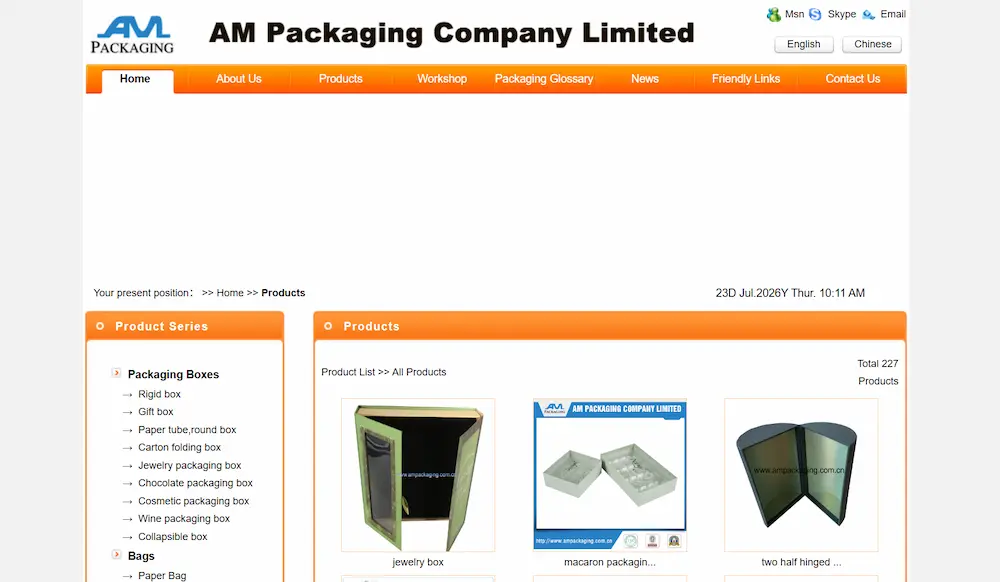
Dongguan AM Packaging is associated with luxury rigid-box packaging. This type of supplier can be relevant when the visual presentation, material feel, lid fit, and insert design are as important as product protection.
For luxury products requiring a premium unboxing experience, rigid boxes usually provide better perceived value than standard folding cartons. However, they require more material, hand assembly, storage space, and freight volume.
6. Shanghai QinQin Printing Company Ltd.
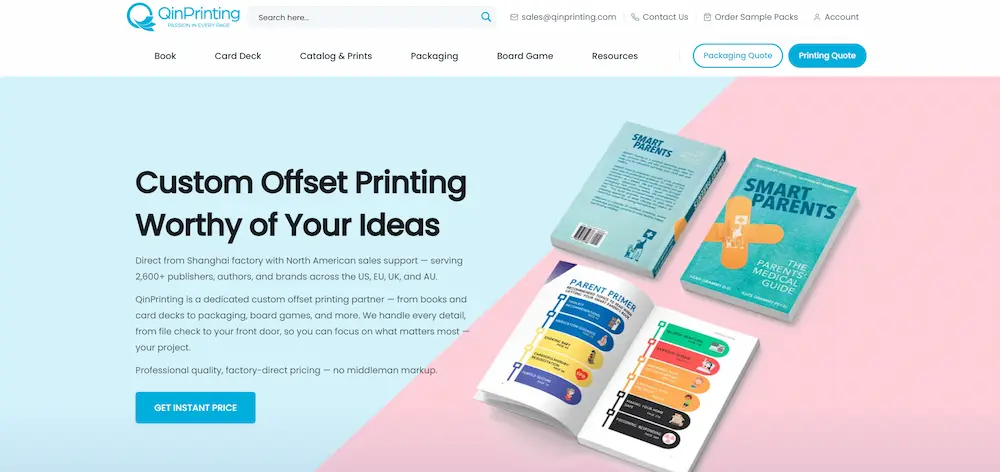
Shanghai QinQin Printing is associated with custom printed shipping boxes, mailer boxes, and gift boxes. This profile can be relevant for ecommerce brands that need packaging to protect products while also supporting an on-brand delivery experience.
Before ordering a mailer box, buyers should confirm internal dimensions, board grade, flute type, compression requirements, closure design, and whether the box will be shipped individually or packed inside a master carton.
7. Suzhou Winstar International Trade Co., Ltd.
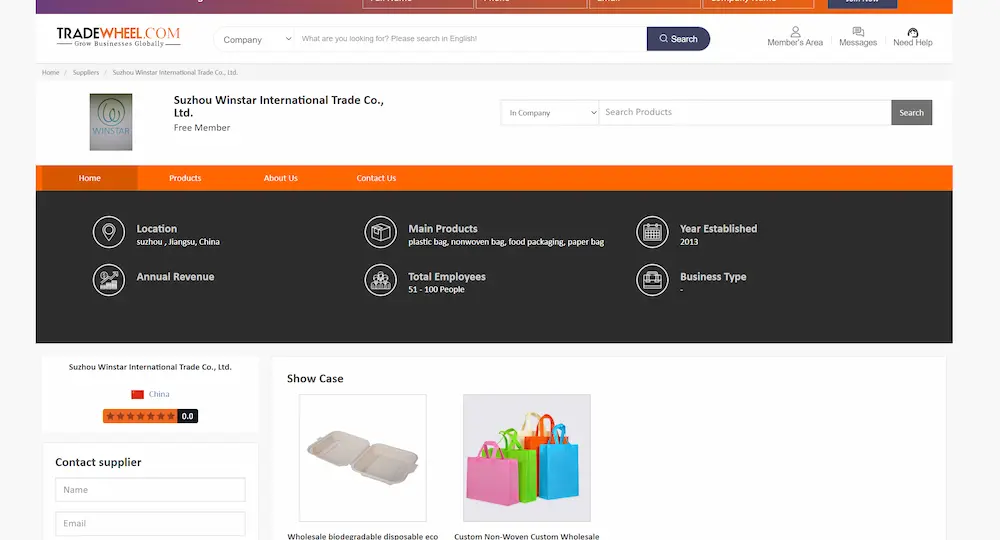
Suzhou Winstar International Trade is associated with plastic bags, food packaging, and non-woven shopping bags. It may be considered by buyers with flexible-packaging or retail-bag requirements.
Flexible packaging is not interchangeable with paper packaging. It requires separate evaluation of barrier properties, sealing method, food-contact requirements where applicable, film structure, and end-of-life considerations in the target market.
8. Shenzhen Rainbow Packaging Co., Ltd.
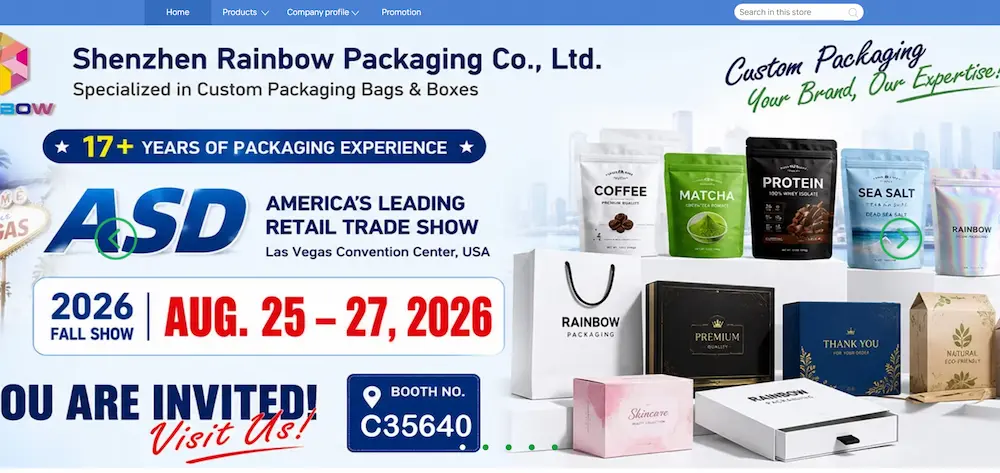
Shenzhen Rainbow Packaging is associated with flexible pouches and stand-up zipper bags. These formats are commonly used for food, supplements, pet products, cosmetics, and dry consumer goods.
For a pouch project, a buyer should define product weight, barrier requirements, filling process, sealing temperature, zipper type, tear notch, hang hole, and shelf-life target before asking for a quote.
9. Guangzhou Bosing Paper Printing & Packaging Technology Co., Ltd.

Guangzhou Bosing is associated with custom paper printing and packaging. It may be relevant for businesses sourcing printed cartons, gift packaging, and customized paper-based retail packaging.
A buyer should not select a supplier only from a finished-product photo. Ask for a structural drawing, material specification, physical sample, approved artwork proof, and pre-production sample when the project includes important branding or fit requirements.
10. Max Bright Packaging Ltd.
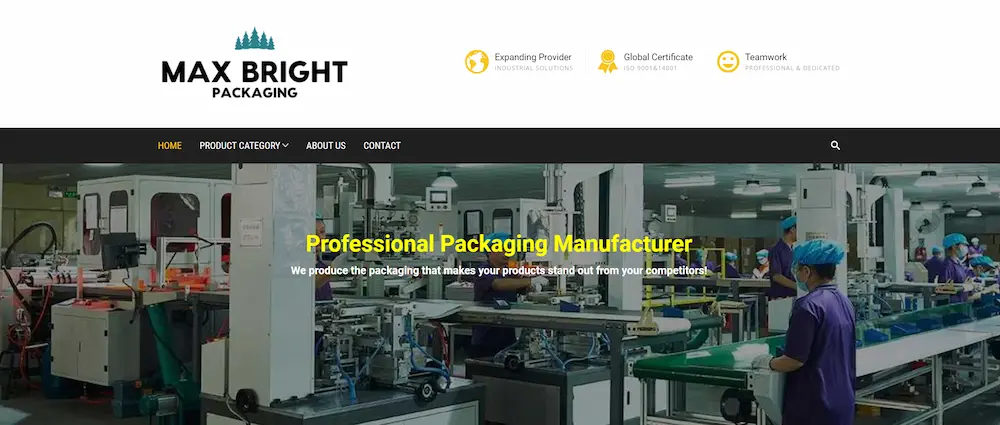
Max Bright Packaging is associated with custom printed cardboard boxes and gift boxes. It can be a potential option for buyers comparing bespoke paper-packaging suppliers.
For any customized packaging order, specify whether the supplier is quoting for a flat-packed carton, a fully assembled box, or a box with inserts and accessories. These details materially change labor, packing volume, production time, and total landed cost.
How to Choose a Reliable Packaging Manufacturer in China
When choosing a packaging supplier, buyers should evaluate material quality, production capability, finishing options, quality control, communication, export experience, and the supplier’s willingness to document specifications clearly.
Use this checklist before issuing a purchase order:
- Confirm the exact box structure and internal dimensions.
- Request material names, thicknesses, basis weights, and board grades.
- Share a dieline and print-ready artwork where available.
- Ask for a plain sample or pre-production sample.
- Confirm finishing details, including lamination, foil stamping, embossing, UV coating, or spot varnish.
- Define acceptable color variation and critical visual defects.
- Confirm the inspection standard and sampling process.
- Ask how finished goods will be packed into export cartons.
- Confirm Incoterms, shipping method, destination port, and customs responsibilities.
- Compare total landed cost, not only the unit price.
Manufacturing Insights: Materials and Processes
Rigid Boxes
Rigid boxes use thick greyboard covered with printed paper, specialty paper, fabric, or other wrap materials. Common processes include board cutting, V-grooving, corner taping, wrapping, magnet installation, insert assembly, and final inspection.
Rigid boxes are suitable for premium products, but a complicated structure or multiple hand-applied components will increase cost and lead time.
Folding Cartons
Folding cartons are typically made from SBS, FBB, CCNB, kraft board, or other paperboard grades. They are printed, die-cut, stripped, folded, and glued.
They are often more cost-efficient than rigid boxes for large-volume retail projects because they ship flat and use less material.
Corrugated Boxes
Corrugated boxes use linerboard and a fluted medium. Common flute types include E flute for retail-ready packaging and B, C, or BC flute for stronger shipping requirements.
For ecommerce, corrugated packaging should be selected based on product weight, fragility, stacking conditions, shipping distance, and whether protective inserts are required. See PAKORO’s paper box manufacturer page for related paper-based packaging options.
What Affects Custom Packaging Cost?
Custom packaging price is influenced by more than quantity. The main cost factors include:
- Box style and structural complexity
- Material grade, thickness, and quantity used
- Finished size and shipping volume
- Printing colors and color coverage
- Foil stamping, embossing, debossing, UV, lamination, and other finishes
- Inserts, magnets, ribbons, handles, windows, and manual assembly
- Order quantity and production setup
- Sampling requirements
- Export-carton packing and shipping method
A simple one-color folding carton can be priced very differently from a magnetic rigid box with a custom EVA insert, soft-touch lamination, foil logo, and hand assembly.
MOQ, Sampling, Production, and Shipping
Typical MOQ for customized rigid boxes often begins around 500 to 1,000 units, depending on structure, materials, and finishing requirements. Folding cartons and corrugated boxes may have different MOQs because printing, board conversion, and die-cutting setups vary.
Sample timing depends on complexity. A plain structural sample can often be prepared before a fully printed sample, while custom finishes and specialty materials may require more preparation.
Production lead time should be confirmed after artwork, material, sample, quantity, and payment terms are finalized. Buyers should build in extra time for revisions, inspection, export packing, and international freight.
Common shipping methods include express courier for samples, air freight for urgent smaller shipments, sea freight for economical bulk cargo, and rail or road options where applicable.
Common Sourcing Mistakes to Avoid
The most common mistake is approving packaging based only on a digital mockup. A mockup cannot fully show board stiffness, color variation, wrap alignment, glue quality, fold accuracy, or how the product fits inside.
Other common mistakes include:
- Quoting without internal dimensions
- Using external dimensions as the only sizing reference
- Not specifying material thickness
- Ignoring the product’s weight and fragility
- Adding expensive finishing before validating the box structure
- Failing to request export-carton details
- Choosing the lowest unit price without calculating freight and defect risk
- Assuming all “eco-friendly” materials have the same recyclability or market acceptance
Why Source Packaging From China?
A China packaging manufacturer can offer access to varied material sources, specialized printing and converting processes, custom tooling, and consolidated production for many paper packaging formats.
The trade-off is that overseas buyers must manage longer logistics routes and communicate specifications precisely. A local supplier may provide faster in-person coordination, while a China supplier may be more attractive for custom complexity, production consolidation, or larger order volumes. The best option depends on total landed cost, lead-time risk, quality needs, and the buyer’s internal sourcing capability.
Frequently Asked Questions
How do I choose a reliable custom packaging manufacturer in China?
Choose a manufacturer by verifying its relevant product capability, sample quality, material specification, inspection process, communication quality, and export experience. Ask for a written quotation that identifies structure, dimensions, material, printing, finishing, packing method, MOQ, production time, and Incoterms. A reliable supplier should be able to explain what is included, what is excluded, and what may change the final price.
What is the MOQ for custom packaging boxes?
MOQ depends on the packaging type, material, printing method, and finishing requirements. Customized rigid boxes commonly begin around 500 to 1,000 units, while folding cartons, corrugated boxes, and paper bags may have different minimums. Buyers should not assume one MOQ applies to all projects. Ask for separate quotations at several quantities to understand how unit cost changes.
How long does custom packaging production take?
Production time depends on the box style, order quantity, materials, printing, finishing, assembly, and sample approval. A simple carton project usually moves faster than a hand-assembled rigid box with magnets, inserts, and foil stamping. Confirm lead time only after artwork, specifications, quantity, and approval requirements are clear. Also allow time for inspection, export packing, and freight.
Can packaging manufacturers provide samples?
Yes, many packaging manufacturers can provide structural samples, blank samples, or printed pre-production samples. A structural sample helps verify size, fit, and opening experience before committing to final artwork. A printed sample is especially valuable when color, foil placement, texture, or high-value retail presentation matters. Clarify sample cost, shipping method, revision limits, and whether the sample charge is creditable against a production order.
What materials are available for luxury packaging?
Luxury packaging commonly uses greyboard, specialty paper, coated art paper, textured paper, fabric wraps, ribbon, magnets, foam, molded pulp, paperboard inserts, and EVA inserts. The right material depends on the product’s weight, presentation requirements, sustainability goals, and target price. Buyers should request physical material swatches because paper texture, stiffness, and color can appear different in digital images.
What factors affect the cost of a custom gift box?
Custom gift-box cost is driven by structure, size, materials, print coverage, finishing, insert type, assembly labor, quantity, and shipping volume. A magnetic rigid box with soft-touch lamination, foil stamping, ribbon, and a fitted insert will cost more than a standard folding carton. The lowest unit price may not deliver the lowest landed cost if the packaging is bulky, fragile, or difficult to pack efficiently.
Are rigid boxes better than folding cartons?
Rigid boxes are better for products that need a premium unboxing experience, stronger presentation, and a more substantial perceived value. Folding cartons are usually better when buyers need lower material use, flat shipping, efficient storage, and cost control at volume. The correct choice depends on the product category, retail channel, target selling price, freight constraints, and desired customer experience.
What quality checks should I request for packaging orders?
Request checks for dimensions, material grade, print color, registration, die-cut accuracy, folds, glue adhesion, wrap alignment, surface defects, inserts, count accuracy, and export-carton condition. For critical products, define acceptable quality levels before production begins. Each order should have approved artwork and a clear inspection reference so the factory and buyer are evaluating the same standard.
What shipping methods are available from China?
Common methods include express courier for samples, air freight for urgent smaller shipments, sea freight for bulk orders, and rail or road transport for applicable destinations. The best method depends on cargo volume, deadline, budget, destination, and Incoterms. Ask whether the quote is EXW, FOB, CIF, DDP, or another agreed term, because each option assigns different logistics responsibilities and costs.
How can I reduce packaging cost without reducing quality?
Reduce cost by simplifying the structure, removing unnecessary hand assembly, standardizing dimensions, limiting special finishes, improving carton packing efficiency, and ordering at an economical quantity. Do not reduce board strength, product protection, or essential print controls without testing. A packaging supplier can often suggest a more efficient design, but the buyer should compare physical samples before changing a proven structure.
Is sustainable packaging always recyclable?
No. Sustainability depends on the material mix, local collection systems, coatings, adhesives, inks, and how easily components can be separated. A paper box with plastic lamination, magnets, foam, or metallic decoration may be harder to recycle than an uncoated mono-material paperboard carton. Ask the manufacturer for the exact material composition rather than relying on a general “eco-friendly” label.
Can one supplier produce both retail boxes and shipping packaging?
Some custom packaging manufacturers can coordinate both retail packaging and corrugated transit packaging, while others specialize in only one format. Using one supplier may simplify specification coordination and product-fit testing, but buyers should still verify capability for each format. Retail presentation and shipping protection require different materials, tests, production equipment, and quality controls.