Printed packaging boxes help brands protect products, communicate essential information, and create a consistent retail or ecommerce experience. The best manufacturer is the one whose printing capability, box structure, material options, quality control, MOQ, and delivery model match your specific project—not necessarily the supplier with the lowest quoted unit price.
This guide compares 10 printed packaging box manufacturers for initial supplier research and explains what buyers should verify before ordering custom cartons, rigid boxes, mailer boxes, and gift packaging.
What Is a Printed Packaging Box?
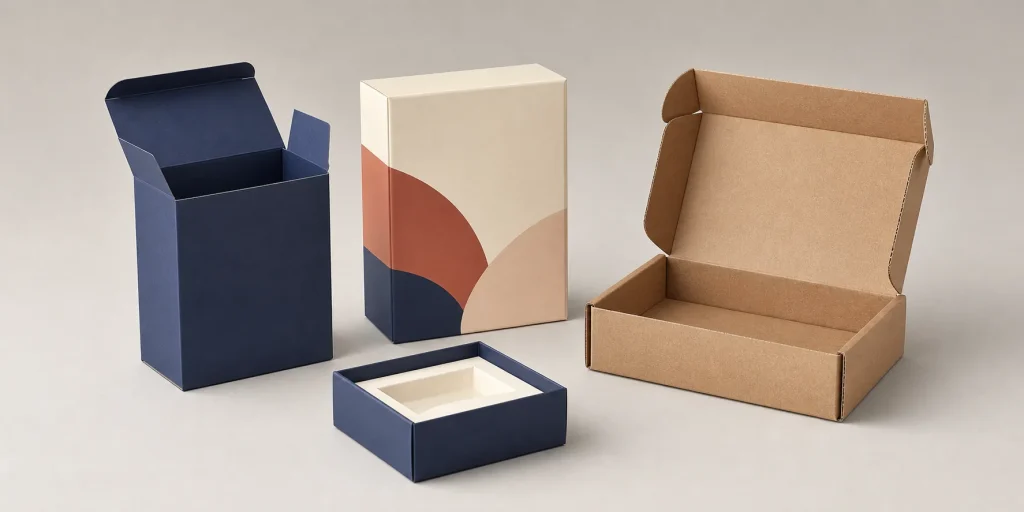
A printed packaging box is a paperboard, corrugated, or rigid-board package customized with artwork, colors, product information, and finishes such as lamination, foil stamping, embossing, or spot UV.
Printed packaging may serve different purposes:
- Folding cartons for retail shelves
- Corrugated mailer boxes for ecommerce delivery
- Rigid boxes for luxury products and gift sets
- Paper bags and sleeves for retail presentation
- Inserts that hold and protect products inside the box
A packaging structure should be selected before artwork is finalized. A beautiful design cannot compensate for a box that is too weak, too large, difficult to assemble, or poorly suited to the product.
Top 10 Printed Packaging Box Manufacturers
This is a practical supplier research shortlist, not a definitive global ranking. Buyers should independently verify each company’s current factory capability, product range, certifications, sample policy, quality controls, commercial terms, and suitability for their target market.
| Supplier | Primary Focus | Suitable Project Type |
|---|---|---|
| PAKORO | Custom paper packaging, cartons, rigid boxes, displays | Branded paper packaging from China |
| Oriental Packing Co., Ltd. | Printed consumer packaging | Design-to-production projects |
| Yingmei Packaging | Luxury and retail packaging | Premium presentation boxes |
| Packly | Online custom printed boxes | Smaller or agile box orders |
| 105 Packaging | Printed paper packaging | North American custom-box projects |
| Custom Boxes Now | Printed corrugated packaging | Shipping and promotional boxes |
| Arteca Rigid Boxes | Premium rigid packaging | Luxury gift and presentation boxes |
| International Paper | Industrial paper and packaging | Large-scale packaging requirements |
| TOPPAN | Printing and material technology | Complex multinational packaging needs |
| Alya Packaging | Printed boxes and bags | European-focused gift and retail packaging |
1. PAKORO

PAKORO, operated by Shenzhen Pakoro Packaging Co., Ltd., is a China packaging manufacturer serving B2B buyers looking for custom paper packaging. Relevant categories include folding cartons, rigid boxes, corrugated boxes, gift packaging, paper bags, and point-of-purchase displays.
With years of experience in custom packaging manufacturing, PAKORO is a practical option when a project requires discussion of box structure, artwork, print finishes, inserts, export packing, and production coordination. Buyers can review its custom packaging manufacturer services when planning a branded packaging project.
For premium product presentation, PAKORO’s luxury gift box manufacturer solutions are relevant. For ecommerce or transit protection, review its corrugated box manufacturer capabilities.
2. Oriental Packing Co., Ltd.
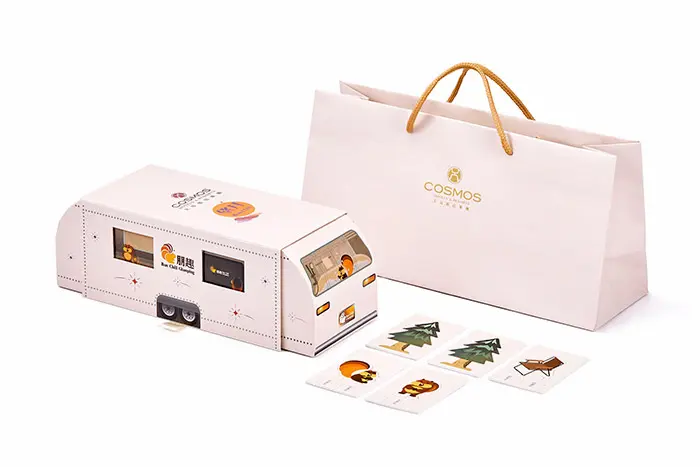
Oriental Packing is associated with printed packaging projects across consumer products, beauty, food, and related sectors. It may be relevant for buyers looking for a design-to-production packaging supplier.
Before selecting any full-service supplier, verify whether design work, structural engineering, tooling, prototype development, and final production are included in the quotation. “One-stop service” can mean different things between suppliers.
3. Yingmei Packaging

Yingmei Packaging is associated with customized printed packaging and gift boxes, including premium retail presentation formats. It may be a relevant research option for brands seeking complex finishes or luxury-oriented box construction.
Luxury packaging should be evaluated through physical samples. Buyers should inspect board thickness, wrap alignment, corner quality, lid fit, insert accuracy, foil placement, and surface resistance rather than approving only a digital rendering.
4. Packly
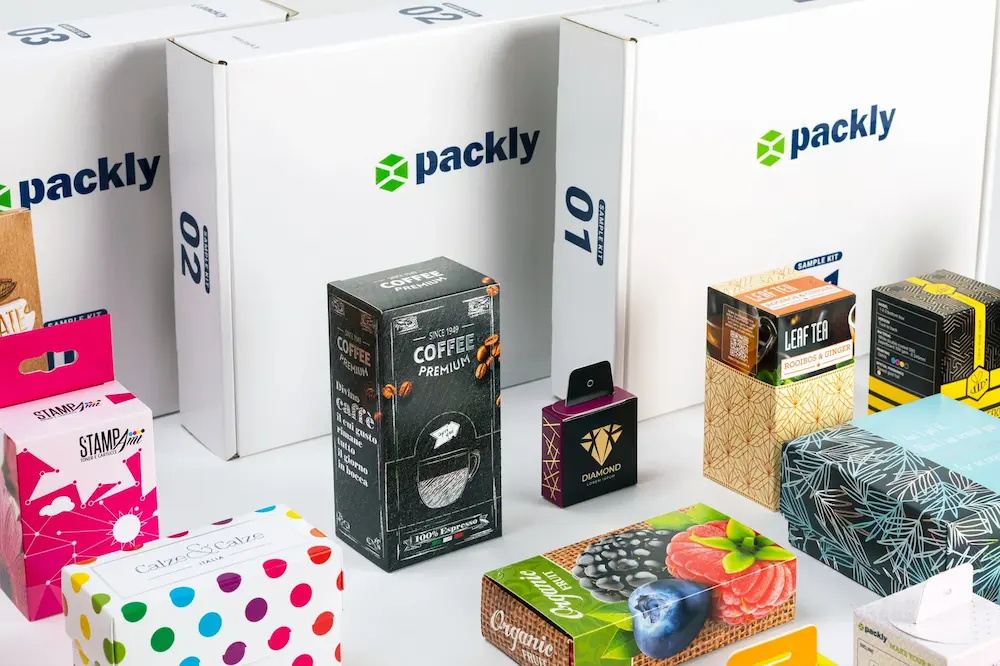
Packly is an online custom-box platform known for digital ordering and visualization tools. This model may suit startups, smaller brands, and marketing teams that want to configure printed boxes quickly.
Online ordering can simplify routine projects, but buyers should still confirm the material, internal dimensions, finish, manufacturing tolerance, shipping method, and color expectations before ordering a larger quantity.
5. 105 Packaging
105 Packaging is associated with custom printed packaging and a sustainability-focused positioning in North America. It may be relevant for buyers who prefer a regional supplier or shorter domestic logistics routes.
Local sourcing can simplify communication and reduce international freight complexity. However, buyers should still compare total landed cost, material quality, print requirements, production timing, and the supplier’s ability to support future volume changes.
6. Custom Boxes Now

Custom Boxes Now is associated with printed corrugated and promotional packaging. It may suit brands that need custom shipping boxes, branded mailers, or practical ecommerce packaging.
A corrugated mailer box is made from fluted board sandwiched between liner sheets. It is designed to protect products during handling while providing printable surfaces for branding. The correct flute and board grade depend on product weight, fragility, stack height, and shipping route.
7. Arteca Rigid Boxes
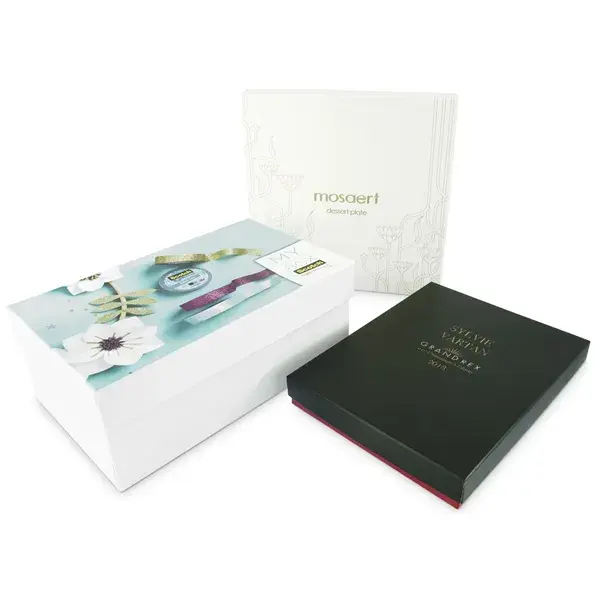
Arteca Rigid Boxes is associated with premium rigid packaging. It may be relevant for luxury products, cosmetics, accessories, electronics, wine, and high-value gift sets.
Rigid boxes generally offer more perceived value than folding cartons, but they consume more material, require more assembly, occupy more shipping volume, and can increase freight costs. Buyers should use them where the premium presentation supports the product’s market position.
8. International Paper

International Paper represents the large-scale industrial packaging category. Global paper and packaging groups can be relevant for multinational buyers needing broad material availability, standardized processes, or volume capacity.
Large suppliers may not be the right fit for every custom project. Smaller and mid-sized brands should check whether the supplier’s minimum order, service model, customization level, and development process match their needs.
9. TOPPAN

TOPPAN is associated with printing, packaging, and material technology. It may be considered for complex packaging programs requiring advanced printing, technical materials, regulatory support, or multi-market coordination.
For technical or regulated packaging, buyers should define requirements early. These may include product-contact rules, migration testing, barcode readability, tamper evidence, shelf-life needs, language requirements, and country-specific labeling obligations.
10. Alya Packaging
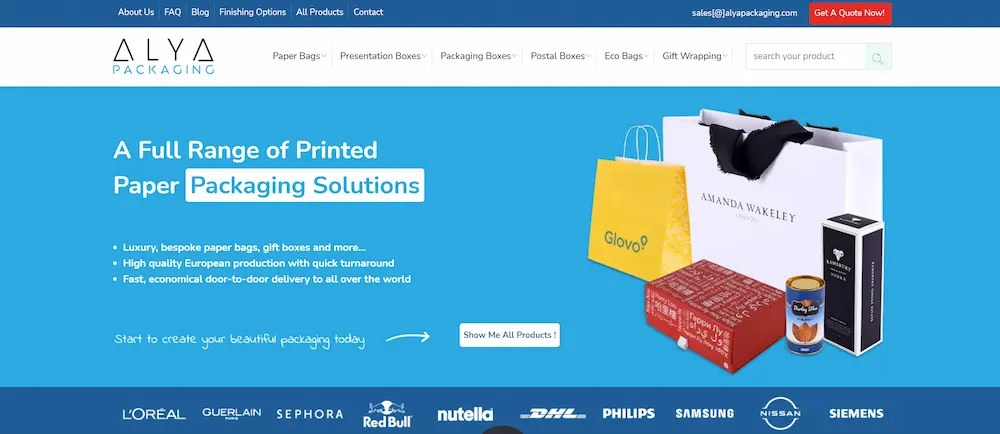
Alya Packaging is associated with printed boxes, gift packaging, and paper bags. It may be relevant for buyers looking for European-oriented packaging supply or premium retail formats.
For international projects, clarify whether the supplier’s quoted price covers packaging only or also includes export documentation, pallets, master cartons, freight, duties, and last-mile delivery. These details affect the actual landed cost.
How to Choose a Printed Packaging Box Manufacturer
When choosing a printed packaging box manufacturer, buyers should evaluate product fit first and price second.
Use the following supplier-selection checklist:
- Can the supplier make the required box structure?
- Can it provide the needed material grade and thickness?
- Does it offer suitable printing and finishing methods?
- Can it produce and ship a physical sample?
- Does it understand your product dimensions and protection requirements?
- Does it explain color-control and quality-inspection procedures?
- Can it meet your MOQ and production schedule?
- Does it have experience with export packing and international shipping?
- Is the quotation detailed enough to compare fairly?
- Can the supplier communicate revisions clearly and document approvals?
Printing Methods for Custom Packaging
Offset Printing
Offset printing is commonly used for high-quality paperboard packaging and larger production runs. It delivers strong color reproduction, sharp detail, and a wide choice of finishing options.
Offset printing usually requires setup and is often more economical at higher quantities. It is commonly used for folding cartons, rigid-box wraps, sleeves, and premium retail packaging.
Digital Printing
Digital printing is suitable for shorter runs, prototypes, variable data, and projects that need fast artwork changes. It reduces plate setup but may have different color behavior and material limitations compared with offset printing.
Buyers should request a physical color proof when brand color accuracy is important.
Flexographic Printing
Flexographic printing is widely used for corrugated packaging. It is practical for shipping cartons and mailer boxes, especially when the required artwork is relatively simple.
For highly detailed retail graphics, litho-laminated corrugated packaging or other print methods may be more appropriate than direct flexographic printing.
Materials Used for Printed Packaging Boxes
Folding Carton Board
Folding cartons commonly use SBS, FBB, CCNB, kraft board, or other paperboard grades. Material selection influences print quality, stiffness, fold durability, cost, and recyclability.
Corrugated Board
Corrugated packaging uses linerboard and a fluted medium. E flute is often used for retail-ready or mailer packaging, while B, C, and double-wall combinations are more suitable for heavier shipping requirements.
Greyboard for Rigid Boxes
Rigid boxes use thick greyboard as their structural core, usually wrapped with printed paper or specialty paper. Greyboard thickness influences the box’s strength, perceived quality, and final weight.
Manufacturing Insights: Color, Finishes, and Quality Control
Color is one of the most common causes of disagreement in printed packaging. Artwork shown on a screen is not a production standard because screens vary in brightness and color calibration.
For color-critical orders, buyers should provide Pantone references where applicable, approve a printed proof, and define which colors are most important. Metallic inks, uncoated papers, textured stocks, kraft paper, and special finishes can all change the appearance of printed colors.
Common packaging finishes include:
- Gloss or matte lamination
- Soft-touch lamination
- Spot UV coating
- Foil stamping
- Embossing and debossing
- Aqueous coating
- Window patching
- Textured or specialty paper wraps
Each finish affects cost, production time, handling, and recyclability. Adding multiple finishes to a simple box can increase cost more than increasing print colors.
What Affects Printed Packaging Box Cost?
The main cost factors are:
- Packaging structure and dimensions
- Material type, thickness, and board grade
- Printing method and number of colors
- Print coverage and artwork complexity
- Finishing processes
- Die-cutting and tooling
- Inserts, magnets, ribbons, windows, and hand assembly
- Order quantity
- Sample and revision requirements
- Export-carton packing and freight volume
A magnetic rigid box with a fitted insert, foil stamping, soft-touch lamination, and hand assembly will cost substantially more than a standard flat-packed printed folding carton.
MOQ, Samples, Lead Time, and Shipping
Typical MOQ for custom printed rigid boxes often begins around 500 to 1,000 units, depending on size, materials, and finishing requirements. Folding cartons and corrugated mailers may have different MOQs because printing, board conversion, and die-cut setup requirements differ.
A structural sample is useful for confirming product fit and opening experience. A printed pre-production sample is important when artwork, finishes, color matching, or premium presentation are critical.
Production lead time should be confirmed only after artwork, material, final dimensions, quantity, approval process, and payment terms are settled. Buyers should also plan for inspection, export packing, and international freight.
Common shipping options include express courier for samples, air freight for urgent smaller shipments, and sea freight for bulk cargo.
Common Mistakes When Ordering Printed Packaging
Avoid these recurring sourcing mistakes:
- Approving a box from a digital mockup only
- Using outer dimensions instead of product-fit internal dimensions
- Not specifying board grade or thickness
- Ignoring product weight and shipping conditions
- Choosing a supplier based only on unit price
- Adding expensive finishes before confirming the basic structure
- Not approving a physical pre-production sample
- Failing to define acceptable visual defects
- Ignoring master-carton size and freight volume
- Assuming every paper-based package is automatically recyclable
For broader paper packaging options, buyers can also review PAKORO’s paper box manufacturer page.
Frequently Asked Questions
How do I choose a reliable printed packaging box manufacturer?
Choose a supplier by checking its relevant packaging capability, sample quality, material documentation, print controls, inspection process, MOQ, and communication. Ask for a detailed quotation that lists dimensions, materials, printing, finishes, packing method, production time, and Incoterms. A good supplier explains both what is included and what could change the price or lead time.
What is the MOQ for custom printed packaging boxes?
MOQ depends on the box type, size, material, printing method, and finishing requirements. Customized rigid boxes often start at around 500 to 1,000 units, while folding cartons and corrugated boxes may have different minimums. Request tiered pricing at several quantities so you can compare unit cost, setup cost, and inventory risk before committing.
How long does printed packaging production take?
Production time depends on the box structure, order quantity, materials, print method, finishing, assembly, and sample approval. Simple cartons generally move faster than rigid boxes with magnets, inserts, and foil stamping. Confirm production timing only after final artwork and specifications are approved, then allow additional time for inspection, export packing, and shipping.
Can I get a sample before production?
Yes, many manufacturers can provide a blank structural sample, a material sample, or a printed pre-production sample. A structural sample confirms dimensions and product fit, while a printed sample helps verify color and finishing. Ask whether the sample fee is creditable against production, how revisions are handled, and whether the sample will use final production materials.
Which printing method is best for packaging boxes?
Offset printing is usually best for detailed, color-critical paper packaging at larger quantities. Digital printing can suit smaller runs, prototypes, and variable artwork. Flexographic printing is common for corrugated shipping boxes. The best method depends on the quantity, substrate, artwork detail, color requirements, budget, and desired production speed.
How can I ensure packaging colors match my brand?
Use approved Pantone references where applicable, supply print-ready artwork, and approve a physical production proof. Screen images should not be treated as the final color standard because monitors vary. Specify which colors are critical, especially on kraft paper, uncoated stock, metallic inks, or textured material, as these surfaces can change color appearance.
Are rigid boxes better than folding cartons?
Rigid boxes are better when premium presentation, product protection, and unboxing experience are central to the purchase decision. Folding cartons are usually more efficient for storage, flat shipping, and high-volume retail distribution. The right choice depends on product value, target market, freight constraints, retail display needs, and sustainability goals.
What quality checks should I request for printed boxes?
Request checks for dimensions, material grade, color consistency, print registration, die-cut accuracy, fold and glue quality, surface defects, finishing placement, insert fit, packing quantity, and export-carton condition. For critical orders, use an approved pre-production sample as the inspection reference. This gives the buyer and supplier a shared standard for acceptance.
What affects the cost of printed packaging?
Cost is affected by box structure, dimensions, material thickness, printing method, color coverage, finishes, die-cutting, inserts, assembly labor, order quantity, and shipping volume. Premium details such as foil stamping, soft-touch lamination, magnets, or custom inserts add both material and labor cost. Compare total landed cost, not only the quoted unit price.
Can a manufacturer make both retail and ecommerce packaging?
Some custom packaging manufacturers can coordinate both retail boxes and corrugated shipping packaging, but buyers should verify this for each supplier. Retail packaging focuses on shelf presentation and print finish, while ecommerce packaging focuses on transit protection and efficient freight. Testing the retail box inside its shipping carton helps prevent damage and poor unboxing experiences.
Are printed paper boxes recyclable?
Some are, but recyclability depends on the full material construction. Uncoated paperboard is generally easier to recycle than boxes with plastic lamination, magnets, foam, metallic films, or mixed-material inserts. Ask for the material composition and consider a mono-material paper design when recyclability is a core requirement in your target market.
What shipping methods can I use for packaging orders?
Express courier is common for samples; air freight suits urgent, lower-volume orders; and sea freight is often more economical for bulk production. Your best option depends on shipment volume, deadline, destination, budget, and Incoterms. Confirm whether the quote is EXW, FOB, CIF, DDP, or another shipping term before approving the order.