Are you ready to elevate your business and packaging projects with perfectly sized playing cards?
If so, you’re in the right place.
You might be aiming to create a brand-new deck for a promotional campaign, or maybe you want to ensure your product stands out with a unique card design.
Whatever your goal, understanding playing card dimensions and thickness is crucial.
In this post, you’ll get clear insights into what sizes to consider for specific games, what card stock thickness works best, and how you can customize your decks for maximum impact.
Read on, and you’ll uncover all the packaging and design tips you need to get started.
Take a Quick Glance: Key Playing Card Dimensions
| Card Type | Dimensions (inches) | Dimensions (mm) |
|---|---|---|
| Standard (Poker) | 2.5 x 3.5 | 63.5 x 89 |
| Miniature | ~ 1.75 x 2.5 | 44 x 64 |
| Bridge | 2.25 x 3.5 | 57 x 89 |
| Tarot | 2.75 x 4.75 | 70 x 120 |
| European | 2.4 x 3.8 | 61 x 97 |
| Trump Cards | 2.44 x 3.94 | 62 x 100 |
| Educational Cards | 3.5 x 5.75 | 89 x 146 |
| Double Poker | 3.5 x 5.0 | 89 x 127 |
| Jumbo | A5, A4, or larger | Varies |
1. Why Playing Card Dimensions Matter
As a packaging expert, I know exactly how crucial sizing can be.
You might be wondering if a fraction of an inch really makes that much difference.
The short answer is: yes, it does.
When your cards don’t fit the box or your packaging design doesn’t align with your chosen artwork, you can run into all sorts of complications.
Moreover, consistent dimensions help your customers enjoy a smooth experience, from easy shuffling to perfect handling during gameplay.
Furthermore, standardization of playing card dimensions serves several purposes.
Not only does it guarantee interoperability across different games, but it also ensures your cards will fit neatly in standard packaging solutions.
This aspect saves you time and money.
Additionally, using widely recognized dimensions can boost your brand’s credibility.
People trust that the quality and durability of standard-sized decks will meet their expectations.
2. Standard Playing Card Dimensions
You’ve likely come across the most common size, also known as the Poker card size.
Measuring 2.5 x 3.5 inches (63.5 x 89 mm), these cards are the industry norm in many popular card games like Texas Hold’em and Blackjack.
When you choose this size, you can trust you’re creating a deck that will be instantly recognizable and highly functional.
Why should you care about standard sizing?
- It ensures your decks are easy to shuffle.
- Your customers will be familiar with the feel.
- Packaging materials for standard cards are widely available and cost-effective.
In addition, choosing a well-known card dimension speeds up your design process.
You’ll find plenty of ready-made templates, which helps you reduce potential errors.
This approach is especially helpful if you’re balancing multiple tasks, such as marketing and distribution.

3. Miniature Cards: Small Size, Big Impression
If you’re aiming for something distinctive, you might consider Miniature cards.
These are smaller than standard cards and typically measure around 1.75 x 2.5 inches (44 x 64 mm).
In certain contexts, you’ll find them referred to as “small cards.”
They’re perfect for travel games, novelty items, or children’s products that need a fun twist.
Miniature cards serve specialized needs. You might use them for:
- Portable board games.
- Personalized giveaways or brand promotions.
- Collectors’ editions that provide a unique, novelty experience.
Yet, remember to plan your artwork carefully.
When you design smaller cards, you must ensure that any text or imagery remains legible.
Consider your product’s overall purpose.
If easy readability is a priority, you may want to test different font sizes before finalizing your design.
4. Poker Cards: The Global Favorite
Poker cards continue to dominate the market because they adapt well to various games, from Texas Hold’em to casual card magic.
Their dimensions, as mentioned, are 2.5 x 3.5 inches (63.5 x 89 mm).
You could incorporate intricate artwork or a minimalist approach to highlight your brand identity.
Whether it’s for a casino, a corporate event, or a personal project, you’ll see that the poker size is widely accepted, making it easy for customers to handle and appreciate.
Key Takeaway: If you plan to mass-produce your playing cards or distribute them internationally, the poker size is the most likely to resonate with a broad audience.
5. European Playing Cards: Slightly Different Feel
If you cater to a European market, you might discover that European playing cards have slightly different dimensions.
They often come in 2.4 x 3.8 inches (61 x 97 mm).
Although similar in height, they are narrower than the standard American format.
You’ll want to mention this difference if you’re targeting European customers specifically.
By recognizing regional preferences, you show that you care about cultural nuances and local gaming traditions.

6. Bicycle Playing Cards: Trusted Tradition
You’ve probably encountered Bicycle playing cards in countless stores or at friendly gatherings.
Bicycle is a brand that’s synonymous with quality, reliability, and tradition.
Their decks also follow the 2.5 x 3.5 inches standard.
If you aim to give your cards that classic and iconic feel, consider referencing Bicycle as an inspiration.
It’s a trusted benchmark for card enthusiasts worldwide.
7. Bridge Cards: Perfect for Larger Hands (or More Cards)
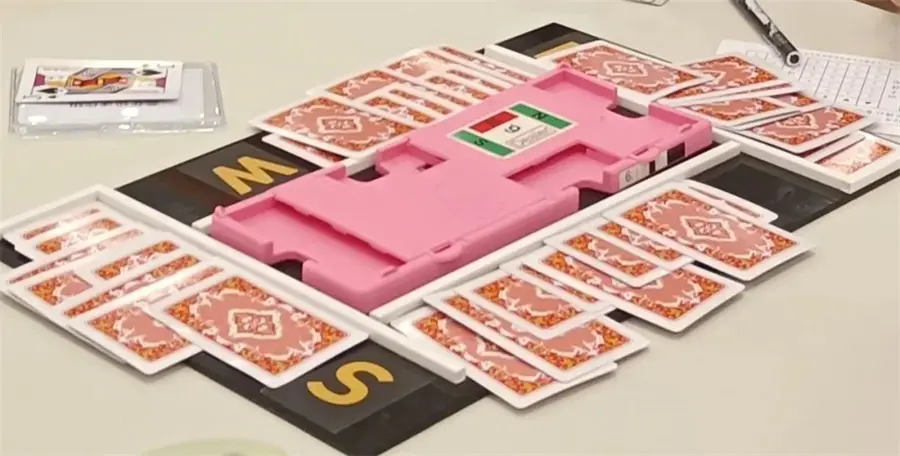
Bridge cards, at 2.25 x 3.5 inches (57 x 89 mm), are slightly slimmer than poker cards.
That slim profile helps players hold multiple cards at once.
You might find this dimension particularly appealing for trick-taking games where you fan out a large hand.
Additionally, if your design leans toward a sophisticated aesthetic, Bridge cards offer a refined look and a comfortable handling experience.
8. Tarot Cards: Embrace the Larger Canvas
Tarot cards generally measure 2.75 x 4.75 inches (70 x 120 mm), making them noticeably taller and slightly wider.
This extra space accommodates elaborate imagery and symbolism that is crucial in Tarot readings.
If you’re creating an oracle deck, you’ll value this extra room for text and vibrant artwork.
Pro Tip: Because Tarot decks rely on visual narratives, you’ll want to invest in high-quality printing. Make sure your chosen packaging protects these slightly larger cards, especially if your audience values collectibles and premium finishes.
9. Educational Cards: Spread Knowledge with Bigger Designs
When you plan on including detailed illustrations or text-heavy content, you might consider Educational cards.
These come in around 3.5 x 5.75 inches (89 x 146 mm).
If you’re using flashcards to teach language, science, or history, you’ll benefit from the increased space.
Such dimensions are also excellent for businesses producing product information cards or training materials.
With these, your audience can quickly read and internalize the data without straining their eyes.
10. Trump Cards: Emphasize Special Abilities
Trump cards often measure 2.44 x 3.94 inches (62 x 100 mm).
These decks typically appear in thematic games where certain cards have enhanced powers or unique abilities.
You might choose this dimension to set your brand’s game apart or highlight your product’s unique twists.
The slightly distinct size can reinforce the special “trump” nature by giving it an exclusive feel.
11. Flash Cards: Engage Learners Instantly
Flash cards come in around 5.8 x 4.1 inches (148.5 x 105 mm).
If you’re designing them for educational programs or corporate training, these larger measurements allow for bold text and even bullet points.
With more room for images, you can keep your learners engaged and reduce confusion.
The bigger size also makes it easy to show them to an entire group, which is beneficial in classroom settings or interactive workshops.
12. Custom-Sized Game Cards: Unleash Your Creativity
Of course, you’re not restricted to the sizes above.
When you want to push boundaries and create a truly innovative product, custom-sized game cards are an excellent choice.
Whether you need a square design or something that defies conventional measurements, you can tailor the cards to your brand’s identity.
However, be sure to work closely with your packaging supplier.
You’ll want to ensure the resulting boxes fit your custom cards snugly.
This approach reduces any risk of wear or tear during transportation.
13. Double Poker Cards: Twice the Fun
Sometimes, bigger is better. Double Poker cards measure 3.5 x 5.0 inches (89 x 127 mm), making them nearly twice as large as standard decks.
You might use these giant cards for promotional events or marketing stunts.
They’re hard to ignore and can draw attention at tradeshows, giving your brand a memorable twist.
Just be aware that these larger decks may be more challenging to shuffle, so you’ll want to consider your audience’s preferences.
14. Jumbo Cards: When Size Really Matters
For truly standout experiences, you can create Jumbo cards measuring A5, A4, or even larger.
Imagine unveiling a huge playing card during a product launch.
People notice such oversized designs, which can lead to viral social media posts.
Jumbo cards work well for event entertainment, stage magic, or brand ambassadors aiming to capture crowd attention.
If your marketing plan involves making a massive impact, Jumbo could be the way to go.
15. Card Stock Thickness: Where Durability Meets Design
So far, you’ve focused on dimensions. However, the thickness of a playing card is just as important.
You don’t want your cards to feel flimsy, and you also don’t want them so thick that they become unmanageable.
Below are popular cardstock options and approximate thicknesses:
- Gaming Linen (GL29)
- Approximately 0.33 mm thick.
- Features a linen texture and a blue core to reduce transparency.
- Delivers a traditional feel with reliable durability.
- Premium Smooth (PS30)
- Approximately 0.33 mm thick.
- Has a smooth finish for vibrant printing.
- Also includes a blue core to prevent light from passing through.
- Deluxe Smooth (DS33)
- About 0.31 mm thick.
- Premium texture with higher color contrast.
- Ideal for custom game designers who demand impeccable print quality.
- Casino Linen (CL31)
- Roughly 0.31 mm thick.
- Sports a linen finish with micro air pockets, providing excellent handling.
- Incorporates a dark core to further block any light transmission.
By comparing these stocks, you’ll see that the difference in thickness affects how a card feels in your hand.
You’ll want to balance cost with functionality, which means choosing a cardstock that fits both your budget and your brand’s expectations.
Furthermore, premium stocks usually offer better shuffling experiences and increased longevity.
If you expect your customers to use these decks repeatedly, investing in a higher-grade material can enhance customer satisfaction.
16. Conclusion and Next Steps
To sum up, choosing the right playing card dimensions directly impacts both the user experience and the perceived quality of your brand.
You’ve learned that Poker and Bridge sizes are widely recognized, while Miniature, Tarot, and Educational cards each serve specialized needs.
You’ve also gained insight into custom-sized game cards and how you can leverage them to carve out a unique market niche.
Most importantly, you now understand the significance of card stock thickness and how it can elevate your final product.
What’s your next step?
- Define Your Audience: Determine whether your target market prefers standard playing cards, or if they’d enjoy something unconventional like Jumbo or Tarot dimensions.
- Plan Your Packaging: Align your card dimensions with packaging solutions that offer protective and cost-efficient features.
- Choose the Right Card Stock: Decide between linen or smooth finishes, and ensure the chosen stock meets your durability requirements.
- Finalize Your Design: Test your fonts, artwork, and brand details. Confirm that every element is legible and visually appealing.
- Consult with Experts: Partner with a printing or packaging provider who can guide you through the nuances of production, ensuring your final deck meets professional standards.
By following these steps, you’re setting yourself up for success.
Whether you’re introducing a new board game, running a marketing campaign, or simply designing a custom deck for fun, the right playing card size and thickness can make a lasting impression.
If you have questions on optimizing your packaging or want insights into the best printing practices, feel free to reach out.
I’m here to help you deliver an unforgettable unboxing and gameplay experience, every time.