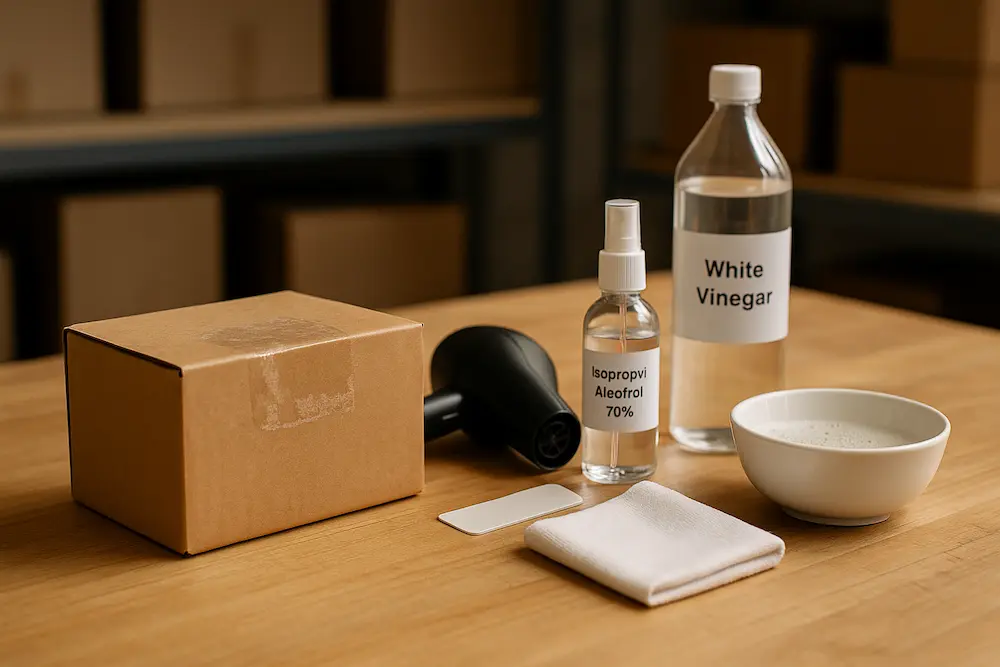
You want tape residue gone without scratches, haze, or lingering smell.
The fastest path is simple: warm the adhesive, lift gently, and wipe with a mild cleaner.
Start with a hair dryer for half a minute, ease up an edge with a plastic card, then wipe with a little rubbing alcohol or white vinegar on a microfiber cloth.
If a patch resists, soften it with a drop of cooking oil, wait a few minutes, and wash with soapy water. Always test first on a hidden spot.
Safety and setup that actually saves time
A quick test prevents expensive mistakes. Work in a ventilated spot.
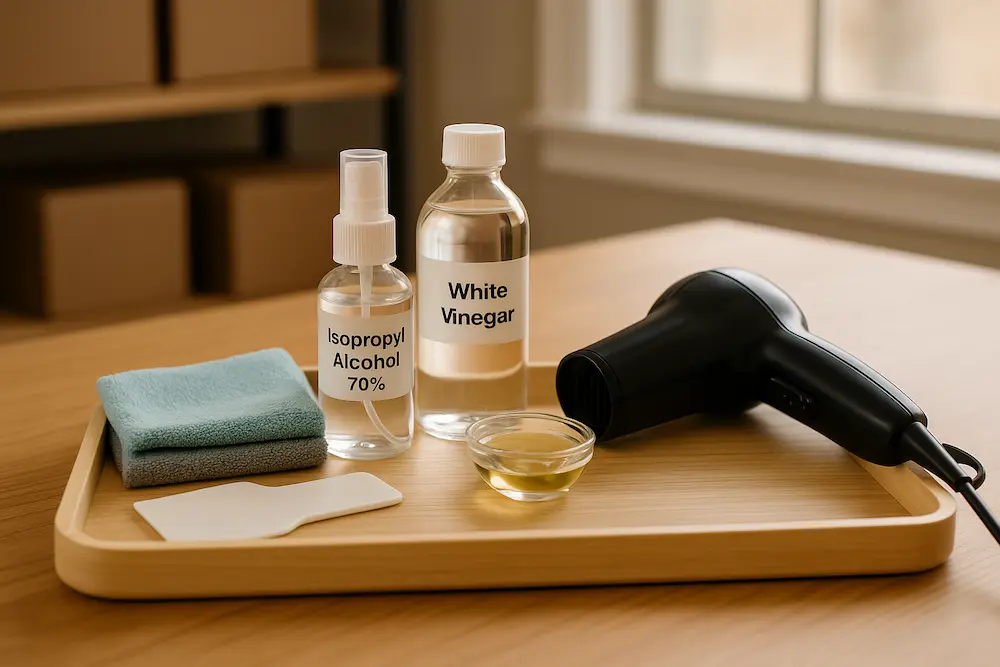
Keep a plastic scraper or card, a hair dryer, microfiber cloths, a splash of rubbing alcohol or white vinegar, a little dish soap, and cooking oil nearby.
With these on hand, you’ll rarely need anything harsher.
Choose your approach in seconds
Think in materials.
On glass and metal, heat loosens the bond quickly; a brief wipe with alcohol or vinegar usually finishes the job.
On painted or sealed wood, warm first and touch liquids lightly, then wipe dry.
With plastics, warm gently and go mild—short contact with alcohol is often fine, while acetone is not.
For fabric or paperboard, avoid floods of liquid; chill stubborn gum with ice to make it brittle, lift what you can, and spot-clean carefully.
The core method, told like a mini playbook
Warm the tape residue until it feels pliable, not hot.
Slide a plastic card under the edge and keep the angle low so you separate adhesive from surface instead of gouging the finish.
When most of the glue lifts, moisten a corner of your cloth with alcohol or vinegar and make small, patient circles.
Residue turns dull and streaky, then disappears. Rinse the area with a little soapy water and dry, so no film remains.

When residue won’t budge (stubborn, old, or blackened)
Layer your tactics. Warm first, then wipe with alcohol.
If smearing persists, tap in a few drops of cooking oil and cover with cling film so it can penetrate; after five to ten minutes, wipe clean and wash with dish soap.
For fine, matte, or delicate finishes, a light baking-soda paste can add a touch of controlled friction without scratching.
Commercial adhesive removers are a last resort; use them sparingly, follow the label, and wash the surface afterward to remove any oily sheen.
Special surfaces deserve special care
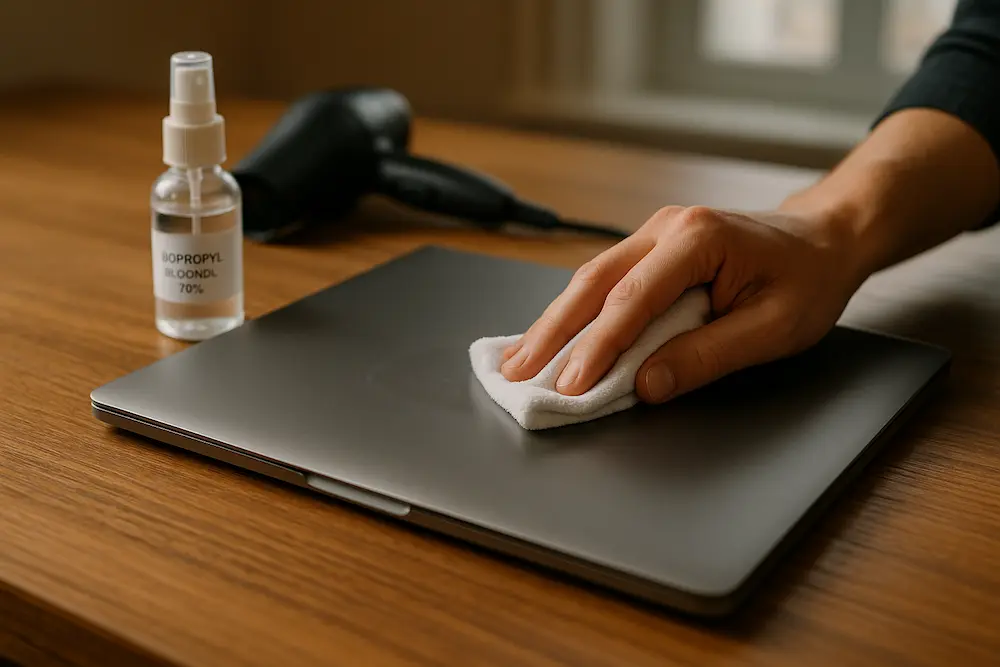
Electronics and screens like a dry approach: power down, warm lightly, and wipe with the barest hint of alcohol on the cloth—not the device.
Automotive paint and piano-gloss finishes prefer warmth first and very short contact with a paint-safe cleaner; wipe as soon as the residue gives up.
Paperboard and book covers dislike moisture; rely on heat and a card, and only spot-touch with cleaner if you can dry it instantly.
Plastics vary, so test; brief alcohol contact can be fine, but long soaks or acetone can haze or crack.
Greener first choices (they work surprisingly well)
Vinegar, baking-soda paste, warmth, and a tiny touch of cooking oil handle most everyday residue, especially on glass, metal, and sealed finishes.
They’re inexpensive, easy to rinse, and kinder to indoor air.
If you step up to a commercial remover, keep the room airy and clean the area with soapy water when you’re done.
Prevent residue next time
Choose low-residue tapes or water-activated paper tape (WAT) for shipping.
Warm tape for a moment before peeling, and pull back slowly at a low angle so adhesive releases with the carrier.
On sensitive finishes, lay a sacrificial layer—like an easy-peel film or painter’s tape—before labeling.
A quick real-world win
A client brought us glass jars with year-old label shadows.
We warmed each label, eased a corner with a card, wiped with alcohol, then spot-soaked the toughest rings with a dab of oil under cling film.
Five minutes later, a soapy rinse revealed clear glass with no halos.
Time per jar: under three minutes after the first few.