Have you ever held your breath while shipping a delicate glass item to a client?
The fear of breakage is real, and it can damage your reputation and profits.
As a Pakoro packaging expert, I’m here to show you how to ship glass items confidently.
In the following sections you’ll learn the most valuable tips on choosing the right materials, selecting boxes, and following proven steps.
You can use these insights right away to protect fragile products and earn customers’ trust.
Choose Protective Packaging Materials Carefully
Your first line of defense comes from the materials you wrap around the glass.
When you pick the right protective packaging, you reduce shocks and vibrations during transit. Here’s what works best:
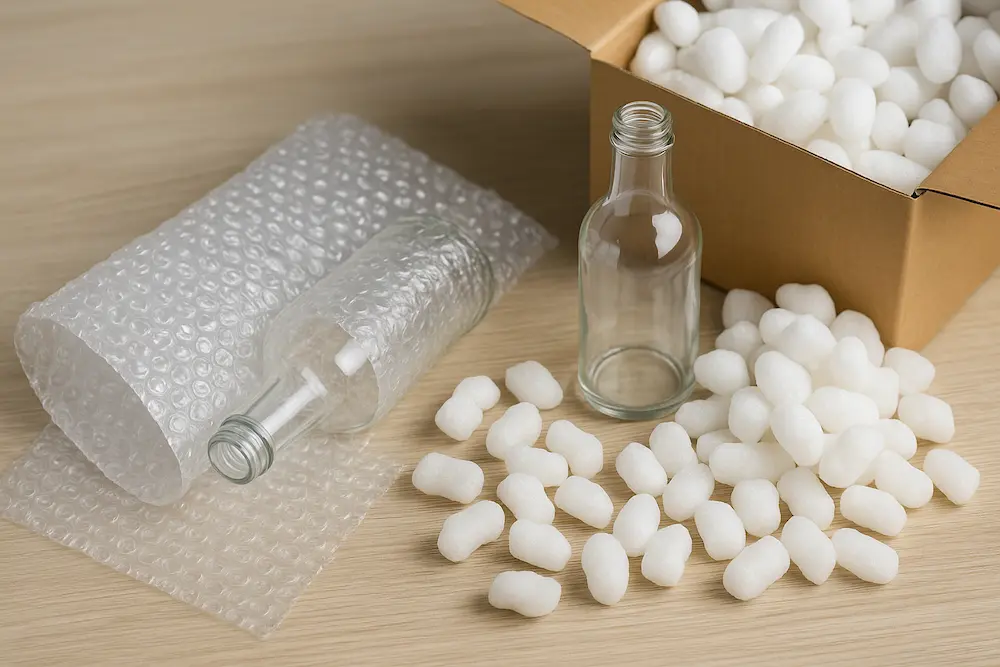
Bubble wrap: This classic material cushions fragile surfaces. Wrap your glass item with several layers, making sure all sides are covered. Don’t be shy about using more bubbles; it pays off.

Foam peanuts: These small pieces fill empty spaces in the box. They prevent shifting and absorb impact. Be sure the glass item is centered and the peanuts surround it evenly.

Foam sheets or rolls: Thin foam sheets protect against scratches and minor bumps. You can wrap them around delicate edges or use them between items.

Corrugated cardboard inserts: Inserts add structural support. They create compartments that keep multiple glass pieces from touching each other.

Ask yourself: Are you using enough filler to stop movement inside the box?
If you’re not, your glass might collide with the container walls and crack.
Choosing the right fillers is one of the simplest ways to improve shipping outcomes.
Understand Different Shipping Boxes for Glass
Not all boxes are created equal.
Choosing the right one can mean the difference between safe arrival and disaster.
Consider these options:
Single‑walled cardboard boxes: Suitable for lightweight glass items. They’re affordable but offer limited strength.

Double‑walled boxes: Provide extra durability. They resist stacking pressure and protect heavier pieces such as glassware sets.

Triple‑walled boxes: Ideal for very heavy or high‑value glass products. They can handle long shipping routes and rough handling.

Wooden crates: Offer maximum protection for large or irregularly shaped glass items. They can be expensive and heavy, but sometimes they’re the safest choice.
Plastic boxes or hard‑plastic containers: Water‑resistant and reusable, these boxes can be a good option if moisture is a concern.
Specialty or custom boxes: When nothing off‑the‑shelf fits your needs, custom packaging from Pakoro gives you the exact size and strength required.
By learning the strengths of each box type, you position yourself to make smart choices.
Always match the box to the weight and fragility of the item.
Choose the Right Box Like a Pro
You might wonder, How do I know which box is best for my glass product?
Here are the factors you should consider:
- Material and thickness: Thicker, sturdier boxes provide more protection. If you ship internationally, choose boxes that withstand stacking and long travel.
- Size: The box should be slightly larger than the item plus fillers. You don’t want too much empty space, but you also need room for padding.
- Weight capacity: Check the maximum weight a box can support. Overloading a box weakens its structure and endangers your product.
- Moisture resistance: If your shipment might encounter rain or humid conditions, choose plastic or moisture‑resistant cardboard.
- Cost versus protection: Balance your budget with the risk of breakage. Spending a little more on packaging could save you from replacing damaged goods.
One often overlooked step is testing your packaging.
Create a prototype package and send it through a simulated shipping process.
Look for excessive movement or compression and adjust your materials accordingly.
At Pakoro, we help businesses develop custom solutions that use less filler yet deliver greater protection.
Pick the Right Shipping Service
{citationIndex=’4′ label=’Delivery trucks from different shipping carriers with boxes labelled ‘Fragile”}
Even the best packaging can fail if you hand it over to the wrong carrier.
Different shipping services have different strengths:
- Major carriers: Companies like USPS, UPS, FedEx, and DHL offer various service levels. Compare their transit times, tracking capabilities, and insurance options.
- Local couriers: Sometimes local services can handle fragile items with extra care and offer same‑day delivery.
- Freight services: For large volumes or very heavy glass, freight might be the most economical choice.
Before you choose, read the carrier’s guidelines for shipping glass, and consider purchasing insurance.
Transit time affects risk: longer journeys require sturdier packaging.
Ask yourself, Do I need express shipping to reduce handling time?
Always balance speed, cost, and protection.
Conclusion
Shipping glass items doesn’t have to be stressful.
By choosing quality packaging materials, selecting the right box, and following a step‑by‑step process, you dramatically reduce the risk of breakage.
When you pair this with a reliable shipping service, your customers receive their glass items intact and your brand reputation shines.
At Pakoro, we specialize in custom packaging solutions that protect fragile products while maintaining an eco‑friendly approach. Ready to improve your shipping process? Visit us at www.pakoro.com or email Melody@pakoro.com. Let’s work together to deliver a perfect unboxing experience.