If you’re searching for a 5 ply corrugated box manufacturer, you usually want three things fast: stacking strength, consistent quality, and a supplier who responds quickly with clear specs and pricing. This guide gives you a buyer-ready checklist, plain-English specs (including ECT/BCT), and a side-by-side manufacturer comparison so you can move from “research” to “purchase order” with confidence.
Here’s the quickest way to make a good decision today:
- Ask for the board build: confirm it’s double-wall (five layers) and specify flute combination if possible.
- Specify performance: request an ECT target (material strength) and validate via BCT / compression testing on the final box size.
- Lock your box style: use a standard style code (FEFCO) or a dieline to avoid costly misunderstandings.
- Demand proofing and sampling: especially if you print branding or ship fragile/heavy goods.
- Confirm lead time + MOQ: these two details decide your real total cost.
What five-ply corrugated means in plain English
Corrugated board is made by gluing flat papers (liners) to a wavy inner paper (fluting) using starch-based adhesive, which creates a strong structure.
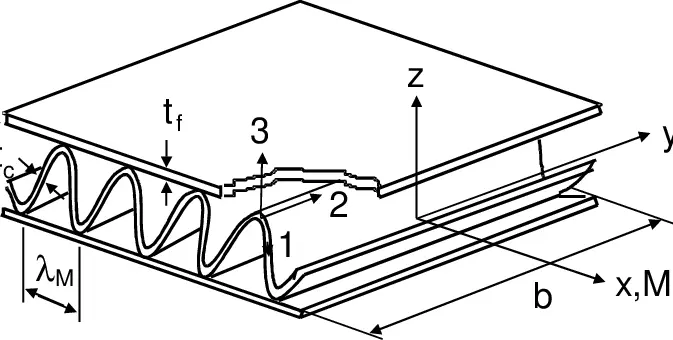
A five-ply box is commonly described as double-wall corrugated board. In practical terms, that means you have two fluted layers and three liner layers working together for strength.
Manufacturers often choose five-ply when stacking and heavier products are part of your real-world shipping problem.
You’ll also hear “single wall” and “triple wall.” Those are standard market options alongside double wall.

3-Ply vs 5-Ply vs 7-Ply Corrugated Boxes
| Construction | Common Name | Typical Buying Use |
|---|---|---|
| 3-ply: two liners + one flute | Single wall | Light products, retail packs and short distribution cycles |
| 5-ply: three liners + two flutes | Double wall | Export shipping, pallet stacks and medium-to-heavy products |
| 7-ply: four liners + three flutes | Triple wall | Very heavy, large or fragile industrial loads |
Layer count is only the starting point. Paper grammage, flute combination, recycled-fiber content, moisture, box dimensions, joint design, product support and pallet pattern all affect performance. A useful purchase specification connects the board build to a compression or distribution requirement.
Specs you should request before you approve any quote
This is the section most buyers wish they had read before the first production run. Read on—these details make or break performance.
Materials and board build
Start with the build and the paper grades.
- Liners + fluting: confirm the supplier is actually building corrugated board with liners and fluting (not just reselling stock).
- Double-wall build (five-ply): ask them to state “double wall / five-ply” explicitly on the quote.
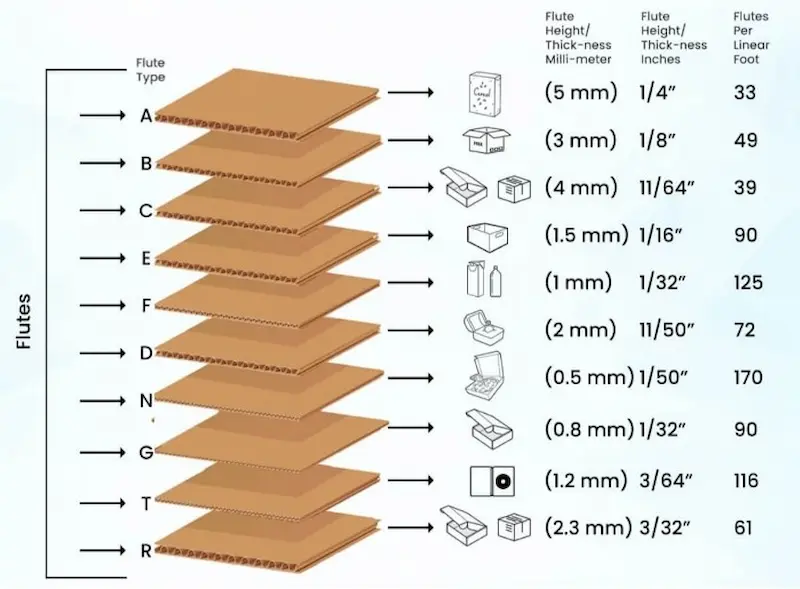
Flute Combinations and Box Dimensions
Common double-wall combinations include BC, BE and AB, but the correct choice depends on the product, printing surface, cushioning need and stacking target. Larger flutes can add cushioning and thickness, while finer flutes can improve print appearance and folding precision. Do not approve a flute combination from its name alone; ask for the resulting board thickness, paper grades and a representative finished-box test.
State dimensions as internal length × width × height and identify the measurement unit. Confirm whether tolerances apply to the flat blank or assembled box, and test the actual product with its dividers, pads and closure. Small dimensional errors can create excess movement, bulging or wasted pallet space.
ECT and BCT
These terms sound technical, but they answer a simple question: Will your box fail in a stack?
ECT (Edge Crush Test) measures the edgewise compressive strength of corrugated material. In plain terms, it indicates how well the board resists edge loading forces related to stacking and handling.
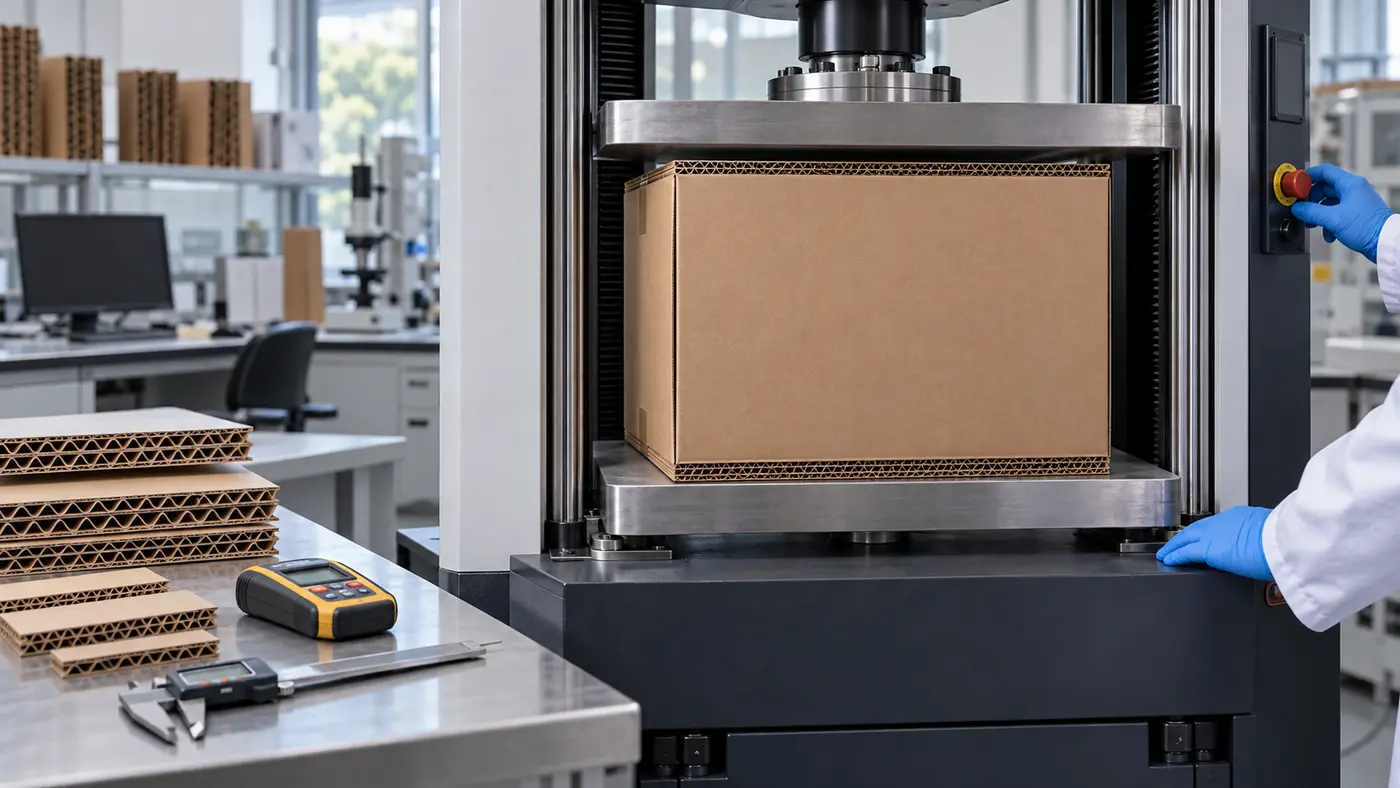
BCT (Box Compression Test) evaluates the compression strength of the finished box under vertical load until failure mode (buckling/collapse). It’s the closest lab proxy for warehouse stacking and transit compression.
If you’re building a robust spec, it’s common to choose appropriate performance characteristics and confirm them with compression testing. ASTM’s guidance for selecting performance characteristics for corrugated fiberboard and boxes is explicitly aimed at matching box construction to distribution hazards.
Practical rule you can use:
Use ECT to shortlist board strength, then validate your actual design with BCT on the final size, print, and closure.
Box style and communication
A good five-ply box can still fail if the style is wrong.
The FEFCO code is an internationally applied system for corrugated packaging designs, used so buyers and manufacturers can reference standard structures quickly.
If you ship standard cartons, the classic regular slotted container is often referenced as FEFCO 0201 in many packaging guides.
Typical uses where five-ply makes sense
Choose five-ply (double-wall) when you need more margin against crushing:
- Heavier products and stacking requirements (common reason suppliers recommend five-ply).
- Long-distance distribution where handling is unpredictable (a frequent promise on five-ply pages).

Where 5-Ply Boxes Add Value
Five-ply cartons are often considered for automotive parts, appliances, hardware, electronics, glassware, bulk food packs and other products that need more rigidity than single-wall board. Partitions and pads can separate dense components, while corner boards and a well-planned pallet pattern help protect the unit load. The box should still be validated against the product’s gross weight, center of gravity and handling route.

How you can vet a manufacturer quickly
Here’s a simple, buyer-friendly workflow you can run in a single afternoon.
First, ask for a written spec that includes five-ply/double-wall, box style, dimensions, print, and performance targets (ECT/BCT). Then you can “compare apples to apples.”
Next, request samples or a prototype. This matters even more when you have inserts, branding, or tight tolerances. Pakoro explicitly encourages sampling so you can confirm fit before ordering.
Then, confirm lead time and MOQ in writing. Pakoro publishes a typical production window guidance and positions itself for small and growing businesses with lower MOQs and faster turnaround messaging.
Finally, validate sustainability requirements. Corrugated industry groups emphasize recyclability and circularity as key benefits, though specific rates vary by region and system.

How 5-Ply Corrugated Boxes Are Made
- The manufacturer reviews product weight, internal dimensions, stacking conditions, printing and pallet layout.
- Liner and medium paper grades are selected and combined into double-wall board under controlled heat, adhesive and moisture conditions.
- Sheets are printed, scored, slotted or die-cut to the approved drawing.
- The manufacturer’s joint is glued or stitched, and partitions, pads or corner protection are fitted.
- A sample is checked for dimensions, fit, closure, print and packing performance before volume production.
Quality Tests to Put on the Purchase Specification
A practical inspection plan may include paper and board identification, thickness, moisture, dimensions, print registration, joint strength and visual workmanship. ECT can help describe edgewise board strength, while BCT evaluates the assembled carton. A loaded stacking or transit trial is valuable when the contents, inserts or pallet pattern materially affect the result.
Discuss conditioning before testing when cartons will face humid warehouses, cold-chain condensation or long storage. Also inspect pallet overhang, corner alignment, strapping pressure and stretch-wrap tension. Strong board can still fail if the unit load is poorly designed.
5-Ply Box Cost Factors and RFQ Checklist
Price changes with finished size, liner and medium grammage, flute combination, order quantity, printing, die cutting, joint method, coatings, inserts, palletization and destination. Oversized cartons also consume freight volume, so compare landed cost and pallet utilization rather than unit price alone.
For a comparable quotation, send internal dimensions, product and gross weight, units per box, stacking height and duration, transport route, storage humidity, print artwork, partition drawing, pallet size, annual volume, order quantity, destination and Incoterm. Ask each supplier to state the proposed board build, tolerances, sample process, test plan, lead time and minimum order in writing.
Manufacturer comparison for five-ply corrugated boxes
Below is a practical shortlist.
Trident Paper Box Industries

- Website: https://www.tridentpbi.in/
- Phone: +91 97129 81980
- Email: sales@tridentpbi.in
- Key strengths: Explicit five-ply/double-wall definition; presents integrated/automatic five-ply manufacturing language; publishes direct sales contact.
Pakoro

- Website: https://pakoro.com/
- Phone: +86 15099817100
- Email: bpf2000@foxmail.com
- Key strengths: Custom packaging focus with low-MOQ and turnaround positioning; global shipping messaging; clear multi-channel contact (phone/WhatsApp/WeChat).
Packman Packaging
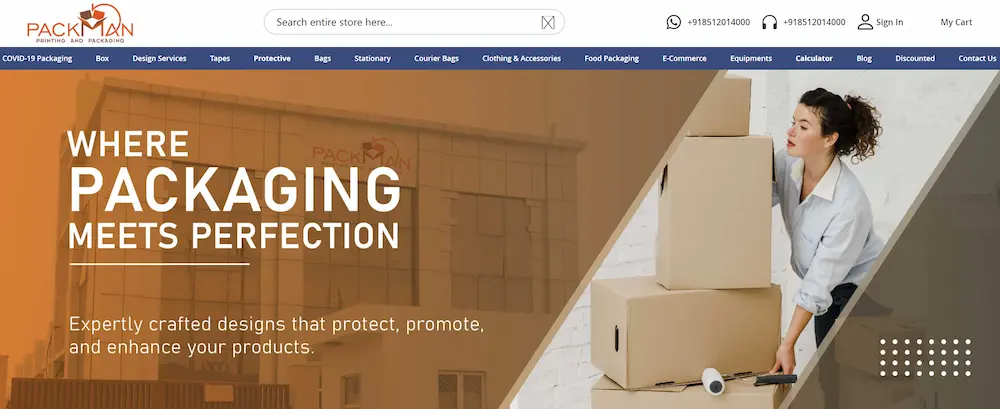
- Website: https://www.packman.co.in/
- Phone: 1800 270 7225
- Email: support@packman.co.in
- Key strengths: States capability in three-ply and five-ply corrugated boxes; publishes customer support hotline and email; offers custom printed options.
Shaligram Packaging
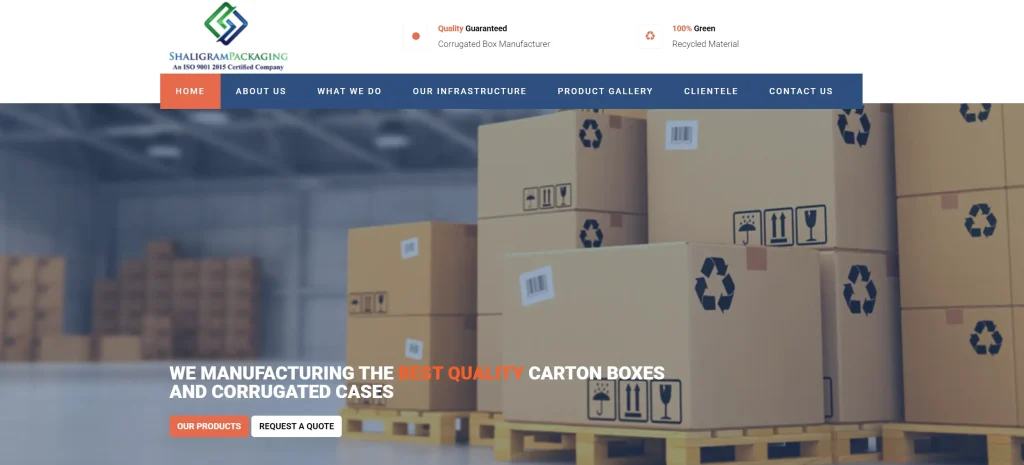
- Website: https://www.shaligrampackaging.com/
- Phone: +91 9168637281 / 82 / 83 / 84
- Email: info@shaligrampackaging.com
- Key strengths: Positions itself as a corrugated box manufacturer supplying five-ply double-wall; publishes multiple enquiry numbers and email.
Dodo Packaging Australia
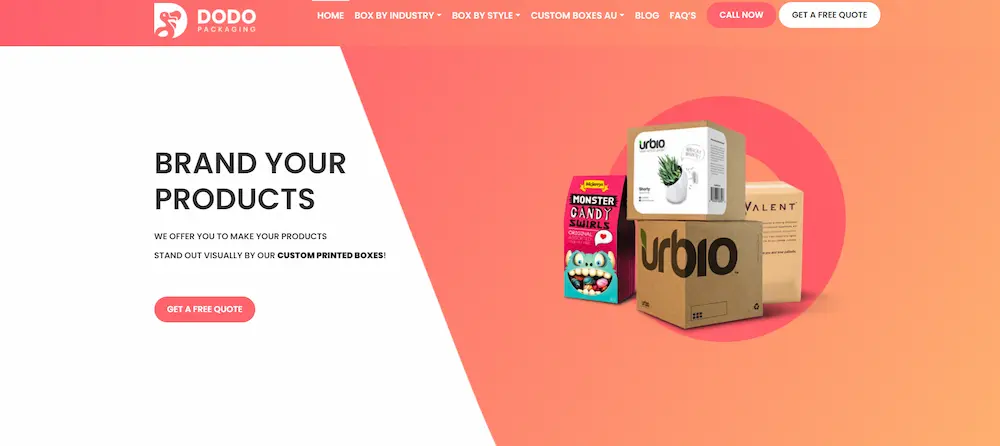
- Website: https://dodopackaging.com.au/
- Phone: 6-129-099-5643
- Email: sales@dodopackaging.com.au
- Key strengths: Publishes a five-ply page that calls itself a five-ply corrugated box manufacturer; lists contact email(s) and phone on its contact page.
Contact details and the referenced five-ply positioning above are taken from each company’s official website pages, including contact/support pages and five-ply product pages.
Where Pakoro fits when you want a responsive custom supplier
Pakoro positions itself as a carton manufacturer with an emphasis on customization, fast turnaround, and lower MOQ accessibility for growing businesses.
Frequently Asked Questions
Is 5-ply corrugated board the same as double wall?
Usually, yes. Five-ply board normally contains three flat liners and two corrugated mediums, which is commonly called double-wall corrugated board.
Is every 5-ply box stronger than a 3-ply box?
Not automatically. Paper grade, flute combination, moisture, box size, joint quality and design influence performance. Compare an agreed test requirement, not layer count alone.
Should buyers specify ECT or BCT?
ECT describes edgewise board strength, while BCT measures compression resistance of the finished carton. Use the measure that matches the distribution risk and validate critical packs with the actual box design.
Which flute combination is best for a 5-ply box?
BC, BE and AB are common examples, but the right combination depends on cushioning, thickness, printing, product weight and stacking conditions. Ask the manufacturer to justify the proposed construction.
Can 5-ply boxes be used for export shipping?
Yes, when the construction, closure, pallet pattern and moisture exposure are suitable for the product and route. Export performance should be confirmed with a sample packing and relevant compression or transit testing.
Are 5-ply corrugated boxes recyclable?
Uncoated corrugated board is widely recyclable where suitable collection systems exist. Coatings, heavy contamination and mixed-material fittings can affect local acceptance, so confirm destination requirements.
What information is needed for a 5-ply box quotation?
Provide internal dimensions, product and gross weight, quantity, stacking conditions, transport route, print, partitions, pallet requirements, destination, Incoterm and any test target.
Conclusion
A capable 5-ply corrugated box manufacturer should translate your product, stacking and shipping conditions into a documented double-wall specification and a testable sample. Compare suppliers on construction, tolerances, quality controls, responsiveness and landed cost—not on a generic “five-ply” description alone.
Updated October 7, 2026 by Melody. Packaging performance guidance should be confirmed against the actual product, inserts, pallet pattern and distribution environment. Supplier capabilities, contact details, minimum orders, pricing and lead times can change; verify them directly before purchasing.