Corrugated cardboard is a ubiquitous material found in everyday life, but few people understand its importance, composition, and various applications. From packaging delicate electronics to shipping bulk goods, corrugated cardboard plays a vital role in modern commerce and industry. This article delves into: what is corrugated cardboard, exploring its history, manufacturing process, types, benefits, and applications. Whether you’re a business owner, a packaging enthusiast, or simply curious, this comprehensive guide will provide valuable insights into this essential material.

Manufacturing Process
Raw Materials
Corrugated cardboard is primarily made from a combination of recycled paper, virgin pulp, and adhesives. The main components include:
- Linerboard: The flat, outer facings of corrugated cardboard.
- Medium: The fluted, wave-like paper between the linerboards.
Corrugation Process
The manufacturing process involves several key steps:
- Pulping: Wood chips or recycled paper are pulped to create a slurry of fibers.
- Paper Making: The slurry is spread onto screens to form paper sheets, which are dried and rolled.
- Corrugating: The medium paper is passed through corrugating rolls, creating the fluted structure.
- Lamination: The fluted medium is glued between two linerboards using starch-based adhesives.
- Cutting and Shaping: The corrugated cardboard is cut to size and shape for various applications.

Types of Corrugated Cardboard
Single Face
Single-face corrugated cardboard consists of one linerboard adhered to one fluted medium. It is flexible and used primarily for wrapping.

Single Wall
Single-wall corrugated cardboard features one fluted medium sandwiched between two linerboards. It is the most common type used for shipping boxes and general packaging.

Double Wall
Double-wall corrugated cardboard has two fluted mediums and three linerboards, providing extra strength and durability. It is ideal for heavy-duty packaging.

Triple Wall
Triple-wall corrugated cardboard comprises three fluted mediums and four linerboards. It is the strongest type, used for industrial applications and heavy goods.

Benefits of Corrugated Cardboard
Strength and Durability
Corrugated cardboard is known for its strength and durability. The fluted structure provides rigidity and cushioning, protecting goods during transit.
Lightweight
Despite its strength, corrugated cardboard is lightweight, reducing shipping costs and making it easy to handle.
Cost-Effective
Corrugated cardboard is cost-effective due to its low material and production costs. It is also widely available, making it an economical choice for packaging.
Eco-Friendly
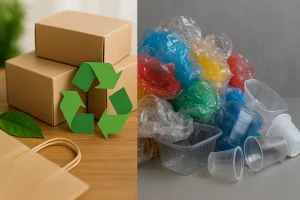
Corrugated cardboard is highly recyclable and biodegradable, making it an environmentally friendly packaging option. Many manufacturers use recycled materials, further reducing its environmental impact.
Versatility
Corrugated cardboard can be customized in terms of size, shape, and printing, making it suitable for a wide range of applications.
The History of Corrugated Cardboard
Early Beginnings
The origins of corrugated cardboard date back to the 19th century. In 1856, Englishmen Edward Allen and Edward Healy patented a process for corrugating paper, which was initially used as a liner for tall hats. This early form of corrugated paper provided extra cushioning and insulation.
Evolution into Packaging
It wasn’t until 1871 that corrugated cardboard began to be used for packaging. Albert Jones of New York patented single-sided corrugated board for wrapping bottles and glass lantern chimneys. By 1874, Oliver Long improved upon this by adding a second liner, creating the first double-sided corrugated board. This innovation marked the beginning of corrugated cardboard as a primary packaging material.
Industrialization and Standardization
The late 19th and early 20th centuries saw the industrialization of corrugated cardboard production. The invention of the corrugator machine in 1874 by G. Smyth and the subsequent development of automated machinery revolutionized the industry. By the early 1900s, corrugated cardboard had become a standardized material used widely in shipping and packaging.
Applications of Corrugated Cardboard
Shipping and Packaging
Corrugated cardboard is the material of choice for shipping and packaging due to its protective properties and cost-effectiveness. It is used to ship everything from consumer electronics to bulk industrial goods.
Retail Displays
Retailers use corrugated cardboard for point-of-purchase displays, signage, and packaging. Its printability and ease of customization make it ideal for marketing and branding purposes.
Storage
Corrugated cardboard boxes are commonly used for storage in homes, offices, and warehouses. They provide a sturdy and stackable solution for organizing items.
Insulation
In addition to packaging, corrugated cardboard is used for insulation in construction. Its fluted structure provides thermal and sound insulation.
Creative Uses
Artists and designers often use corrugated cardboard for creative projects, including sculptures, furniture, and architectural models.
Environmental Impact
Recycling
Corrugated cardboard is one of the most recycled materials in the world. Recycling reduces the need for virgin materials, conserves resources, and decreases landfill waste.
Sustainability
Many manufacturers are committed to sustainable practices, using renewable resources and minimizing waste. Advances in production technology have also made the manufacturing process more energy-efficient.
Biodegradability
Unlike plastic and other non-biodegradable materials, corrugated cardboard breaks down naturally over time, reducing its environmental footprint.
The Future of Corrugated Cardboard
Innovations in Design
As sustainability becomes increasingly important, innovations in corrugated cardboard design are on the rise. These include lightweight yet strong materials, water-resistant coatings, and advanced printing techniques.
Smart Packaging
The integration of technology into corrugated cardboard, such as QR codes and RFID tags, is transforming packaging. Smart packaging enhances supply chain management, improves product tracking, and offers interactive consumer experiences.
Eco-Friendly Alternatives
Researchers are exploring eco-friendly alternatives to traditional corrugated cardboard, such as biodegradable coatings and sustainable adhesives. These innovations aim to further reduce the environmental impact of packaging.