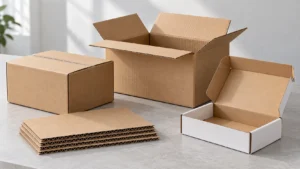
Protective packaging manufacturers design and produce materials or packaging systems that reduce shock, vibration, abrasion, compression, moisture, and product movement during storage and transportation.
The right manufacturer depends on what you are shipping, how fragile the product is, your order quantity, destination market, and whether you need a fitted insert, a complete custom box, or automated packing equipment.
For a quick answer:
- Pakoro is a practical option for custom boxes and fitted protective inserts.
- Sealed Air, Pregis, and Storopack offer broad cushioning materials and automated packing systems.
- Ranpak specializes in paper-based protective packaging.
- Smurfit Westrock and International Paper/DS Smith are particularly strong in corrugated and fiber-based packaging.
- Nefab and Signode are suitable for industrial products, export packaging, and pallet protection.
This guide compares 10 notable protective packaging companies. It should be used as a sourcing shortlist rather than a universal ranking.
Table of Contents
- Protective Packaging Manufacturers at a Glance
- 1. Pakoro
- 2. Sealed Air
- 3. Pregis
- 4. Smurfit Westrock
- 5. Storopack
- 6. Ranpak
- 7. Sonoco
- 8. International Paper and DS Smith
- 9. Nefab
- 10. Signode
- How to Choose a Protective Packaging Manufacturer
- Information to Include in Your RFQ
- Frequently Asked Questions
Protective Packaging Manufacturers at a Glance
| Manufacturer | Primary Base | Main Strengths | Best Suited For |
|---|---|---|---|
| Pakoro | Shenzhen, China | Custom corrugated and rigid boxes; EVA, EPE, foam, and paper inserts | Branded packaging and fitted inserts |
| Sealed Air | United States | Bubble cushioning, foam-in-bag, paper, mailers, and automation | Large fulfillment and industrial operations |
| Pregis | United States | Inflatable cushioning, paper, foam, mailers, and automation | E-commerce and high-speed packing lines |
| Smurfit Westrock | Ireland/United States | Corrugated packaging, paperboard, fiber protection, and automation | Multinational corrugated programs |
| Storopack | Germany | Paper cushioning, air cushions, loose fill, and foam systems | Warehouses packing different products |
| Ranpak | United States | Paper void fill, cushioning, wrapping, and automation | Businesses replacing plastic void fill |
| Sonoco | United States | Engineered and temperature-assurance packaging | Industrial, healthcare, and sensitive products |
| International Paper/DS Smith | United States/Europe | Corrugated and fiber-based protection | High-volume North American and European programs |
| Nefab | Sweden | Engineered crates, cushioning, and logistics optimization | High-value industrial equipment |
| Signode | United States | Edge protection, strapping, wrapping, and equipment | Palletized and heavy industrial loads |
Selection note: The “best” protective packaging manufacturer depends on your product fragility, shipping hazards, order volume, location, and required services. Ask shortlisted suppliers to solve the same packaging brief and compare total landed cost and verified test performance—not unit price alone..
1. Pakoro
- Phone: +86 13149910371
- Email: bpf2000@foxmail.com
- Website: https://www.pakoro.com

Pakoro focuses on custom foam and wrap solutions. You can minimize damage and reduce waste with their eco-friendly approach.
Pakoro is known for customized foam inserts and specialty wraps. You’ll find that they prioritize eco-friendly materials without sacrificing strength.
Their attention to detail will help you deliver products in pristine condition. Furthermore, they make it easy to request bespoke packaging that fits your brand’s exact needs.
Key Products:
- Foam inserts
- Corrugated wraps
- Biodegradable fillers


“An e-commerce store shipping fragile ceramics switched to Pakoro’s custom foam inserts. They saw a significant drop in breakage rates and a surge in positive reviews.”
“We design foam solutions that are not only protective, but also gentle on the planet.” – Pakoro
2. Sealed Air Corporation
- Phone: +1 800-648-9093
- Email: info@sealedair.com
- Website: https://www.sealedair.com

Sealed Air Corporation is an industry giant with innovations like bubble wrap and inflatable cushioning. You’ll love their top-notch product protection and focus on recycled materials.
Sealed Air is known for bubble wrap and cushioning innovations. You can also explore their recyclable materials for a more sustainable brand image.
They are also committed to reducing waste, which appeals to businesses aiming for a lighter carbon footprint.
“Keep your customers happy with packaging designed to save costs and reduce damage.” – Sealed Air
“A global retailer used Sealed Air’s Bubble Wrap and inflatable cushions. They reduced transit damage by over 50%, resulting in fewer returns and happier customers.”
Request a quote
3. Pregis LLC
- Phone: +1 (847) 597-9200
- Email: info@pregis.com
- Website: https://www.pregis.com

“Choose packaging that’s efficient to store and quick to set up.” – Pregis
“A fresh food e-commerce business leveraged Pregis’s air pillows, ensuring products arrived in top condition and delighting customers with pristine packaging.”
You’ve probably seen their air pillow and foam packaging solutions. Pregis creates lightweight and durable options that are popular for e-commerce shipments.
Pregis specializes in air pillows and foam packaging. You’ll save on shipping costs due to lightweight materials, while still protecting your goods.
They also work to lower material usage, so you can pack more goods without adding extra weight.
Request a quote4. Smurfit Kappa Group
- Phone: +353 (1) 2027000 (Headquarters)
- Email: info@smurfitkappa.com
- Website: https://www.smurfitkappa.com

Smurfit Kappa Group excels in paper-based and corrugated box solutions. They emphasize renewable and biodegradable packaging that meets rigorous international standards.
Smurfit Kappa focuses on paper-based and corrugated packaging. If you need global supply chain support and eco-friendly materials, their solutions can fit your needs.
“Get greener while safeguarding your cargo.” – Smurfit Kappa
“A furniture retailer partnered with Smurfit Kappa to develop a paper-based cushioning solution. They successfully reduced plastic usage and saw positive customer feedback.”
If you seek an eco-conscious partner that offers consistent quality, you’ll appreciate their global reach.
Request a quote5. Storopack
- Phone: +1 (513) 874-0314
- Email: packaging.us@storopack.com
- Website: www.storopack.us

Storopack stands out for loose fill peanuts, paper cushioning, and foam-in-place systems. They engineer solutions that adapt to products of any shape.
Storopack provides loose fill peanuts, paper cushioning, and foam-in-place. You’ll benefit from faster pack times and flexible solutions to accommodate products of all shapes.
“We turn the hassle of packaging into a breeze.” – Storopack
“An international online retailer used Storopack’s loose fill and foam-in-place systems. Shipments remained intact despite long-distance travel, satisfying customers across borders.”
You’ll enjoy saving time on packing, and your customers will thank you for items that arrive intact.
Request a quote6. Ranpak Holdings
- Phone: +44 788 1274 288
- Email: midson.diana@ranpak.com
- Website: https://www.ranpak.com

Ranpak is famous for paper-based cushioning, void fill, and wrapping solutions. Their approach helps reduce plastic usage, which aligns with many modern sustainability goals.
Ranpak is renowned for paper cushioning and automated solutions. With them, you can handle high shipment volumes while reducing your environmental impact.
“Experience paper-based innovation at its finest.” – Ranpak
“A beauty brand adopted Ranpak’s paper-based cushioning and void fill. They lowered their plastic consumption and improved their green reputation.”
They also offer automated systems that boost productivity during peak shipping seasons.
Request a quote7. Berry Global
- Phone: +1 (812) 424-2904
- Email: info@berryglobal.com
- Website: https://www.berryglobal.com

Berry Global specializes in flexible films, bags, and plastic packaging. Despite using plastics, they invest heavily in recycling and product development.
Berry Global leads in flexible films and plastic packaging. You can customize their solutions to achieve both a professional look and reliable protection.
“Protect your goods with versatile solutions that get noticed.” – Berry Global
“A personal care company needed leak-proof packaging. Berry Global supplied durable plastic films, boosting brand trust and product appeal.”
You can choose from customizable films that offer durability and a professional finish.
Request a quote8. Intertape Polymer Group (IPG)
- Phone: +1-888-898-7834
- Email: info@itape.com
- Website: https://www.itape.com

IPG offers tapes, films, and protective mailers. Their broad product range means you can find a tape for every sealing need.
IPG’s portfolio includes tapes, films, and mailers. You’ll find products that seal boxes securely and stand out with customizable branding options.
“Seal every box with confidence and style.” – IPG
“A logistics firm chose IPG’s high-strength tapes and protective mailers, cutting down on the need for extra reinforcements and improving packaging efficiency.”
They also provide solutions that enhance branding through printed or colored options.
Request a quote9. Sonoco Products Company
- Phone: +1 (843) 383-7000
- Email: corpinfo@sonoco.com
- Website: https://www.sonoco.com

Sonoco delivers rigid, semi-rigid, and paper packaging. Their designs are well-regarded for structure and sustainability.
Sonoco offers rigid, semi-rigid, and paper packaging. If you want strong structural designs that also support sustainability, they can be a solid partner.
“Combine performance and planet-friendly design.” – Sonoco
“A snack manufacturer used Sonoco’s rigid paperboard cans to enhance shelf appeal and improve shipping stability.”
By partnering with Sonoco, you’ll discover a diverse portfolio that covers food, healthcare, and retail goods.
Request a quote10. DS Smith
- Phone: +44 (0)20 7756 1800 (Headquarters in the UK)
- Email: media@dssmith.com
- Website: https://www.dssmith.com

DS Smith crafts corrugated boxes, retail displays, and industrial packaging. They promote circular design to minimize waste at every stage.
DS Smith excels in corrugated packaging and circular design. You’ll lower waste and strengthen your brand’s eco-friendly reputation with their help.
“Pack your products with confidence and a clear conscience.” – DS Smith
“An appliance manufacturer collaborated with DS Smith to reduce logistics costs by 15%. Their newly designed corrugated boxes maximized space and minimized breakage.”
You’ll likely benefit from their end-to-end services, including design, testing, and recycling support.
Request a quoteHow to Choose a Protective Packaging Manufacturer
The best manufacturer is the one that can demonstrate adequate product protection at an acceptable total delivered cost.
1. Define the Product and Distribution Hazards
Provide the supplier with the product dimensions, weight, fragility, surface sensitivity, and value.
Explain whether the shipments will move by courier, truck, air, or sea and whether they will be palletized. Identify potential hazards such as:
- Drops
- Vibration
- Compression
- Abrasion
- Humidity
- Temperature changes
- Dust
- Corrosion
- Repeated handling
Without this information, a manufacturer may recommend too much packaging or a solution that does not provide adequate protection.
2. Identify the Required Protective Function
| Protective Function | Purpose | Common Solutions |
|---|---|---|
| Cushioning | Absorbs shock and vibration | Foam, molded pulp, paper pads, and air cushions |
| Blocking and bracing | Prevents movement inside the box | Fitted inserts, corrugated partitions, and foam end caps |
| Void fill | Occupies unused space | Kraft paper, air pillows, and loose fill |
| Surface protection | Prevents scratches and abrasion | Foam sheets, tissue, films, and sleeves |
| Barrier protection | Limits moisture, dust, or corrosion | Liners, barrier bags, desiccants, and VCI materials |
| Load containment | Stabilizes cartons or heavy products | Strapping, stretch film, and edge boards |
A product may require more than one protective function.
For example, void fill can prevent movement, but it does not necessarily provide sufficient cushioning for a fragile product.
3. Compare Total Packaging Cost
Do not compare only the unit price of the box or cushioning material.
Your total packaging cost may include:
- Structural design
- Tooling
- Sample production
- Packaging materials
- Equipment
- Labor
- Storage
- Freight
- Customs duties
- Damaged-product replacement
- Customer returns
A better-designed box may have a higher unit price but reduce dimensional freight, packing time, and product damage.
4. Request Prototypes and Performance Testing
Always test the packed product rather than testing an empty box.
Depending on the product and shipping channel, the testing process may include:
- Drop testing
- Random vibration testing
- Compression testing
- Climatic conditioning
- Temperature testing
- Pallet stability testing
ISTA and ASTM methods are frequently used for transport packaging tests. The appropriate test protocol and acceptance criteria should be agreed upon before production.
5. Verify Manufacturing and Quality Controls
Ask the supplier:
- Who manufactures each packaging component?
- Which tolerances are controlled?
- How are incoming materials inspected?
- How are finished products tested?
- Can the supplier provide pre-production samples?
- How are color and printing consistency managed?
- How are nonconforming products handled?
Depending on the application, relevant documentation may include FSC chain-of-custody certification, ISO quality systems, material safety data, food-contact reports, or other compliance documents.
6. Confirm Commercial and Logistics Details
Before placing an order, confirm:
- MOQ
- Price breaks
- Sample charges
- Tooling charges
- Tooling ownership
- Production lead time
- Incoterm
- Shipping method
- Carton dimensions
- Carton quantity
- Gross weight
- Total CBM
- Artwork format
- Printing color standard
- Replacement policy for nonconforming products
Information to Include in Your RFQ
A complete request for quotation should include:
- Product name, dimensions, and weight
- Product photos, drawings, or a physical sample
- Quantity per order
- Estimated annual purchasing volume
- Preferred box and insert style
- Printing and branding requirements
- Surface finish requirements
- Destination country and postal code
- Preferred shipping method
- Required delivery date
- Sustainability or certification requirements
- Known damage risks
- Target packaging test standard
- Whether you need structural design support
The more complete your RFQ is, the more accurately manufacturers can compare materials, protection performance, and delivered costs.
Frequently Asked Questions
What Is Protective Packaging?
Protective packaging is any material, component, or packaging system designed to prevent damage from shock, vibration, compression, abrasion, moisture, contamination, or movement during handling, storage, and transportation.
Examples include corrugated boxes, fitted foam inserts, molded pulp, paper cushioning, air pillows, partitions, barrier bags, and pallet-stabilization materials.
Which Protective Packaging Material Is Best for Fragile Products?
There is no single best material for every fragile product.
EVA or polyethylene foam can work well for delicate, high-value products. Molded pulp and engineered corrugated inserts can provide fiber-based alternatives. Paper pads and air cushions are frequently used for cushioning or void fill.
The final packaging system should be tested using the actual product and expected distribution conditions.
What Is the Difference Between Cushioning and Void Fill?
Cushioning absorbs impact and vibration, while void fill occupies empty space to reduce product movement.
A fragile product may need both. Simply filling the empty space inside a carton does not guarantee sufficient protection against shock.
Can Protective Packaging Be Recyclable?
Yes.
Corrugated board, molded pulp, and many paper-based cushioning materials are widely recyclable where suitable collection systems exist.
Some polyethylene foams and plastic films can also be recycled through designated recycling streams. Businesses should confirm local acceptance and material combinations before making recyclability claims.
How Much Does Custom Protective Packaging Cost?
The cost depends on:
- Packaging dimensions
- Material
- Structural design
- Tooling
- Printing
- Surface finishes
- Order quantity
- Shipping destination
To receive an accurate quotation, provide the product dimensions and weight, required quantity, delivery location, and performance requirements.
What Tests Should Protective Packaging Pass?
Common evaluations include:
- Drop testing
- Random vibration testing
- Compression testing
- Temperature testing
- Humidity or climatic conditioning
ISTA and ASTM testing methods are frequently used, but the correct protocol should reflect the specific product and distribution environment.
What Is the Typical MOQ for Custom Protective Packaging?
The MOQ varies according to the packaging type and manufacturer.
Stock cushioning products may be purchased in relatively small case quantities. Custom printed boxes, molded components, and fitted inserts often require hundreds or thousands of units because of tooling and production setup costs.
Higher quantities usually reduce the unit cost.
How Can I Reduce Shipping Damage Without Overpacking?
Start by identifying the actual reason for the damage.
Right-size the outer carton, immobilize the product, and place cushioning only where testing shows that it is necessary. A packaging engineer can then reduce excess materials while maintaining the required protection.
Final Recommendation
Choose a protective packaging manufacturer according to the problem you need to solve:
- For a custom box and fitted insert from one supplier, consider Pakoro.
- For broad material choices and automated packaging systems, compare Sealed Air, Pregis, and Storopack.
- For paper-based cushioning and void fill, evaluate Ranpak.
- For large corrugated packaging programs, compare Smurfit Westrock and International Paper/DS Smith.
- For industrial export packaging, consider Nefab.
- For pallet and unit-load protection, evaluate Signode.
Send the same RFQ to two or three suitable manufacturers, request prototypes, and compare verified performance, total landed cost, lead time, and local service coverage.
Contact Pakoro for a custom protective packaging proposal based on your product, order quantity, and delivery destination.