Are you struggling to decide between offset printing and screen printing for your next packaging project?
As a packaging expert at Pakoro, I’m here to guide you through these two popular processes and help you make an informed decision.
This article uses plain English, provides the most valuable information right up front, and gives you a friendly nudge to reach out to us if you have questions.
Introduction to Printing Methods

You’ve probably noticed how beautiful packaging can elevate a product.
Whether you’re producing vibrant boxes for a new product launch or refined brochures for a trade show, the printing method you choose plays a huge role in the final look and feel.
Offset printing and silk screen printing (also known simply as screen printing) are two of the most common techniques.
Both are tried‑and‑true; however, they differ in process, cost and application.
Before diving into the details, here’s why you should care: offset printing is renowned for high‑resolution images and is cost‑efficient at scale, while screen printing offers tactile richness and substrate flexibility.
Your choice affects everything from color accuracy to unit price, so let’s explore each method together.
How Offset Printing Works and Why It Excels

Offset printing is an automated lithographic process where images are transferred from a plate to a rubber blanket and then onto the paper.
This indirect transfer ensures exceptionally sharp details and consistent quality.
Because the setup involves creating plates and calibrating colors, it requires more time upfront.
However, once the press starts rolling, the per‑unit cost drops significantly on large runs.
Here’s why offset might be the best choice for your project:
- High detail and resolution – Fine lines, small text and intricate graphics are reproduced with incredible clarity due to high‑resolution plates and refined color management.
- Color accuracy and consistency – Using the CMYK color model, offset printing provides faithful color reproduction across thousands of copies. If you need precise brand colors, this method shines.
- Versatile paper options – Offset presses handle a wide range of paper types, coatings and specialty finishes, giving you creative freedom for premium packaging.
- Efficiency at scale – Because setup costs are amortized over longer runs, offset is most cost‑effective when printing more than about 2,500 units.
- Sustainability – Modern offset presses use soy‑ and vegetable‑based inks and feature efficient plate making and automation, reducing waste and environmental impact.
Offset printing shines when you need large quantities with impeccable detail and consistent color.
Imagine printing 500,000 catalogues or thousands of luxury packaging boxes; offset will deliver sharp images and keep per‑unit costs low.
What Makes Screen Printing Unique

Screen printing is a more hands‑on technique that uses a mesh screen and a squeegee to push ink directly onto the printing surface.
Each color requires its own stencil, and the ink sits on top of the material, creating a textured effect.
This method’s flexibility extends beyond paper:
- Tactile and textured finishes – Screen printing allows for thicker ink deposits, resulting in raised, three‑dimensional textures that invite touch. This is ideal for bold logos or designs where you want depth.
- Wide range of substrates – Unlike offset printing, screen printing works on fabrics, glass, ceramics, metals, plastics and more. If you’re printing on a tote bag or a metal sign, this is your go‑to.
- Rich color options – Ink can be mixed to match Pantone colors and can include metallics, fluorescents and special effects. Want glittery packaging or glow‑in‑the‑dark labels? Screen printing delivers.
- Suitable for small to medium runs – Setup is relatively simple, making screen printing economical for shorter runs or varied designs.
- Evolving with technology – Screen printing is adapting to the digital age. Computer‑to‑screen (CTS) systems streamline pre‑press work by imaging directly onto screens, improving accuracy and speed. Sustainable practices like water‑based inks and eco‑friendly substrates are also gaining traction, reducing VOC emissions and lowering environmental impact.
If you’re producing custom apparel, promotional items or packaging with special effects, screen printing offers tactile appeal and versatility.
Head‑to‑Head: Offset vs. Screen Printing

Choosing between offset and screen printing involves balancing cost, quality, material and design objectives. To simplify your decision, here’s a quick comparison across key factors:
| Factor | Offset Printing | Screen Printing |
|---|---|---|
| Print quality | High resolution and crisp detail | Bold, textured designs with raised ink |
| Color range & accuracy | Uses CMYK for consistent color matching | Custom-mixed inks allow metallic and fluorescent colors |
| Substrate versatility | Ideal for paper-based packaging, magazines and brochures | Suitable for fabric, glass, metal, plastic, paper and more |
| Run length & cost | High setup cost but economical for large runs | Lower setup cost; better for small to medium runs |
| Special effects | Limited to coatings and finishes (e.g., spot gloss) | Offers textured, glitter, metallic and glow-in-the-dark options |
| Environmental impact | Improved via vegetable‑based inks and efficient automation | Moving toward water‑based inks and eco-friendly materials |
| Technology trends | Hybrid offset/digital workflows enhance personalization | CTS and hybrid digital technologies enhance detail and efficiency |
This table shows there is no one-size-fits-all answer. Instead, think about your project’s priorities and use the strengths of each technique to your advantage.
How to Choose the Best Method for Your Packaging
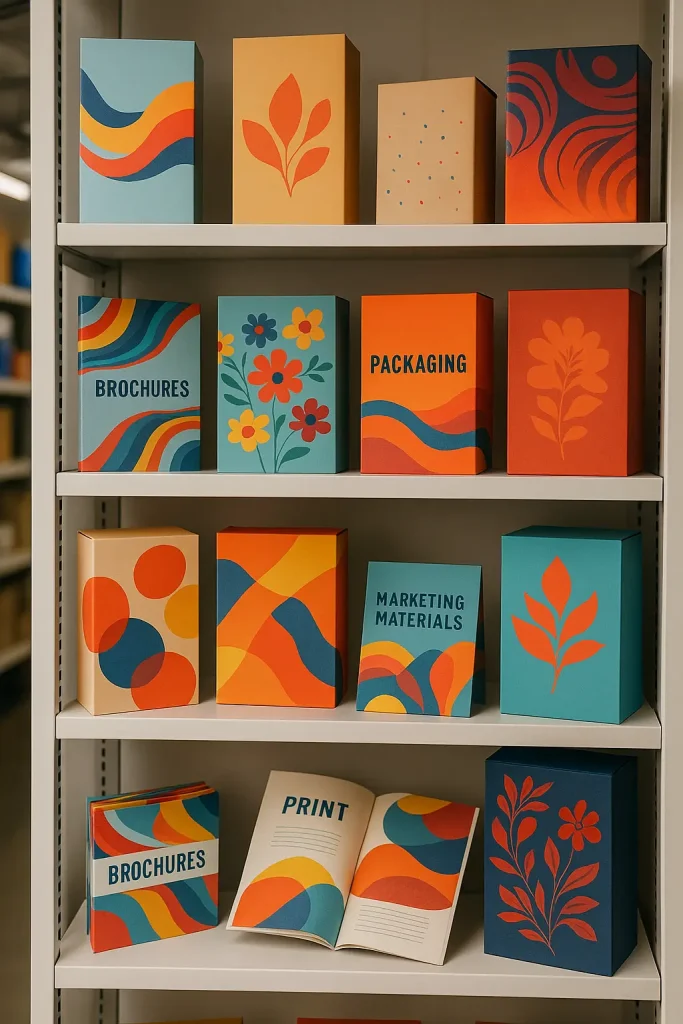
When selecting a printing method, consider the following questions:
- How many pieces do you need? If you’re printing thousands of units, offset will likely offer the lowest per‑unit cost. For limited runs or multiple variations, screen printing can be more economical.
- What material are you using? Offset excels on paper but struggles with fabrics or plastics. Screen printing handles diverse substrates, including textile packaging, glass bottles and metal tins.
- Do you need special effects? For tactile packaging, metallic inks, or glow-in-the-dark elements, screen printing is your friend. Offset printing offers options like spot gloss and textured paper but not thick ink deposits.
- What about color precision? When brand colors must be matched exactly or fine details are critical (think small text or intricate patterns), offset provides consistent reproduction. For vibrant color mixes and unique inks, screen printing’s flexibility shines.
- Is sustainability important? Both methods are evolving. Modern offset presses use eco-friendly inks and minimize waste. Screen printing’s shift to water-based inks and recycled substrates is reducing VOCs and supporting greener production.
- Do you need personalization? Digital printing can layer personalization onto offset-printed materials. Similarly, hybrid screen/digital workflows enable intricate designs on short runs.
As you consider these factors, picture your finished product. Do you imagine smooth, crisp packaging for a high-end product line? Or are you visualizing textured, eye-catching labels for a small batch of artisan goods? Understanding your brand message and production constraints helps determine which process best meets your goals.
Still uncertain? Don’t worry—this is where partnership comes in. At Pakoro, we work closely with clients to review materials, run cost analyses and produce samples. Please contact us at Melody@pakoro.com to discuss your project. We will be happy to guide you in selecting materials, colours and finishes.
Final Thoughts: Blending Tradition and Innovation
Offset printing and screen printing are both valuable tools in a packaging professional’s toolkit. Offset offers precision, efficiency and high-volume capability—ideal for large runs of boxes, catalogs or brochures. Screen printing delivers tactile richness, flexible substrates and creative effects perfect for limited runs and specialty packaging.
As we look toward 2025 and beyond, it’s exciting to see these methods evolving. Hybrid workflows combine offset’s speed and consistency with digital customization, while screen printing embraces digital pre‑press, automation and eco-friendly practices. Rather than choosing one over the other, many brands strategically use both to balance cost, quality and creativity.