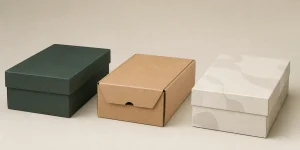
Measuring box dimensions accurately is essential for various tasks, from packaging gifts to shipping products and storing items. Knowing the exact dimensions of your boxes ensures that your items fit perfectly and arrive safely. In this article, you’ll learn the essential steps and considerations of how to measure box dimensions, including the importance of the order in which dimensions are listed and how to determine height, width, and depth.
LWH: Length, Width, Height – How to Measure Box Dimensions
Understanding Box Dimensions
When measuring box dimensions, you typically represent them in the order of length (L), width (W), and height (H). These dimensions are crucial for ensuring that the box will adequately contain your items and fit within the constraints of storage or shipping space.
Length is the longest side of the box, width is the shorter side on the same plane, and height is the dimension perpendicular to the length and width. Measuring these dimensions accurately ensures that your items will fit as intended.
Measuring Length, Width, and Height
To measure box dimensions accurately, follow these steps:
- Length (L): Measure the longest side of the box. Place your measuring tool along the length and record the measurement. This side is usually parallel to the box opening.
- Width (W): Measure the shorter side of the box on the same plane as the length. The width is perpendicular to the length and should be measured from one end to the other on the shorter side.
- Height (H): Measure the vertical dimension of the box. This is the side perpendicular to both the length and width and is often referred to as the depth when the box is upright.
1. In the case of a tall or upward-facing box, the depth will be the most prominent dimension, while the length and width will be smaller.

2. As seen below, the depth and width will be much smaller than the length of long boxes.

Practical Example
Suppose you have a rectangular shipping box. To measure it:
- Length: If the longest side measures 20 inches, this is the length.
- Width: The shorter side on the same plane measures 15 inches, which is the width.
- Height: The vertical side from the base to the top measures 10 inches, which is the height.
Length x Width x Height = Volume
Depth – Understanding and Measuring
What is Depth?
Depth is often used interchangeably with height, particularly in contexts where the box is laid flat rather than upright. Depth represents the distance from the top to the bottom of the box when it is placed on its base. In some cases, especially for shallow containers, depth is a more appropriate term than height.
Measuring Depth
To measure depth:
- Align the Box: Place the box in the position it will be used (e.g., flat on a table if it is a shallow container).
- Measure from Top to Bottom: Using a measuring tape or ruler, measure the distance from the top opening to the bottom of the box.
For example, if a box has a depth of 6 inches, it means there is 6 inches of space from the top opening to the bottom inside surface.
Order of Dimensions – Why It Matters
Standard Order
In the packaging industry, the standard order of listing dimensions is length x width x height (L x W x H). This standardization ensures consistency and clarity when communicating dimensions to manufacturers, suppliers, and customers.
Importance of Order
The order of dimensions is essential for several reasons:
- Manufacturing: Ensures boxes are made to the correct specifications.
- Shipping: Helps determine shipping costs based on size and weight.
- Storage: Aids in efficient space utilization.
Example of Importance
Consider a box with dimensions listed as 10 x 8 x 6 inches (L x W x H). If these dimensions are incorrectly listed as 6 x 10 x 8 inches, it can lead to miscommunication and errors in manufacturing or shipping, potentially causing delays and additional costs.

Case Studies and Real-World Applications
Case Study 1: E-commerce Packaging
Imagine you run an e-commerce business selling handcrafted candles. Your candles are delicate and need to be packaged securely to prevent damage during shipping. Initially, you face numerous complaints from customers about broken candles upon arrival, resulting in high return rates and negative reviews.
Upon investigation, you realize that the problem lies in the incorrect dimensions of the boxes used for shipping. The boxes were either too small, causing the candles to be crammed and break, or too large, allowing the candles to move around and get damaged.
To address this issue, you decide to standardize the measurement practices. You measure the exact dimensions of your candles and determine the appropriate box size. Here’s how you do it:
- Length (L): Measure the longest side of your candle, which is 4 inches.
- Width (W): Measure the width, which is 3 inches.
- Height (H): Measure the height, which is 6 inches.
You then find boxes that are slightly larger than these dimensions to allow for cushioning materials. You choose boxes with dimensions 5 x 4 x 7 inches (L x W x H), ensuring that there is enough space for padding to protect the candles during shipping.
After implementing these standardized measurement practices and using correctly sized boxes, you notice a significant reduction in product damage and return rates. Customer satisfaction improves, leading to positive reviews and increased sales. This case highlights the importance of accurate box dimensions in ensuring product safety and customer satisfaction.
Case Study 2: Custom Packaging Solutions
You are the packaging manager for a company that produces high-end electronic devices, such as tablets and smartphones. These devices are fragile and expensive, requiring secure and precise packaging to prevent any damage during transportation.
You are tasked with designing custom boxes for a new line of tablets. The tablets measure 10 inches in length, 7 inches in width, and 0.5 inches in height. To ensure the tablets are secure during transport, you need to create a box that accommodates the tablet and its accessories, like the charger and user manual.
Here’s how you approach the task:
- Length (L): Measure the longest side of the tablet, which is 10 inches.
- Width (W): Measure the width, which is 7 inches.
- Height (H): Measure the height, which is 0.5 inches.
Next, you consider the accessories and padding required to protect the tablet. You decide that an additional 1 inch of space is needed on each side for cushioning materials. Therefore, the final box dimensions are 12 x 9 x 3 inches (L x W x H).
After creating prototypes and conducting tests, you find that the boxes fit the tablets perfectly, providing enough space for accessories and padding. The custom packaging not only protects the tablets from damage but also enhances the unboxing experience for customers.
The new packaging design reduces breakage rates by 30%, leading to fewer returns and higher customer satisfaction. This case study demonstrates how precise measurement and attention to detail in box dimensions can significantly impact product safety and customer experience.
Statistical Insight
According to a study by the International Safe Transit Association (ISTA), companies that adhere to standardized box dimension practices see a 25% reduction in shipping damages and a 15% improvement in space utilization during storage and transit.
Conclusion
Accurately measuring and listing box dimensions is a fundamental aspect of packaging, shipping, and manufacturing. Understanding the correct order of dimensions (L x W x H) and the difference between height and depth ensures clarity and precision in communication. By following these guidelines, you can enhance efficiency, reduce costs, and improve product safety.
In summary, measuring box dimensions involves:
- Identifying the longest side as length, the shorter side on the same plane as width, and the vertical side as height or depth.
- Ensuring dimensions are listed in the standard order (L x W x H).
- Recognizing the importance of accurate measurements in preventing errors and enhancing operational efficiency.
By implementing these best practices, you can achieve better packaging outcomes, optimize storage, and ensure safe and cost-effective shipping.