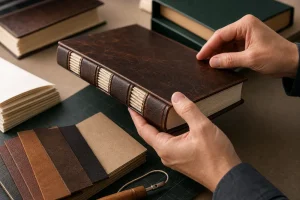
To preserve books long term, keep them clean, dry, upright, and away from direct sunlight. Maintain stable temperature and humidity, handle them carefully, and use acid-free protective boxes for valuable editions.
Whether you collect books, sell them, or publish them, proper storage protects your investment. It also prevents yellow pages, mold, broken spines, faded covers, and insect damage.
At Pakoro, we help publishers and brands produce durable books, slipcases, and custom protective packaging.
1. Handle Your Books Correctly
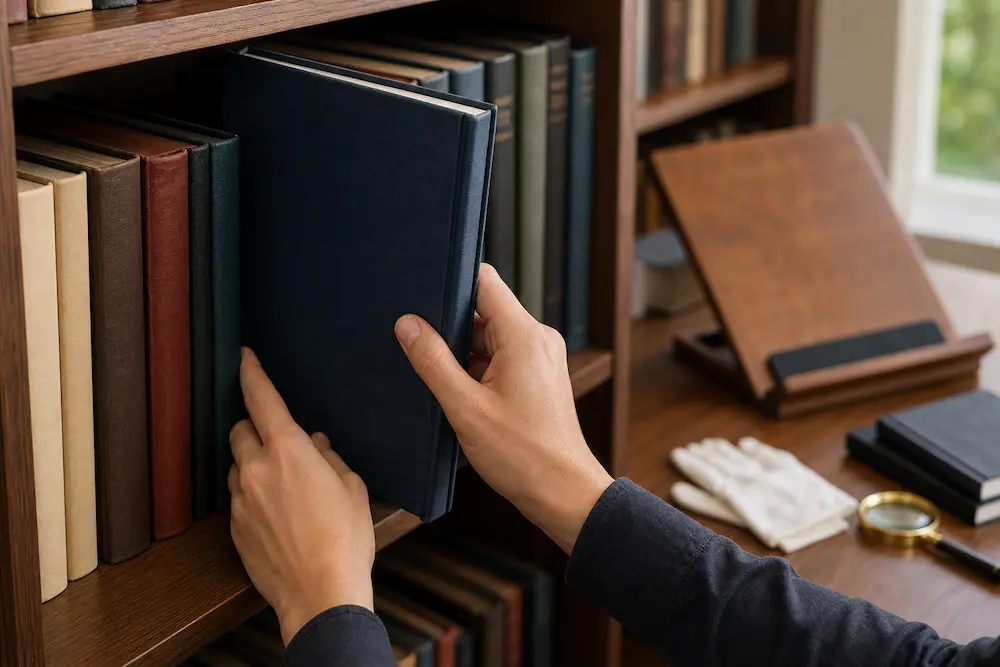
Good book preservation starts with careful handling.
Before touching a book, make sure your hands are clean and dry. Dirt, oil, and moisture can transfer to the cover and pages.
When removing a book from a shelf, do not pull the top of its spine. Instead, push the nearby books back slightly. Then, hold the book around the middle and remove it gently.
You should also:
- Keep food and drinks away
- Avoid folding page corners
- Use a clean bookmark
- Never use paper clips
- Support heavy books with both hands
- Avoid forcing a book to open flat
Cotton gloves are not necessary for most modern books. However, clean gloves may help when handling photographs, metal details, or sensitive materials.
2. Store Books in the Correct Position
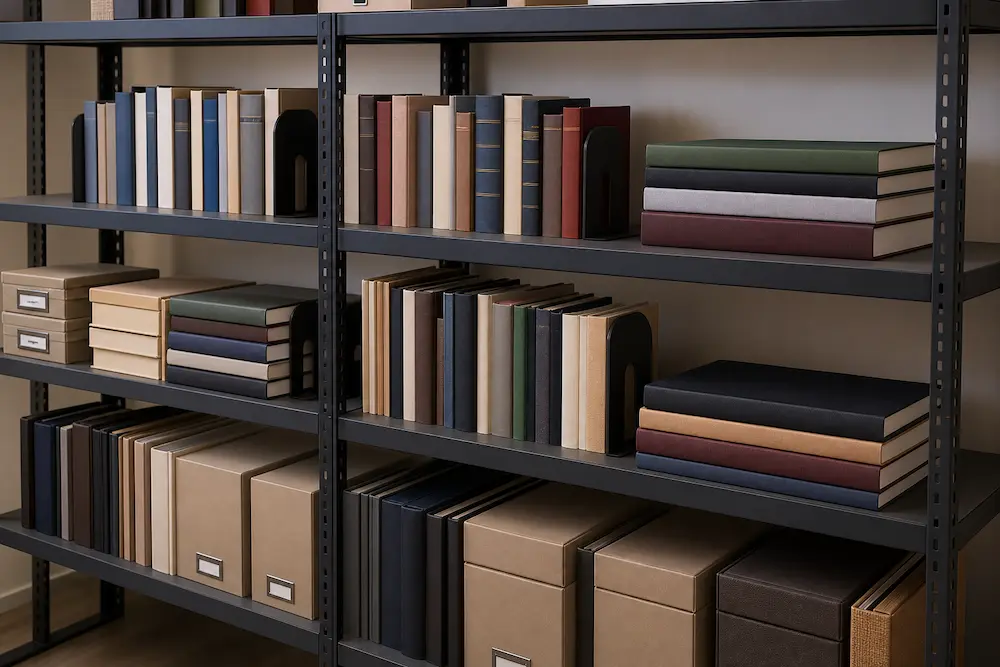
Place most books upright on a stable shelf. Use bookends so they remain straight without being packed too tightly.
Leaning books can slowly damage their bindings. However, overcrowded shelves may also cause damage when you remove a book.
Store large and heavy books flat. Keep each stack small because too much weight can damage the books at the bottom.
For better protection:
- Keep books away from the floor
- Avoid damp exterior walls
- Use smooth, clean shelves
- Leave space for air circulation
- Do not store books with the fore-edge facing down
- Keep books of similar sizes together
Avoid unfinished wood shelves because acids and resins may transfer to your books. If necessary, add an acid-free shelf liner.
3. Control Temperature, Humidity, and Light
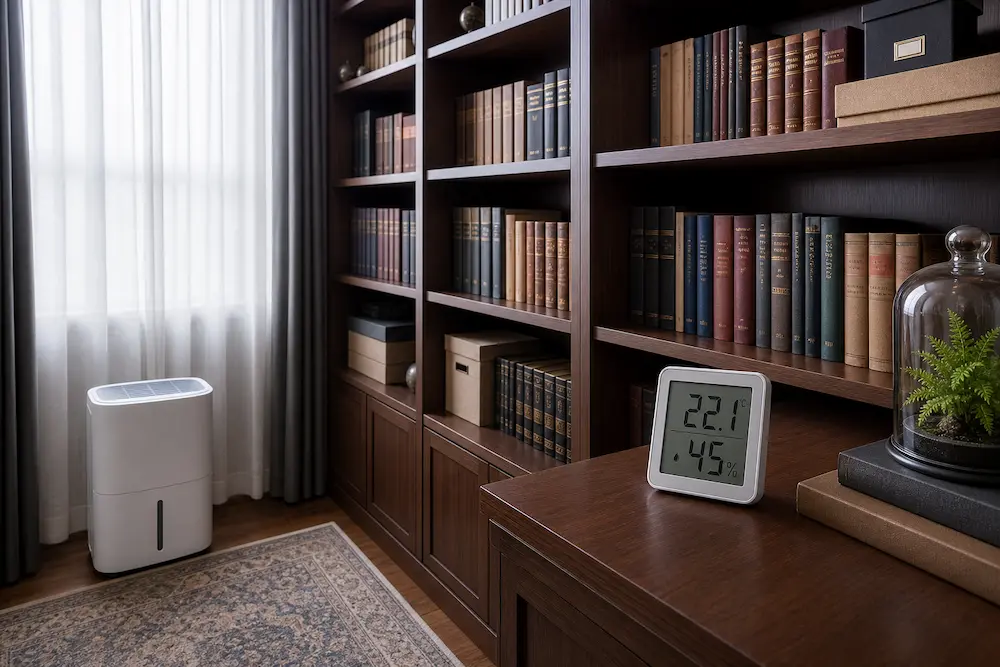
A stable environment is essential when you want to preserve books long term.
High humidity encourages mold and attracts insects. Meanwhile, very dry air can make paper and leather brittle.
For a typical home collection, aim for:
- A cool and stable temperature
- Relative humidity around 40% to 55%
- Good air circulation
- Minimal temperature changes
You can use a small digital monitor to check temperature and humidity. If the room is damp, consider using a dehumidifier.
Do not store valuable books in attics, garages, bathrooms, or damp basements. These areas often experience large environmental changes.
Sunlight can also fade covers and weaken paper. Therefore, place shelves away from direct sunlight. You can also use curtains, blinds, or UV-filtering window film.
Artificial light can cause damage over time as well. Turn off unnecessary lights when the room is not in use.
4. Clean Books and Prevent Pests
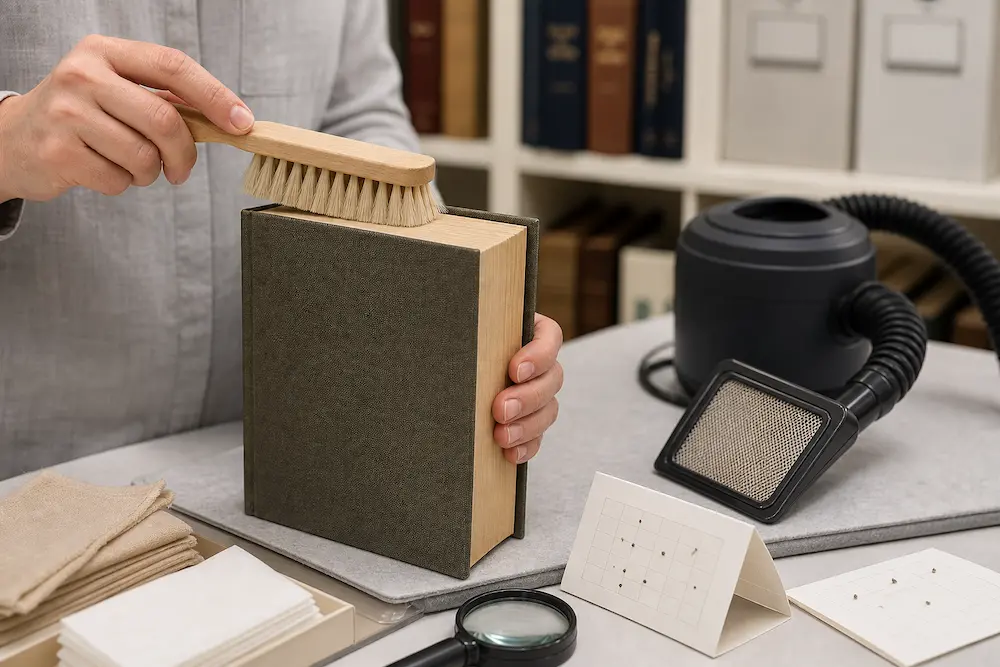
Dust holds moisture and can damage book surfaces. Therefore, clean your shelves and books regularly.
First, remove the books from the shelf. Then, wipe the shelf with a clean cloth and allow it to dry completely.
Use a soft brush to clean each closed book. Brush from the spine toward the outer edge so dust does not enter the binding.
Avoid liquid cleaners unless a trained professional recommends them. Water and household chemicals can stain covers or cause mold.
To reduce pest problems:
- Keep food away from the collection
- Clean shelves regularly
- Check for insects and droppings
- Control indoor humidity
- Inspect secondhand books before shelving
- Avoid storing books in cardboard shipping boxes
If you find active insects, isolate the affected book. Do not spray pesticides directly onto it.
5. Watch for Mold and Water Damage
Mold can spread quickly between books. It can also create health risks.
Common signs include:
- A musty smell
- White, green, or black spots
- Fuzzy growth
- Damp or distorted pages
- Stains that continue spreading
If a book becomes wet, act quickly. Keep it separate from the rest of your collection and improve air circulation.
Do not close a wet book or place it inside a sealed plastic bag. Trapped moisture encourages mold growth.
For valuable, rare, or heavily damaged books, contact a professional conservator. Professional treatment is safer than experimenting with household chemicals.
6. Repair Damaged Books Safely

Do not repair valuable books with standard pressure-sensitive tape. Over time, the adhesive may become yellow, brittle, and difficult to remove.
You should also avoid:
- Strong household glue
- Rubber bands
- Metal staples
- Adhesive labels
- Aggressive cleaning products
- Cutting loose binding materials
Minor repairs may use acid-free materials and reversible adhesives. However, repairing a valuable book requires proper training.
Contact a conservator if your book has:
- Detached boards
- Loose page sections
- Torn illustrations
- Damaged leather
- Active mold
- Serious water damage
- Historical or financial value
A poor repair can cause more damage than the original problem.
7. Use Archival Covers and Book Boxes
A protective enclosure shields your book from dust, light, scratches, and handling damage.
Useful protection options include:
- Acid-free book boxes
- Custom clamshell boxes
- Fitted slipcases
- Archival dust-jacket protectors
- Acid-free tissue paper
- Custom rigid presentation boxes
The enclosure should fit correctly. A tight box may damage the cover, while an oversized box allows the book to move.
Avoid wrapping books permanently in ordinary plastic. Some plastics trap moisture or release chemicals as they age.
Pakoro can produce custom slipcases, clamshell boxes, sleeves, and rigid book packaging based on your book’s exact dimensions.
8. Choose Durable Materials When Printing New Books
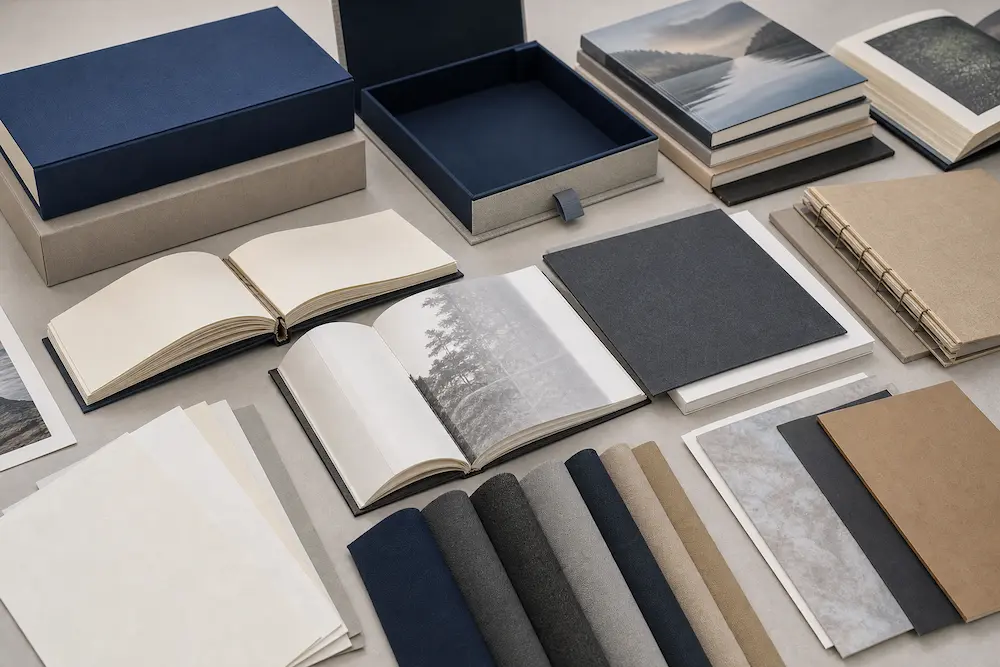
Long-term preservation begins before your book reaches the shelf.
If you are printing a book, choose materials based on its expected lifespan and use. A premium collector’s edition needs different materials from a temporary product catalog.
Consider these options:
- Acid-free interior paper
- Strong cover board
- Durable binding adhesive
- Sewn binding for heavy use
- Protective lamination
- Strong endpapers
- Fade-resistant printing
- Custom protective packaging
A hardcover book with sewn binding usually provides better durability than a low-cost paperback. However, a well-made perfect-bound book can still perform well for many applications.
At Pakoro, we can help you balance durability, appearance, order quantity, and budget.
How Often Should You Inspect Stored Books?
Check your collection at least every few months. More frequent checks may be necessary in humid climates.
During each inspection, look for:
- Dust buildup
- Mold or unusual smells
- Insect activity
- Faded covers
- Leaning books
- Loose pages
- Damaged boxes
- Changes in temperature or humidity
Early action usually makes damage easier and less expensive to manage.
Book Preservation Checklist
For quick reference, follow these 12 tips:
- Handle books with clean, dry hands.
- Remove books without pulling their spines.
- Store normal books upright.
- Store large books flat.
- Keep temperature and humidity stable.
- Protect books from direct sunlight.
- Remove dust regularly.
- Keep food and pests away.
- Check for mold and water damage.
- Avoid ordinary tape and glue.
- Use acid-free protective boxes.
- Inspect your collection regularly.
Protect Your Books with Pakoro
If you are producing books for retail, education, gifting, or collection, packaging can provide valuable long-term protection.
Pakoro can support you with:
- Custom book printing
- Hardcover and paperback binding
- Sewn book production
- Book slipcases
- Clamshell boxes
- Rigid presentation boxes
- Protective sleeves
- Export packaging
Contact Pakoro for custom book printing and protective packaging:[Add Pakoro email, WhatsApp, phone number, or inquiry link]
Final Thoughts
To preserve books long term, focus on stable storage, careful handling, regular cleaning, and suitable protective packaging.
You do not need complicated equipment for a normal collection. However, you should respond quickly when you notice moisture, mold, insects, or binding damage.
With good habits and suitable materials, your books can remain attractive and usable for many years.