Elevate Your Brand and Dazzle Your Customers with Luxurious, Sturdy, and Memorable Packaging
Are you searching for the most comprehensive guide on rigid boxes packaging (often called set-up boxes)?
Then you’ve come to the right place. Rigid box packaging combines exceptional sturdiness, luxurious presentation, and endless customization possibilities.
If you want a high-end feel that leaves a lasting impression, you will want to read on.
Before diving deeper, here is a quick-reference table that summarizes the key points you might be seeking:
| Rigid Boxes (Set-up Boxes) | Folding Cartons | Corrugated Boxes | Flexible Packaging |
|---|---|---|---|
| Already set up, no folding required | Requires folding for assembly | Requires folding for assembly | Highly bendable, changes shape |
| Consistently sturdy, luxurious feel | Lightweight and more flexible | Sturdy and protective | Thin, can be puncture-prone |
| Often used for upscale products, gifts, and premium items | Used for many retail products and general packaging | Preferred for shipping or heavy items | Suited for pouches, wrappers, or lightweight packages |
| High-end look, higher cost | Cost-effective, depends on print and finish | Cost varies, depends on print and finish | Typically low-cost, easily customizable |
| Ideal for a unique unboxing experience | Great for simpler product packaging | Great for bulk shipping or e-commerce | Good for flexible, high-volume needs |
This table should help you see at a glance why rigid boxes stand out if you want a premium packaging experience.
Now, let’s explore this topic in detail.
1. What Are Rigid Boxes?
You may have heard rigid boxes referred to as set-up boxes or even premium packaging.
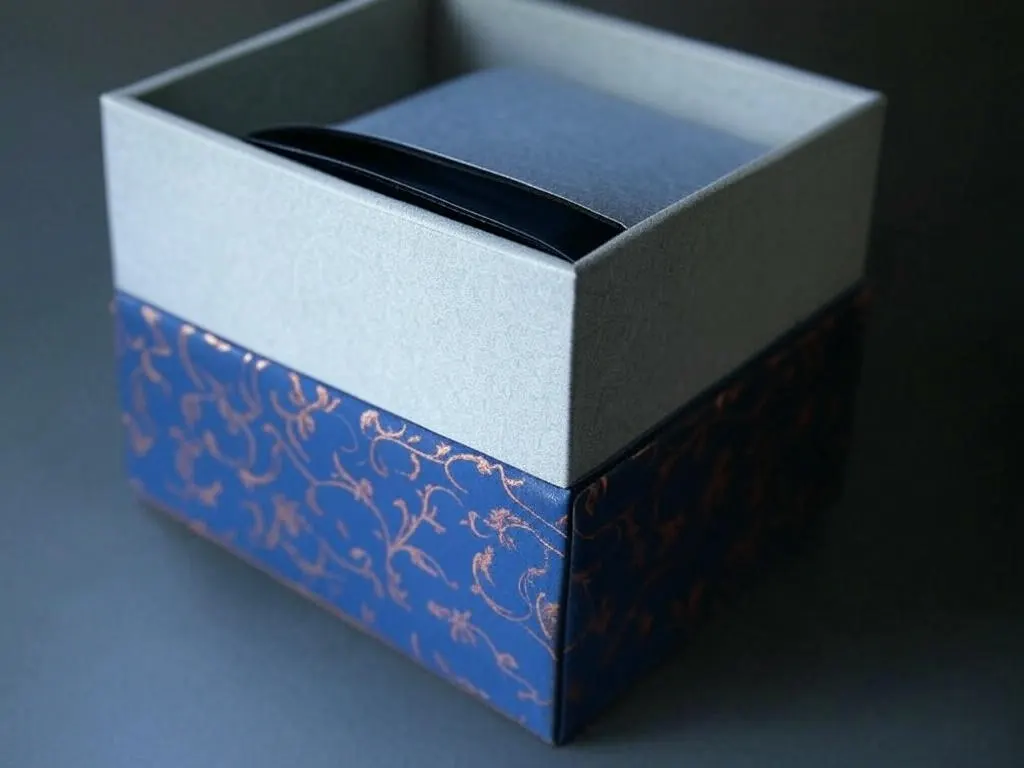
That is because they are built from thick chipboard (usually 2–3 mm), then wrapped with decorative specialty paper.
Unlike folding cartons that require assembly, these boxes come fully formed, and they rarely lose shape.
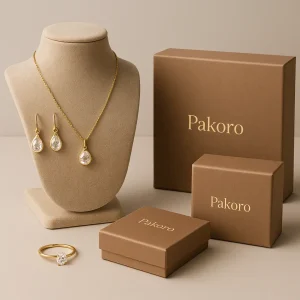
They also bring a luxurious atmosphere to any product, which is exactly why you often see them in high-end jewelry packaging, exclusive board game sets, and gift boxes for top-tier brands.
Rigid box packaging enhances your presentation, improves unboxing experiences, and helps you weave a compelling brand narrative.
Key Attributes of Rigid Box Packaging
- Sturdy Construction: The thicker chipboard base ensures durability and product protection.
- Luxurious Aesthetic: Specialty wrap papers, stylish finishes, and vibrant prints set rigid boxes apart.
- Brand Appeal: You can use debossing, hot stamping, coatings, and decorative elements to highlight your brand.
- Reusable: Customers often keep these boxes for storage, thus reinforcing brand loyalty.
Rigid packaging bridges the gap between design and function. You create a physical keepsake that customers can continue to admire long after they have opened the product.
2. Why Rigid Boxes Are Unique Compared to Other Packaging Types
You might wonder how rigid boxes differ from flexible packaging, folding cartons, and corrugated boxes. The short answer?
Rigid boxes provide an overall premium look, maximum sturdiness, and a memorable unboxing moment that other forms of packaging struggle to match.
Yet, each type of packaging has advantages for specific use cases.
The following points will give you a clearer sense of where rigid boxes shine.
2.1 Flexible Packaging
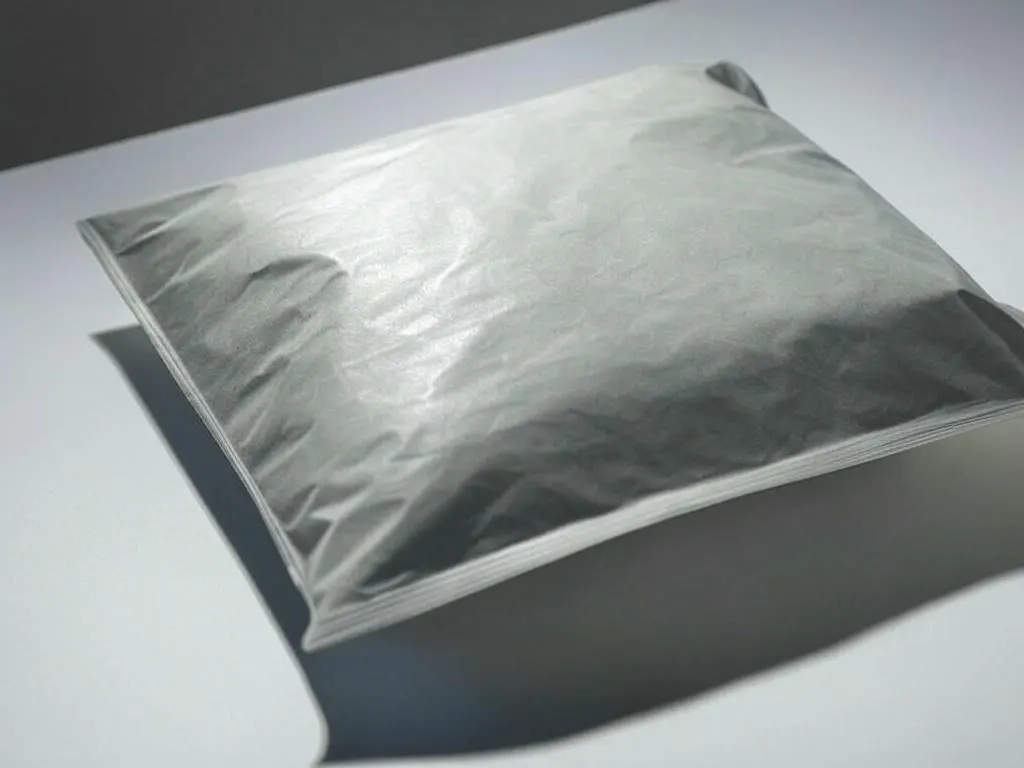
- Key Characteristic: Highly bendable, paper-thin, and usually used for pouches or wraps.
- Advantage: Cost-effective and efficient for mass production.
- Main Drawback: Lacks the structural rigidity to protect heavier or premium products.
2.2 Folding Carton Boxes
- Key Characteristic: Light, easily folded into shape, often used for everyday product packaging.
- Advantage: Cost-efficient when you factor in bulk orders, simple shipping, and decent print finishes.
- Main Drawback: May not convey the same luxury feel. Some items require extra support or inserts.
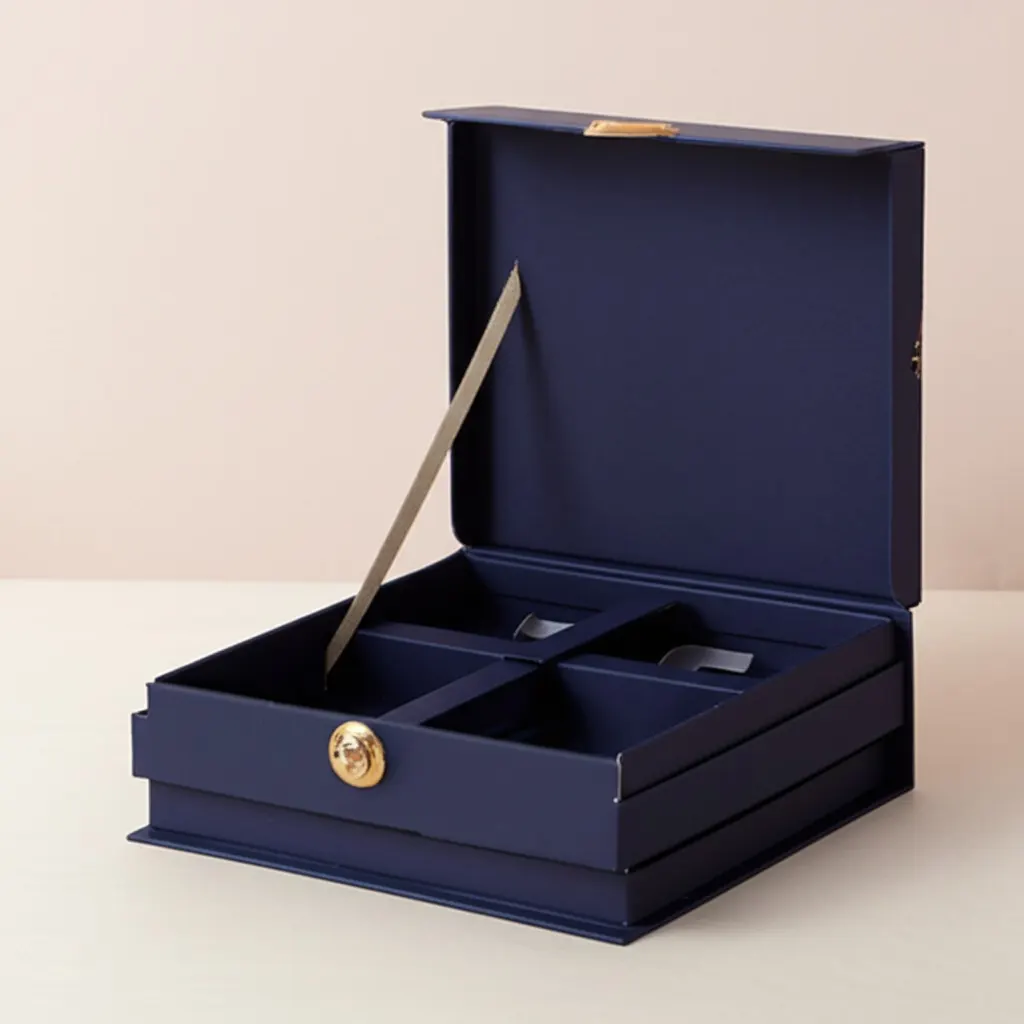
2.3 Corrugated Boxes
- Key Characteristic: Composed of fluted paper sandwiched between liners, excellent for shipping.
- Advantage: Resilient enough for heavier items and bulk transportation.
- Main Drawback: Traditional corrugated boxes, unless heavily customized, may appear more functional than upscale.

2.4 Rigid Boxes (Set-up Boxes)
- Key Characteristic: No folding assembly. Constructed from thick chipboard and wrapped in printed or specialty paper.
- Advantage: Uncompromising sturdiness and enhanced branding opportunities.
- Main Drawback: Higher production cost, especially compared to folding cartons or flexible pouches.
By understanding these differences, you can see why rigid boxes occupy the top tier of product packaging. If you value both strength and visual impact, set-up boxes deliver on both fronts.
3. Types of Rigid Packaging
When people mention rigid boxes, they typically refer to two main categories: partial finish and full finish.
Each has its own build style and cost implication.
You want to choose the right one based on your brand’s needs and your budget.

3.1 Partial Finish Rigid Boxes
- Definition: Only the outer surfaces receive wrapping, leaving the chipboard inside partially visible.
- Construction: A single piece of chipboard with perforated creases is folded and wrapped. Often, you can see the raw kraft or grey board along the internal edges.
- Advantages:
- Fewer materials needed.
- Shorter production times.
- More cost-effective than a full finish approach.
- Drawbacks:
- Visible chipboard may not align with ultra-luxury brand aesthetics.
- Less customization for interior design.
3.2 Full Finish Rigid Boxes
- Definition: Both the exterior and interior are completely wrapped, with no chipboard exposed.
- Construction: Thicker chipboard pieces are cut and formed into each side of the box, then laminated and carefully wrapped.
- Advantages:
- Polished, refined look.
- More space for printed details or decorative elements inside and out.
- Maximum brand impact and premium vibe.
- Drawbacks:
- Higher material usage and cost.
- Longer production times.
Which should you choose? If your brand identity revolves around luxurious simplicity and aesthetic quality, full finish might be your best bet.
However, if you need a slightly lower cost without sacrificing the essential rigidity, partial finish will suffice.
4. Popular High-End Rigid Box Styles
You have already learned about the two main finish types.
But within rigid box packaging, there are plenty of sub-styles to choose from.
Each style caters to a distinct brand presentation and user experience.
Think of these styles as the perfect finishing touches to your brand story.
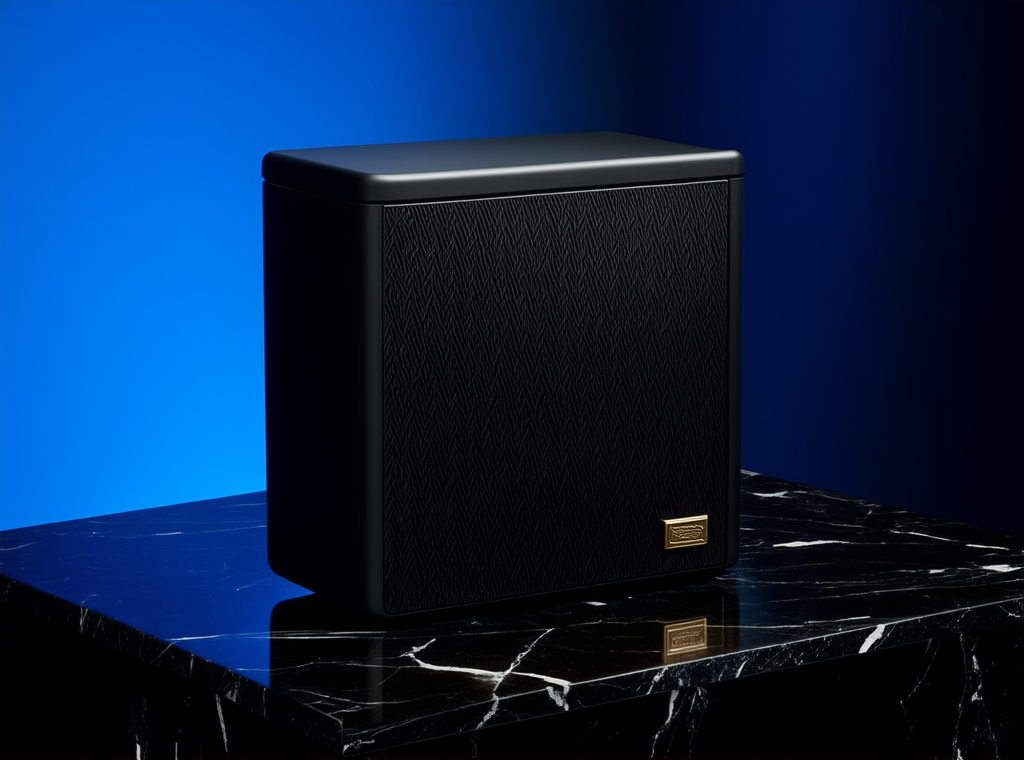
4.1 Tube or Rolled-Edge Tube Packaging
- Structure: A cylindrical shape, often seen in telescopic or shoulder-neck openings.
- Common Uses: Drinks, cosmetics, accessories, or snack containers (like the classic Pringles can).
- Appeal: Offers a unique silhouette and sturdy form, which is ideal for premium bottles or slender items.
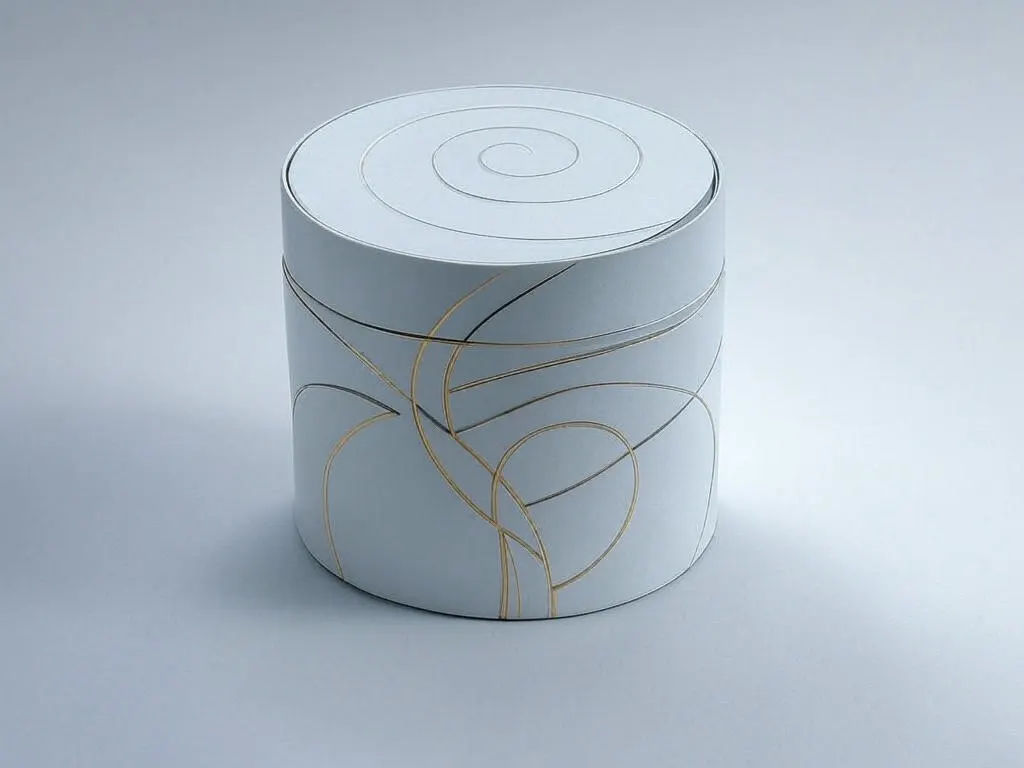
4.2 Magnetic Closure Boxes
- Structure: Features built-in magnets that snap the lid shut. Some versions are collapsible.
- Common Uses: Jewelry, electronics, or gift sets that emphasize a sleek unboxing moment.
- Appeal: A tactile, satisfying closure that conveys an upscale feel.

4.3 Drawer Style Boxes (Slide or Slipcases)
- Structure: A box-within-a-box design that slides open like a drawer.
- Common Uses: Consumer electronics accessories, confections, or small gift items.
- Appeal: A sense of theatrical reveal when the customer slides the drawer to unveil the product.
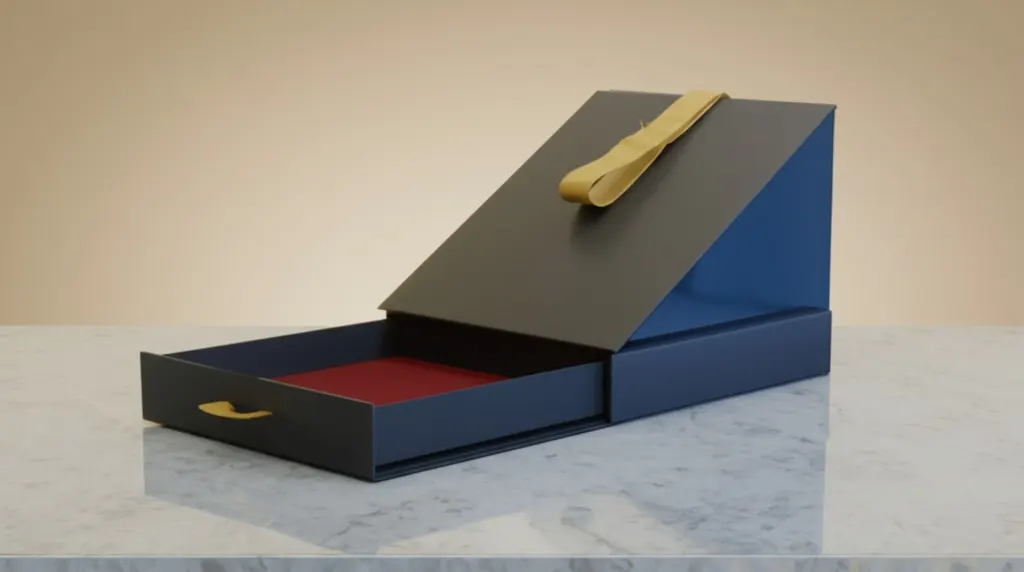
4.4 Book Style Boxes
- Structure: Opens like a hardcover book, optionally with a straight or rounded spine.
- Common Uses: Luxury invitation sets, collector’s editions, or special promotional kits.
- Appeal: Mimics the nostalgia and visual interest of a premium hardcover novel.
4.5 Shoulder Neck Boxes
- Structure: Includes an inner shoulder or “neck” piece that partially shows between the top and bottom.
- Common Uses: Fragrances, high-end cosmetics, or statement accessories.
- Appeal: Elevated unboxing experience and room for two-tone color contrasts if desired.
By selecting the right style, you reinforce your brand’s image and offer a distinctive customer experience. Your product will stand out in store displays or on social media unboxing videos.
5. Inserts and Accessories for Rigid Boxes
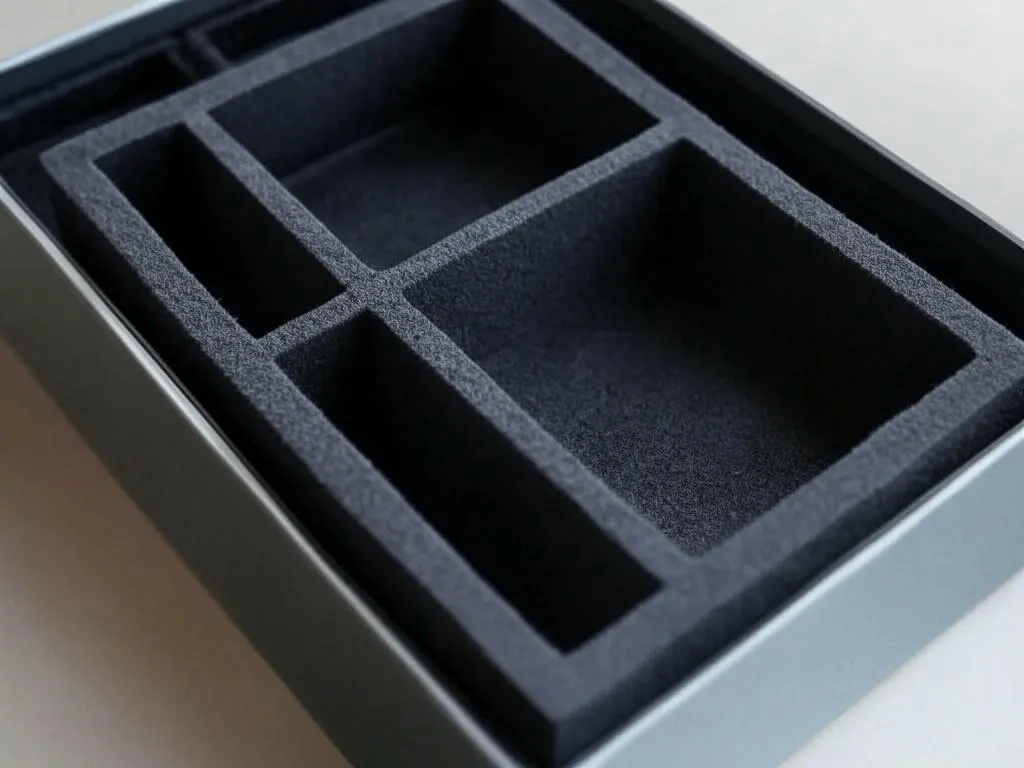
After deciding the structure, you should consider box inserts.
Inserts work as customized compartments or protective layers inside your rigid boxes.
They hold your product safely in place and enhance your brand’s professional look.
5.1 Common Insert Materials
- Paperboard: Lightweight, economical, and easy to print.
- Corrugated: Good shock absorption. Often used for heavier or more fragile items.
- Molded Pulp: Eco-friendly, sustainable, and biodegradable.
- Foam: Superior cushioning for delicate or high-value goods.
- Plastic: Rigid and form-fitting, though less sustainable.
5.2 Why Inserts?
- Positioning: Keeps your product precisely in place and prevents it from moving around.
- Protection: Absorbs shock or impact, reducing damage during shipping or handling.
- Presentation: Builds excitement, as each piece is revealed in an organized, visually pleasing layout.
If you want the ultimate unboxing experience, combining a well-chosen rigid box style with a striking insert can truly make your product feel special.
Think about it: when you remove the lid or slide open the drawer, and the item is perfectly cradled in foam or molded pulp, you instantly feel the quality.
6. How Rigid Boxes Are Made
You might be intrigued by the craftsmanship behind these luxurious boxes.
The production process is more intricate than with flexible or folding carton packaging.
Let’s break it down:
- Cutting and Scoring (Sizing)
You start with chipboard or greyboard sheets. Each sheet is measured, cut, and scored where folds will form. - Folding
The paperboard is folded along those scored lines. Gluing and taping may be applied for partial finish boxes, while full finish boxes have separate boards for each face. - Printing
Your chosen design or brand artwork is printed on the paper that will wrap the box. This phase is where you can add hot stamping, embossing, or coatings. - Wrapping
The printed or specialty paper is then laminated or glued to the chipboard, wrapping around edges. This step requires precision to ensure smooth corners and a flawless exterior.
Tip: Because a portion of this process often relies on manual labor, it can take longer to produce large batches of rigid boxes compared to other packaging formats.
7. Pros and Cons of Rigid Boxes
At this point, you may be convinced of their aesthetic advantages, but you also want to consider all the pros and cons.
Understanding these will help you decide if rigid boxes fit your product and budget.
7.1 Major Advantages
- High-End Look and Feel
The tactile quality and sturdy feel instantly communicate premium value. Customers associate this with luxury and exclusivity. - Enhanced Brand Storytelling
You can decorate your rigid packaging with advanced printing techniques, metallic foils, and creative inserts. This level of detail can tell a compelling brand story. - Protective Strength
Thick chipboard and supportive inserts help safeguard delicate or high-value items. This is crucial if you worry about transit damage. - Reusable and Sustainable Possibilities
Many consumers repurpose rigid boxes for storage, and you can opt for recycled chipboard or eco-friendly wraps, too.
7.2 Significant Drawbacks
- High Production Costs
Making a rigid box can be up to three times more expensive than producing folding cartons or corrugated boxes. The hand-finishing techniques can add extra labor costs. - Longer Lead Times
The manual assembly, plus quality checks, often means a 1-2 week extension compared to other types of packaging. Plan your timeline accordingly. - Less Resilient with Oversized Dimensions
On very large boxes, you risk weaker edges and potential tearing in the wrap paper if you do not choose thicker coverings or stronger adhesives. - Storage and Shipping Space
Rigid boxes do not collapse flat. They require more room in transit and in storage, which can further increase logistics expenses.
If the cost is prohibitive, you can still create a near-luxury look with high-end folding cartons or corrugated packaging, combined with advanced finishing.
However, if your brand image and product value rely on an unmatched tactile and visual impact, rigid boxes pay for themselves in customer delight and loyalty.
8. Best Scenarios and Industry Examples
You are probably wondering which industries gain the most from rigid box packaging.
The short answer is any product where first impressions matter greatly.
That said, let’s highlight some success stories that reinforce why rigid boxes can be a game changer.
8.1 Coca-Cola: The Taste of Celebration
- Packaging Style: Telescope Rigid Box with Custom Insert
- Why It Works: Coca-Cola used a telescopic box, where the lid lifts off to reveal celebratory items inside. The interior insert secures glass bottles in place. The overall design echoes the premium gift-giving aura.
8.2 Contender Brands: Fun, Simple, and Memorable
- Packaging Style: Rolled-Edge Rigid Tube with Custom Insert
- Why It Works: Ideal for game cards and small accessories, the cylindrical shape and protective insert keep everything neatly organized, while adding novelty to the unboxing experience.
8.3 Avec La Vie: Healing in a Package
- Packaging Style: Telescopic Shoulder Neck Box with Cards
- Why It Works: The added “shoulder” layer inside the box creates a two-piece reveal. It adds a refined silhouette and keeps healing cards carefully arranged, reflecting a thoughtful, calming approach.
8.4 Beda Beads: Inspiring Creators
- Packaging Style: Magnetic Closure Rigid Box with Insert
- Why It Works: The magnetic closure and foam insert hold jewelry or beads in place. When the customer lifts the lid, they instantly sense a polished and elegant brand personality.
From large beverage companies to specialized jewelry artisans, brands favor rigid boxes because they reinforce the idea that the packaging is part of the product, not just a disposable covering.
9. Is Rigid Box Packaging Right for You?
By now, you have a thorough understanding of rigid box packaging.
You have seen its advantages, learned about its types and styles, and discovered how it stacks up against other packaging options.
You also realize it is not a perfect fit for every situation, mainly because of the higher cost and longer lead times.
However, if you want to:
- Offer an unforgettable unboxing experience,
- Elevate your brand narrative with advanced printing, special finishes, and custom inserts,
- Protect and showcase your product in a premium manner,
- Encourage customers to reuse the box and keep your brand in view,
then rigid boxes (or set-up boxes) may be the best choice. They add that wow factor.
They impart a sense of sophistication.
And they let you build a deeper emotional connection with your audience.
Still unsure if rigid packaging is truly the right direction?
Consider ordering a small batch to test how your customers respond.
Alternatively, you might speak to a packaging supplier to see how they can optimize or lower costs.
Sometimes, partial finish designs can strike the perfect balance between premium feel and budget constraints.