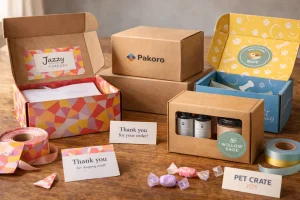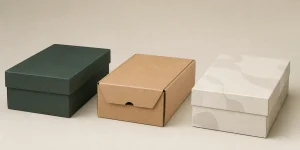
Shipping the right way starts with picking the right box.
Have you ever opened a package only to find the product bouncing around inside?
Conversely, maybe you’ve received something in a giant box filled with wasteful filler.
Both scenarios cost money and damage your brand.
In this guide, you’ll learn how to select the perfect custom shipping box size to cut costs, protect your products, and delight your customers.
If you are planning bulk orders, working with a professional shipping box manufacturer helps you achieve accurate sizing, better protection, and lower overall costs.
Why the Right Box Size Matters to You

As a business owner, you already know that packaging isn’t just about wrapping something up—it’s about making an impression.
The right box size reduces shipping costs, provides adequate protection, and reflects your brand’s professionalism.
When the box is too big, you pay for empty space; when it’s too small, your product could be damaged.
With careful sizing, you enhance the unboxing experience and build customer loyalty.
Understanding Shipping Box Dimensions
Every box has three basic measurements:
- Length: the longest side.
- Width: the shorter side on the bottom.
- Height (or Depth): the vertical dimension.

Always measure your product’s length, width, and height with a tape measure, then add space for protective materials like bubble wrap or foam.
Carriers calculate dimensional weight using these measurements, so taking a few extra minutes to measure accurately helps you avoid unnecessary fees.
In real production, precise sizing is usually handled by experienced suppliers. Explore our custom shipping boxes to see how we design packaging based on your product dimensions and shipping requirements.
Tip: Measure twice and design once. A precise measurement saves you time and money later on.
Cost, Protection & Brand: Why Box Size Affects Everything
A box isn’t just a container—it’s an investment. Here’s why size matters:
- Cost: Carriers charge by weight and dimensions. Oversize boxes cost more even if they’re light.
- Protection: If the box is too big, items move around and break. Too small, and there’s not enough cushioning.
- Brand: A well‑fitted box with your logo looks polished and reduces filler material, which shows that you care about sustainability and your customers.

When you choose the right size, you’re balancing these three factors.
Think of it as a formula: Optimal size = lower cost + better protection + improved brand perception.
Step‑by‑Step Guide to Choosing the Right Size
Follow these steps to ensure your box fits just right:
- Measure your product: Record length, width, and height.
- Plan internal layout: If you’re shipping multiple items, decide their arrangement inside the box.
- Add cushioning space: Leave at least 1–2 inches of space on every side for padding.
- Calculate dimensional weight: Multiply length × width × height, then divide by your carrier’s dimensional weight factor.
- Check weight & strength: Choose single‑wall, double‑wall, or triple‑wall corrugated cardboard depending on weight.
- Select your box style: Consider regular slotted containers (RSC), die‑cut mailers, telescopic boxes, or corrugated mailer boxes.
- Prototype and test: Order a small batch to test for drop resistance and stacking.
- Optimize in bulk: Once you’re confident, order in bulk to save costs.
Following this process ensures that your boxes are tailored to your products, protecting them throughout transit. If you need professional support, our shipping box manufacturing services can help you develop the right structure and size for bulk production.
Custom vs. Standard Boxes: Which Is Right for You?
You might wonder whether it’s worth investing in custom boxes when standard sizes are readily available.
Standard boxes are cost‑effective for simple, uniform products.
They’re great when you need packaging quickly.
However, custom boxes:
- Reduce empty space, saving on shipping fees.
- Improve protection by fitting the product snugly.
- Elevate your brand through unique designs and printing.

If your items are fragile, irregular in shape, or if branding and customer experience are important, custom sizes are worth the investment.
Six Key Factors When Selecting a Box Size
Before you decide on a box size, think about these factors:
- Fragility – Delicate products need more cushioning and stronger boxes.
- Stacking & Storage – Consider warehouse stacking and carrier handling.
- Sustainability – Choose eco‑friendly materials and avoid excess space.
- Shipping Cost – Watch your dimensional weight to prevent extra fees.
- Brand & Customer Experience – Use packaging to tell your story and delight recipients.
- Weather & Moisture Resistance – For humid climates or long transit times, choose moisture‑resistant boxes.
By balancing these factors, you craft a packaging solution that meets your logistical needs and delights your audience.
Enhance the Unboxing Experience
Unboxing is a powerful marketing opportunity. To make it memorable:
- Use inserts or dividers to keep items neat and protected.
- Add eco‑friendly fillers like shredded paper or corrugated inserts.
- Include personal touches: thank‑you cards, discount codes, or branded tissue paper.
- Choose high‑quality printing and colors consistent with your brand.

A positive unboxing moment can turn first‑time buyers into loyal customers because it feels like a gift rather than a generic shipment.
Reduce Shipping Costs with the Perfect Size
Here’s how the right size helps you save money:
- Avoid dimensional weight penalties: The smaller the box (without compromising protection), the lower the cost.
- Minimize filler materials: Less filler means lower material costs and a lighter package.
- Use inserts to combine items: Send multiple items in one box when possible.
- Consider flat packaging: For textiles and soft goods, a flatter box reduces height and dimensional weight.

By adjusting your box size strategically, you spend less on shipping and materials without sacrificing product safety.
Conclusion: Let’s Create the Perfect Package Together
Selecting the right custom shipping box size is more than just logistics; it’s about cost efficiency, product protection, and brand presentation.
If you are looking for a reliable partner to optimize your packaging, we can help you design the perfect solution based on your product and shipping needs.
Take the next step and contact us for your custom packaging needs.