Imagine handing your customer a beautifully branded jute tote instead of a generic plastic or paper bag.
Immediately, they feel the texture of natural fibers and recognize your commitment to sustainability.
As a business owner, you want your brand to stand out and resonate with environmentally aware consumers.
Using custom jute bags positions your company as both green and premium.
People appreciate tangible actions toward sustainability – and jute offers exactly that.
Later in this guide, you’ll discover real examples and design tips that transform a simple bag into a powerful marketing tool.
What Is Jute and Why Is It Eco‑Friendly?
Jute is a long, coarse vegetable fiber harvested from the bark of the Corchorus plant.
Often called the “Golden Fiber” because of its natural golden sheen, jute has been used for centuries in sacks and ropes.
Today, with the push for sustainable materials, jute is experiencing a renaissance.
According to textile experts, jute is eco‑friendly because it’s biodegradable, renewable and low‑cost.
It’s the lowest priced lignocellulosic fiber available, and cultivating it creates jobs for thousands of farmers and mill workers.
Even better, jute enriches the soil and absorbs more carbon dioxide than many other crops.
By choosing jute, you reduce dependency on plastics and support a natural fiber that fits neatly into a circular economy.

Key Eco‑Benefits
- Biodegradable and compostable – jute bags naturally break down without leaving harmful residues.
- Low water usage – compared with cotton, jute requires less water to grow, reducing strain on local water sources.
- Carbon sequestration – jute plants absorb CO₂ and release oxygen, helping offset greenhouse gas emissions.
- Soil enrichment – jute cultivation improves soil quality and reduces the need for chemical fertilizers.
When you tell your customers that your packaging is made from jute, you’re sharing a story of sustainability rooted in nature.
Benefits of Jute Bags for Your Business
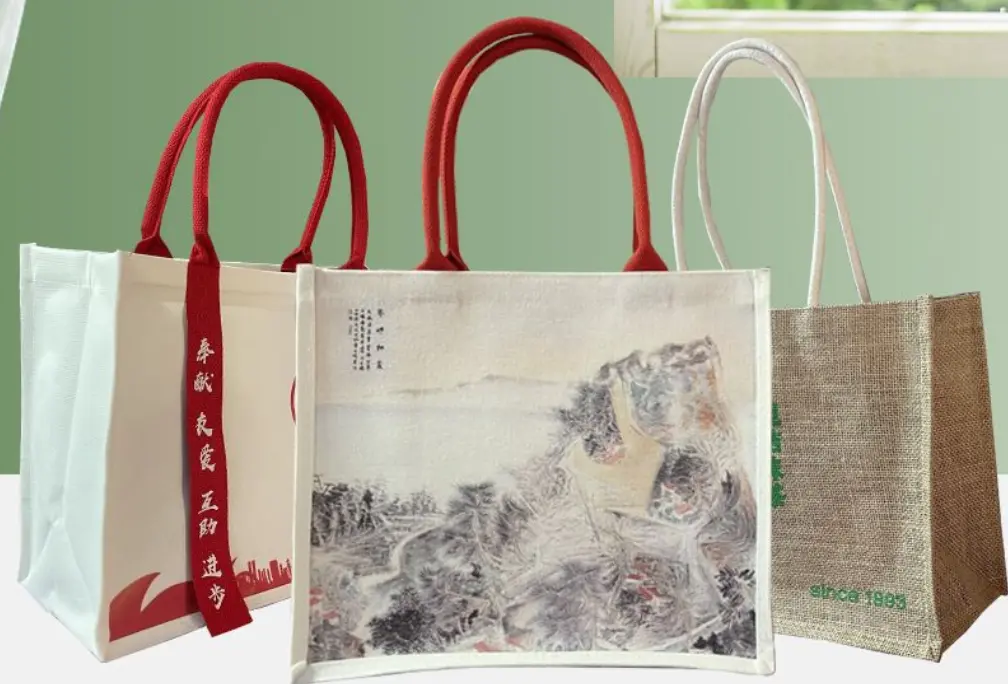
You might be wondering whether jute bags are truly practical for everyday business use.
Here are the advantages that make jute an excellent packaging choice:
- Durability and Reusability – Jute bags can carry heavy loads and withstand repeated use, turning each bag into a long‑lasting advertisement for your brand.
- Premium Look and Feel – The natural texture and rustic aesthetic of jute convey quality and authenticity, elevating your brand image.
- Customizable Branding – With modern printing and embroidery techniques, you can add logos, slogans or artwork, turning your jute bag into a walking billboard.
- Eco‑Credibility – Consumers increasingly prefer sustainable products. Offering a reusable jute bag instantly signals that your company values the planet and is aligned with modern eco‑conscious values. Government policies support this shift—for example, India’s mandatory jute packaging requirements for food grains and sugar highlight how institutions are promoting biodegradable packaging.
- Cost‑Effective Marketing – Although the initial price per bag may be higher than plastic, the extended lifespan and advertising value make jute a cost‑effective choice.
Your customers will appreciate the durability and style while your brand benefits from the positive environmental association.
Types of Custom Jute Bags

Not all jute bags are created equal. At Pakoro, we offer a range of designs to suit different applications, and you can tailor each style to your brand’s needs:
- Tote bags – Perfect for retail shopping and everyday carry; large surface area for logos and artwork.
- Gift or favor bags – Smaller and often with decorative embellishments or ribbons, ideal for corporate gifts and events.
- Wine or bottle bags – Designed to snugly fit a wine bottle, adding a touch of sophistication to hospitality gifts.
- Drawstring and zipper pouches – Useful for accessories, cosmetics or promotional giveaways. Their compact design makes them convenient for travel.
- Specialty shapes – Square-bottom bags, messenger styles or backpacks. These can be customised with pockets, lining and closures to fit your product or promotional needs.
By selecting the right type of jute bag, you ensure functionality and maximise brand exposure. You can even combine multiple styles for a coordinated packaging strategy.
How Jute Stacks Up Against Other Sustainable Packaging Materials
You may have considered other materials, such as paper, cotton or recycled PET (RPET) bags. Each has its merits, but jute occupies a unique sweet spot:
| Material | Durability | Environmental Impact | Brand Perception |
|---|---|---|---|
| Jute | High – strong natural fibers | Biodegradable, low water use, enriches soil | Premium, eco‑friendly, rustic look |
| Paper | Low – tears easily when wet | Recyclable but single‑use; requires large volumes of water and energy to produce | Commonplace; less premium |
| Cotton | Medium – durable but prone to shrinking | Biodegradable, but high water and pesticide use; organic cotton reduces impact | Soft feel; often perceived as casual |
| RPET (recycled plastic) | High – strong and long lasting | Reuses plastic waste but not biodegradable; microplastic concerns remain | Modern, but some consumers view plastic negatively |
Jute’s balance of durability, environmental friendliness and upscale appearance makes it ideal for businesses that want to stand out and reduce their ecological footprint.
Designing Custom Jute Bags for Maximum Impact
Creating a jute bag that captures attention requires careful design. Here’s how you can make the most of your custom bags:
- Choose the right printing technique – Screen printing works well for bold logos and single‑color designs; digital printing enables full‑color artwork; embroidery adds a tactile, premium feel. Many customers prefer water‑based or plant‑based inks to stay consistent with sustainability.
- Align colors with your brand – Natural jute comes in earthy shades. Incorporate colors that contrast well—perhaps a bold logo in dark green or black. Make sure the colors reinforce your brand’s existing palette.
- Optimize the layout – Position your logo and messaging prominently on the bag. Use both sides for maximum visibility; include contact details or QR codes to drive online engagement.
- Consider functional extras – Add pockets, button closures or inner linings for specific uses. These additions make the bag more versatile and valued, ensuring longer use.
- Embrace storytelling – People love a good narrative. Include a brief note on the tag or inside the bag explaining the sustainable journey of the fiber and how your company supports eco‑friendly practices.

Designing thoughtfully will transform your jute bag into a memorable and shareable marketing tool.
Real‑World Use Cases and Best Practices
Jute bags aren’t just theoretical; companies around the globe are using them successfully. Here are a few examples:
- Food industry – In India, the government mandates that 100% of food grains and 20% of sugar be packed in jute bags. This policy not only safeguards jute farmers but also encourages manufacturers to adopt eco‑packaging. If you’re in the food business, using jute aligns your brand with policy and demonstrates compliance.
- Retail and fashion – Lifestyle brands often incorporate jute totes in promotional campaigns. Customers love reusing these sturdy bags, effectively turning them into moving advertisements.
- Events and conferences – Organizers hand out branded jute bags filled with programs and gifts. The bag then lives on as a memento and conversation starter.
- Hospitality and beverages – Wineries and breweries present their products in elegant jute bottle bags. The rustic look complements artisanal beverages and signals quality.
- Corporate gifting – Companies use personalised jute pouches to package employee gifts or promotional materials. Recipients appreciate the thoughtfulness and the bag’s reusability.
To maximize impact, always encourage recipients to reuse the bags. Provide care instructions and emphasize the environmental benefits. You might even include incentives—such as discounts for customers who bring the bag back—which fosters loyalty and reduces waste.
Frequently Asked Questions
How do I care for a jute bag? Hand wash in cold water with mild soap. Avoid machine washing or hot water as it can weaken the fibers and cause shrinkage. After washing, reshape the bag and let it air dry.
Will the print last? With proper care and high‑quality inks, prints and embroidery on jute bags remain vibrant for years. Avoid wringing or scrubbing the printed areas, and the design will stay intact.
Can I compost a jute bag? Yes, if the bag is made from 100% natural jute and uses biodegradable inks or threads. Remove any plastic linings or metal zippers before composting.
Is jute scratchy? Modern jute processing and blending techniques yield a softer feel. Many designers mix jute with cotton or other fibers to improve softness while retaining durability.
Conclusion – Make the Sustainable Switch Today
By now, you know that jute bags offer exceptional eco‑credentials, durability and marketing power. They stand at the crossroads of sustainability and style, giving your brand the edge it needs to appeal to conscientious consumers. The global shift toward biodegradable packaging is accelerating, and governments are incentivizing businesses to adopt jute. There’s never been a better time to make the transition.
At Pakoro, we’re ready to help you design and produce custom jute bags that reflect your brand’s values and aesthetic. Contact us today to discuss your project and explore the many ways jute can work for you.