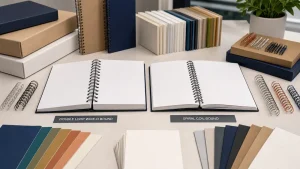
Loop staple binding is a booklet binding method that uses special staples with rounded loops on the spine. These loops allow your booklet to fit inside a ring binder without punching holes through the pages.
If you need manuals, training handouts, catalogs, or technical documents that can be stored in binders, loop staple binding is a smart and practical choice.
At Pakoro, we help you choose the right binding, paper, cover, finish, and packaging for custom printed booklets.
What Is Loop Staple Binding?
Loop staple binding is similar to saddle stitch binding. However, the staples form small loops outside the folded spine.
These loops can slide into standard ring binders. Therefore, your customer can remove, store, and organize booklets without damaging the pages.
This binding style works best for thin printed products. It is simple, affordable, and easy to use.
You may choose loop staple binding when you want:
- A booklet that fits into a ring binder
- A clean and simple spine
- Lower cost than wire-o or spiral binding
- Easy storage for training materials
- No punched holes through the printed pages
- A practical option for document sets
Loop Staple Binding vs Saddle Stitch Binding
Loop staple binding and saddle stitch binding both use staples along the folded spine.
The difference is simple. Saddle stitch uses flat staples. Loop staple binding uses staples with rounded loops.
Saddle stitch is better when your booklet will be read as a standalone item. Loop staple binding is better when your booklet must be stored inside a binder.
Here is the quick comparison:
- Saddle stitch: simple, flat, low cost
- Loop staple: binder-friendly, organized, practical
- Saddle stitch: best for brochures and magazines
- Loop staple: best for manuals and document inserts
- Saddle stitch: no binder storage function
- Loop staple: fits into ring binders
So, if your customer needs to archive or update printed documents, loop staple binding is more useful.
Common Uses for Loop Staple Binding
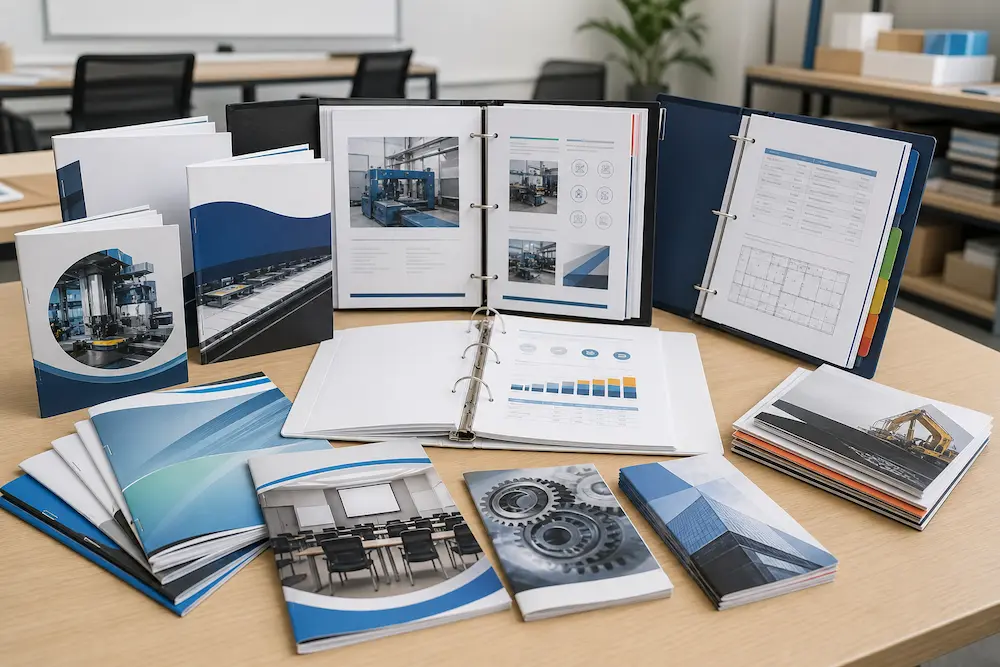
Loop staple binding is often used for printed materials that need to stay organized.
Common products include:
- Training manuals
- Course handouts
- Technical documents
- Product catalogs
- Price lists
- Instruction booklets
- Safety guides
- Sales kits
- Reference sheets
- Binder insert booklets
For example, you may print a set of product manuals with loop staples. Then, your customer can place all of them into one binder.
This makes the full document system easier to store, update, and use.
How Does the Loop Staple Binding Process Work?
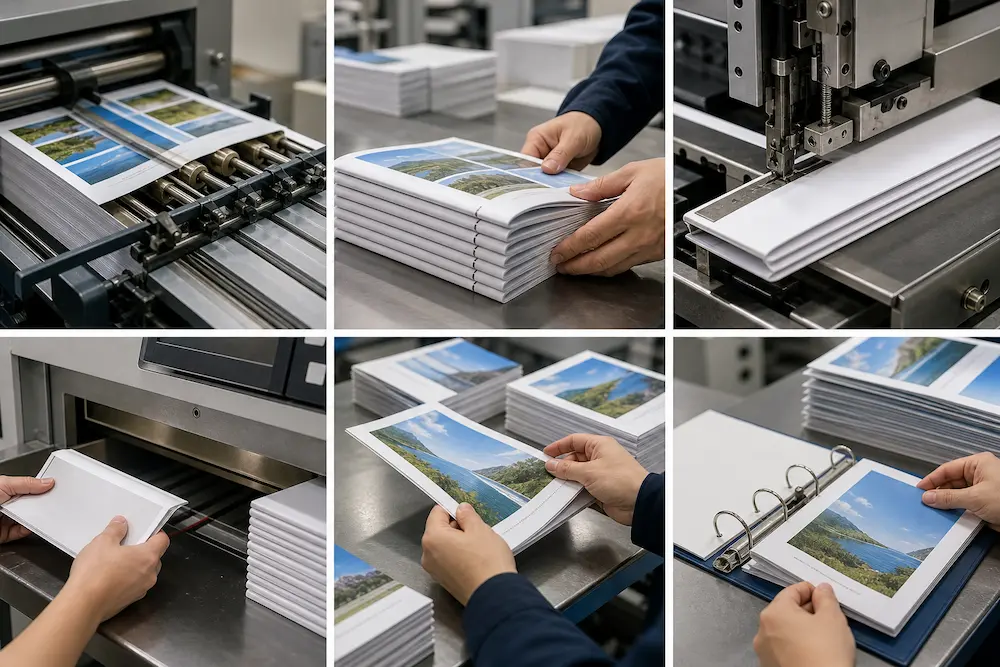
The production process is direct, but accuracy matters.
First, the pages are printed. Next, they are folded and gathered in the correct order. Then, special loop staples are inserted through the spine.
After stapling, the booklets are trimmed. Finally, the loop alignment and page order are checked.
A typical process includes:
- File checking
- Printing
- Folding
- Collating
- Loop stapling
- Trimming
- Binder-fit testing
- Quality inspection
- Packing and shipping
Because the loops must match the binder ring spacing, you should confirm the binder type before production.
What Materials Work Best?
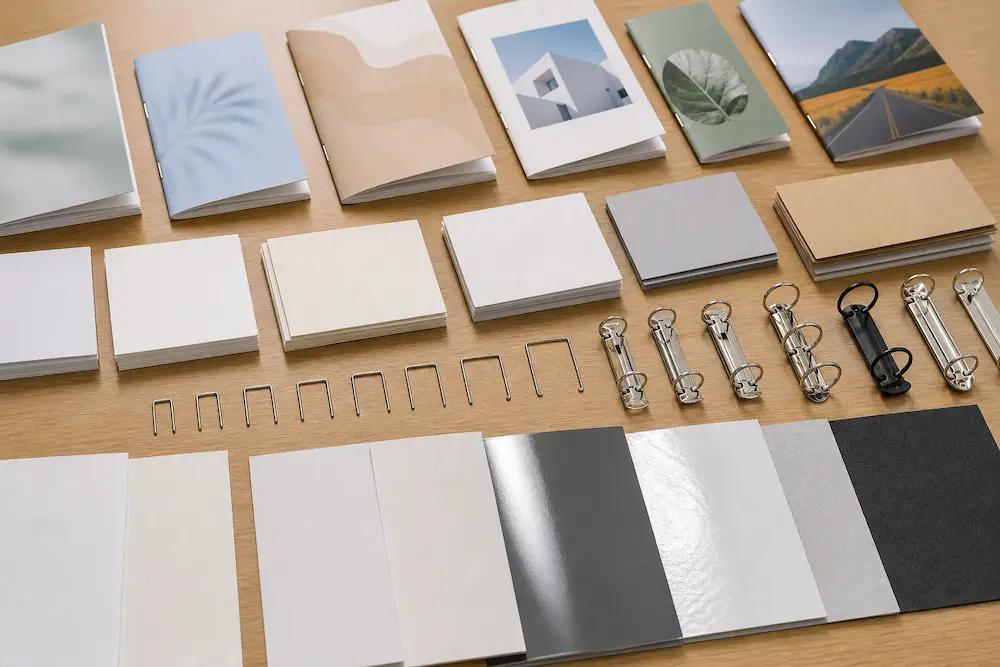
Loop staple binding is best for thinner booklets. If your booklet is too thick, another binding method may be better.
Common paper choices include:
- Uncoated paper
- Matte coated paper
- Gloss coated paper
- Writable paper
- Cardstock covers
For the cover, you can use thicker cardstock. This helps protect the inner pages and gives the booklet a stronger feel.
You can also add finishes, such as:
- Matte lamination
- Gloss lamination
- Soft-touch lamination
- Spot UV
- Rounded corners
However, thick covers and too many pages can affect how well the booklet opens and fits into a binder.
Pakoro can help you check page count, paper thickness, staple size, and binder compatibility before production.
When Should You Choose Loop Staple Binding?
Choose loop staple binding if your booklet needs to be stored in a ring binder.
It is especially useful when your printed materials are part of a larger document system. For example, training departments, equipment companies, schools, and sales teams often need organized binder inserts.
You should choose loop staple binding when:
- The booklet is relatively thin
- Binder storage is important
- Pages should not be hole punched
- The customer may update materials later
- You need a low-cost binding option
- The booklet is part of a manual set
Do not choose loop staple binding for thick books, luxury books, or products that need a premium retail spine. In those cases, wire-o, spiral, perfect binding, or hardcover binding may work better.
Quality Control and Packaging
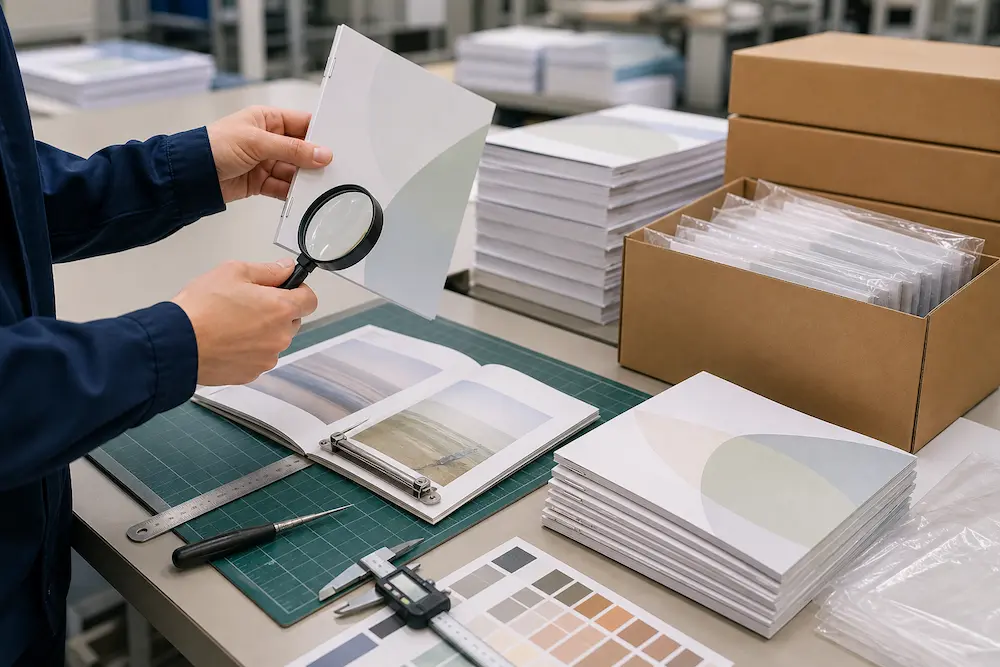
Quality control is important because loop alignment affects real use.
Your supplier should check:
- Page sequence
- Fold accuracy
- Staple strength
- Loop position
- Binder fit
- Trim size
- Cover finish
- Packing protection
Good packaging also matters. The staple loops should not be crushed during shipping.
For export orders, Pakoro can use suitable cartons, dividers, wrapping, and protective packing based on your booklet quantity and shipping method.
Pakoro Can Help with Custom Booklet Printing
Pakoro supports custom booklet printing, binding, finishing, and packaging.
We can help you with:
- Loop staple binding
- Saddle stitch binding
- Spiral binding
- Wire-o binding
- Perfect binding
- Custom covers
- Binder insert booklets
- Retail and export packaging
Contact Pakoro for loop staple binding and custom booklet printing:[Add Pakoro email, WhatsApp, phone number, or inquiry link]
Final Thoughts
Loop staple binding is a simple and useful option when your booklet needs to fit into a ring binder.
It gives you the low cost of staple binding while adding better organization for manuals, handouts, catalogs, and document sets.
If your project needs practical storage, easy updates, and binder compatibility, loop staple binding may be the right choice.