


Paperback book printing turns your finished manuscript into a lightweight book with a flexible paper cover and glued spine. It is affordable, professional, and suitable for novels, guides, workbooks, catalogs, and educational books.
If this is your first printing project, you may feel unsure about paper, files, binding, and costs. However, the process becomes much easier when you understand each step.
At Pakoro, we help you manage paperback printing, finishing, packaging, and international delivery.
What Is a Paperback Book?
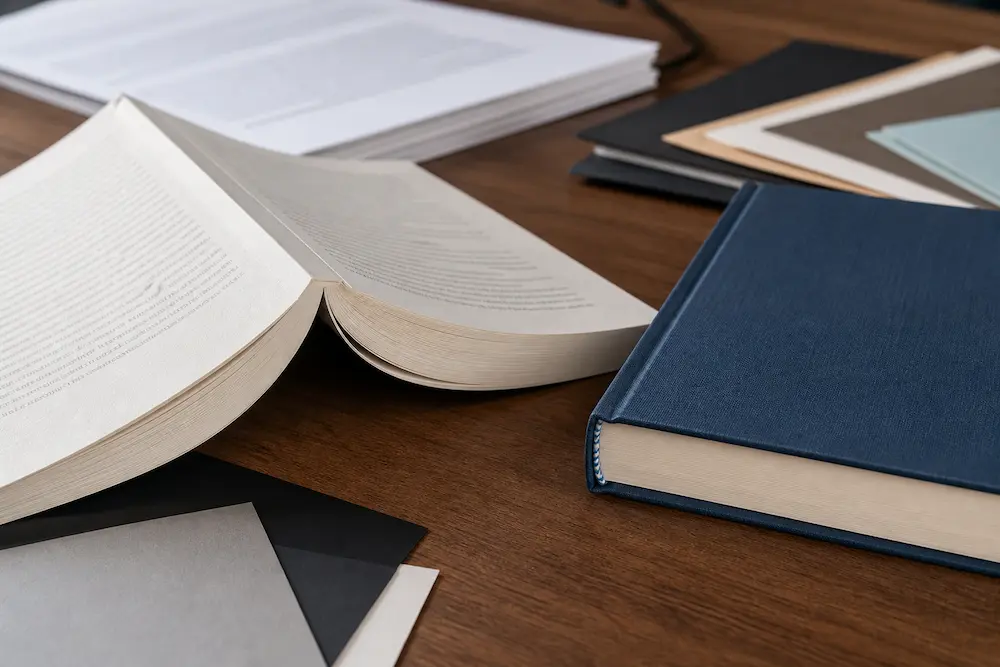
A paperback book has a flexible cardstock cover attached to the inner pages with adhesive. This binding method is commonly called perfect binding.
Unlike a hardcover book, a paperback does not have a rigid board cover. Therefore, it weighs less and usually costs less to produce and ship.
Paperback printing is suitable for:
- Novels and poetry books
- Business books
- Educational books
- Training manuals
- Workbooks
- Product catalogs
- Children’s books
- Event programs
Choose a paperback when you want a professional retail appearance without the higher cost of hardcover binding.
How Does Paperback Book Printing Work?
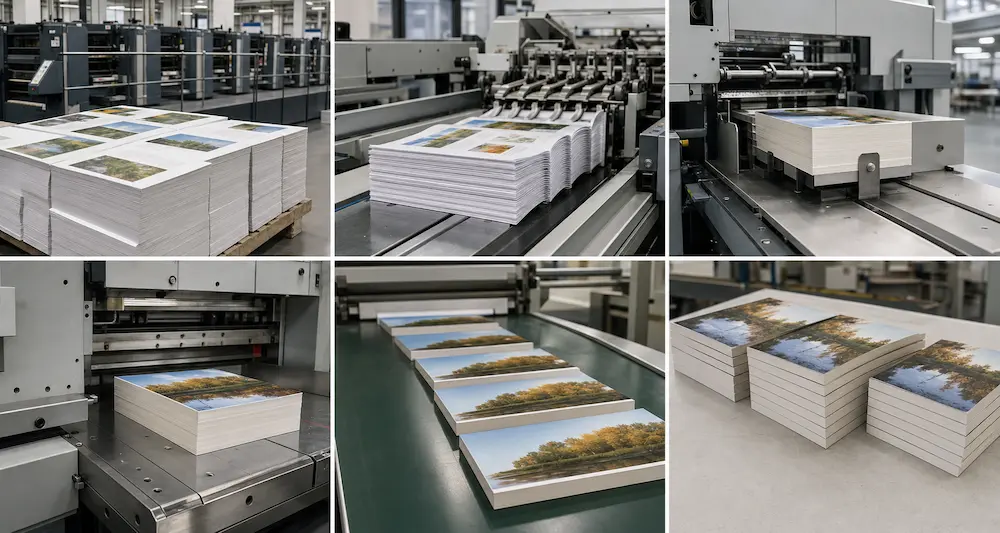
The paperback book printing process begins after you approve the files and specifications.
First, the printer checks your interior and cover artwork. Next, the inner pages and cover are printed separately.
The production process normally includes:
- Checking the files
- Producing a digital or physical proof
- Printing the interior pages
- Printing and finishing the cover
- Folding and gathering the pages
- Applying glue to the spine
- Attaching the cover
- Trimming the book on three sides
- Inspecting and packing the books
During perfect binding, the page edges are prepared before adhesive is applied. This process helps the pages bond securely to the cover.
How Should You Prepare Print-Ready Files?
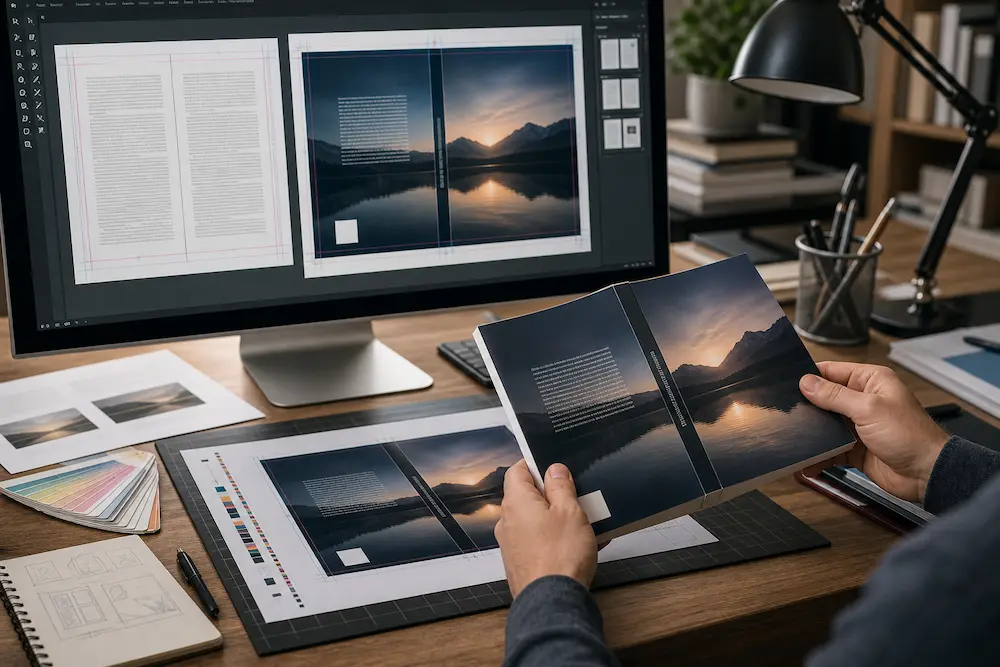
You normally need two files: one for the interior and one for the cover.
Your interior PDF should contain single pages in the correct reading order. It should also use embedded fonts and high-resolution images.
Your complete cover file should include:
- Back cover
- Spine
- Front cover
- Bleed area
- Safe margins
- Barcode area, when required
Do not calculate the spine width before choosing your paper. The final width depends on the page count and paper thickness.
For reliable printing, prepare your files with:
- CMYK colors
- Images at approximately 300 DPI
- At least 3 mm bleed
- Embedded or outlined fonts
- Correct trim size
- Sufficient inner margins
Before mass production, always review a proof. It allows you to check the layout, colors, paper, binding, and overall appearance.
Which Paper and Cover Finish Should You Choose?
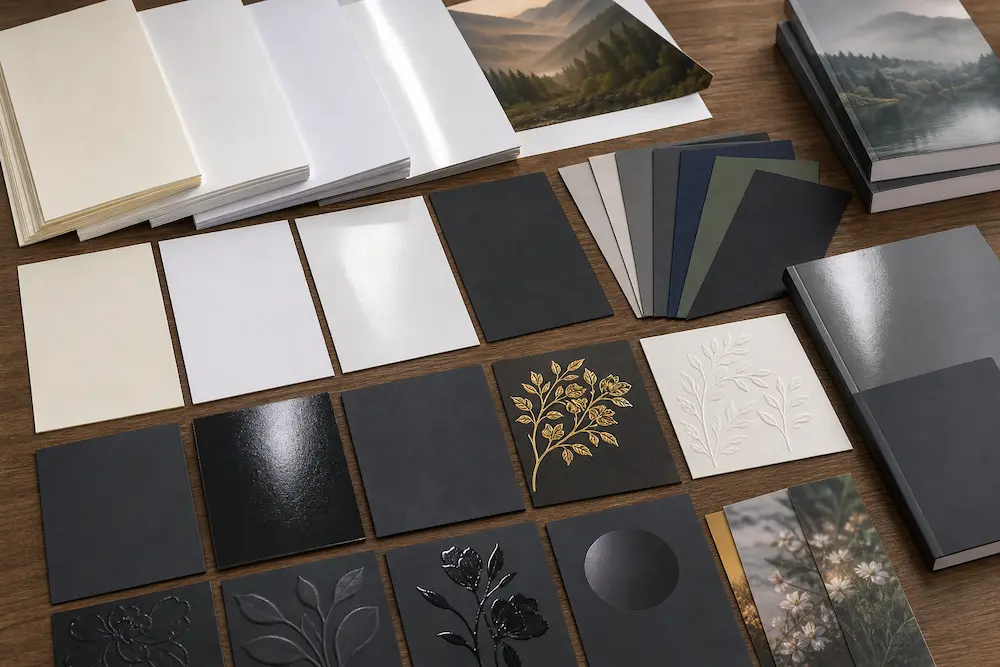
Your paper choice affects readability, weight, thickness, and cost.
White uncoated paper provides clear contrast and works well for manuals and illustrated books. Meanwhile, cream paper creates a softer reading experience for novels.
Coated paper is better when your book contains detailed photographs or colorful graphics.
Common interior options include:
- White uncoated paper
- Cream uncoated paper
- Gloss-coated paper
- Matte-coated paper
- Recycled paper
The cover usually uses thicker cardstock. You can then add a protective and decorative finish.
Popular cover finishes include:
- Matte lamination
- Gloss lamination
- Soft-touch lamination
- Spot UV
- Foil stamping
- Embossing
- Debossing
Matte lamination produces a smooth, understated appearance. In contrast, gloss lamination makes colors look brighter. Soft-touch lamination adds a premium, velvety texture.
Should You Choose Digital or Offset Printing?
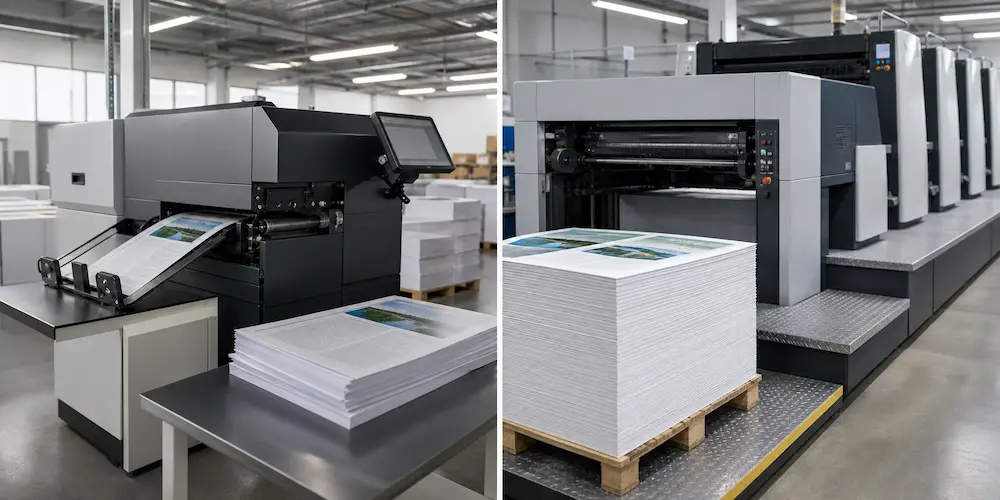
The best printing method mainly depends on your order quantity, budget, schedule, and quality requirements.
Digital printing is often suitable for short print runs. It requires less setup and makes it easier to order a small quantity.
Choose digital printing when you need:
- A small initial order
- Fast production
- Test copies
- Frequent content updates
- Lower setup costs
Offset printing is usually better for medium and large orders. Although setup costs are higher, the unit price falls as the quantity increases.
Choose offset printing when you need:
- Hundreds or thousands of books
- Stable color across the full order
- More paper choices
- Special cover finishes
- A lower bulk unit price
Tell Pakoro your quantity and specifications. We can then recommend the more cost-effective method.
What Affects Paperback Book Printing Cost?
There is no single price for paperback book printing. Your quotation depends on the complete product specification.
The main cost factors are:
- Finished book size
- Number of pages
- Interior printing colors
- Paper type and weight
- Cover material
- Binding method
- Cover finishes
- Order quantity
- Packaging
- Shipping destination
Quantity has a major effect on the unit price. For example, offset printing 2,000 books usually costs less per copy than printing 200 books.
However, ordering more books also increases storage needs. Therefore, you should compare unit savings with your expected sales.
You can reduce costs by using a standard book size, limiting special finishes, and selecting paper that fits the book’s actual purpose.
How Long Does Paperback Printing Take?
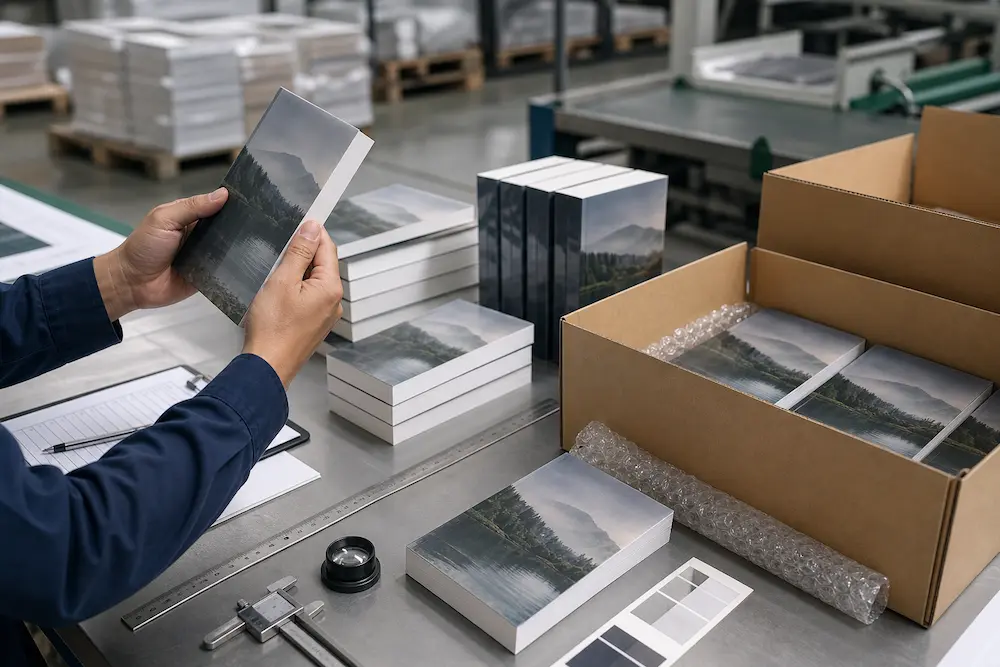
Production time begins after you approve the final proof, not when you first request a quotation.
The schedule may include:
- File checking
- Proof production
- Material preparation
- Printing
- Binding and trimming
- Quality inspection
- Packing
- Shipping
A simple digital order can be produced faster than a large offset order with special finishes. Foil stamping, embossing, and custom packaging can also add production time.
Before confirming your launch date, allow time for proof corrections and shipping. Ask your supplier for a written production schedule based on your exact specifications.
How Are Paperback Books Checked and Packed?
Quality control protects your books from printing and binding problems.
Your supplier should inspect:
- Page order
- Text and image alignment
- Color consistency
- Spine position
- Adhesive strength
- Trimming accuracy
- Cover finish
- Book quantity
Finished books can be shrink-wrapped, bundled, or placed directly into export cartons. Corner protection and stronger cartons may also be used for international shipping.
If you sell books as a gift set, Pakoro can produce custom mailer boxes, slipcases, sleeves, or retail packaging alongside your books.
Can Paperback Book Printing Be Eco-Friendly?
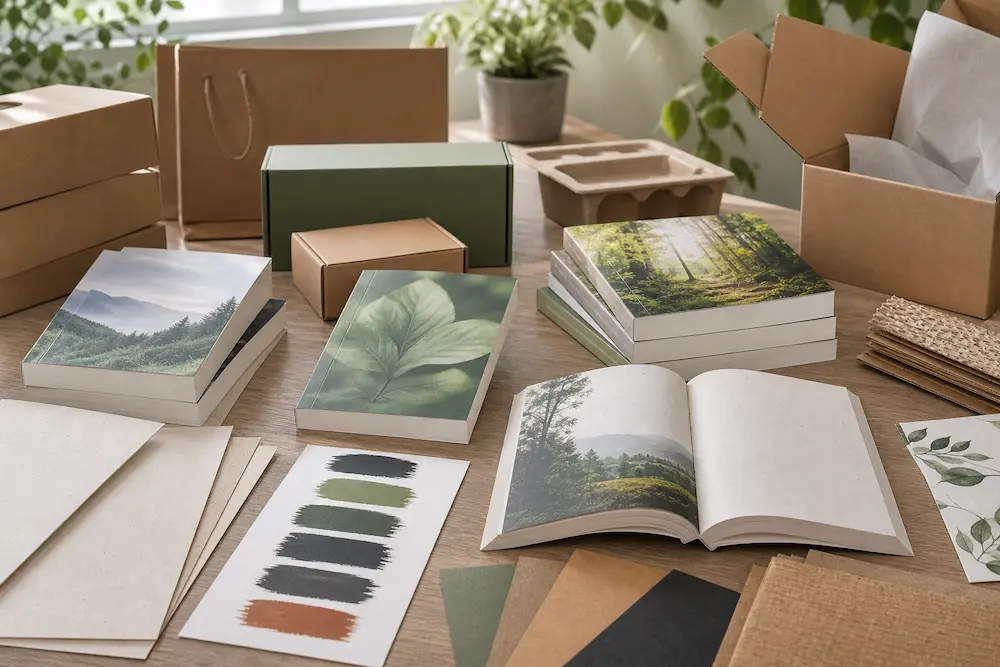
Yes. You can reduce environmental impact through careful material and production choices.
Consider using:
- Recycled paper
- Responsibly sourced paper
- Vegetable-based inks
- Water-based coatings
- Recyclable packaging
- Right-sized shipping cartons
- Minimal plastic wrapping
You should also order a realistic quantity. Producing more books than you can sell creates unnecessary material, storage, and shipping waste.
Ask Pakoro about available sustainable materials before approving your quotation.
Start Your Paperback Book Printing Project
Before requesting a quote, prepare this information:
- Finished size
- Page count
- Interior colors
- Paper preference
- Cover finish
- Order quantity
- Packaging requirements
- Shipping destination
Do not worry if you have not selected every detail. Pakoro can recommend suitable options based on your budget and target reader.
Contact Pakoro for custom paperback book printing and packaging:[Add Pakoro email, WhatsApp, phone number, or inquiry link]
Final Thoughts
Paperback book printing becomes much simpler when you prepare the correct files and understand your production choices.
Start with your target reader and expected quantity. Then, select the printing method, paper, cover finish, and packaging that support your goals.
With clear specifications and an approved proof, you can produce a professional book that is ready for readers, retailers, or online sales.


