


Gutter in printing means the inner margin near the spine of a book. It gives your text, images, and design enough space, so they do not disappear into the binding.
If your gutter is too small, your book may look crowded. More importantly, your readers may struggle to read content near the spine.
At Pakoro, we help you think beyond printing. We also help you protect finished books with custom mailer boxes, rigid boxes, paper inserts, and book packaging solutions.
What Is Gutter in Printing?
The gutter in printing is the blank space near the inside edge of each page, close to the book spine.
When a book is bound, part of the page curves into the spine. Therefore, you need extra inner margin to keep text and images visible.
In simple words:
Gutter = the safe space between your content and the binding.
You need this space for hardcover books, softcover books, catalogs, manuals, journals, and photo books.
Why Gutter Margin Matters for Printed Books
A good gutter margin improves readability, layout balance, and production quality.
If the gutter is too narrow, text may be hidden near the spine. Images may also look cut off. As a result, the final book can feel unprofessional.
A proper gutter margin helps you:
Keep text easy to read
Protect image details
Support different binding styles
Create a cleaner page layout
Improve the reader experience
Also, when your book is packed and shipped, a well-made book keeps its shape better. So, layout, binding, and packaging should be planned together.
How to Set Up Gutter Margins for Printing
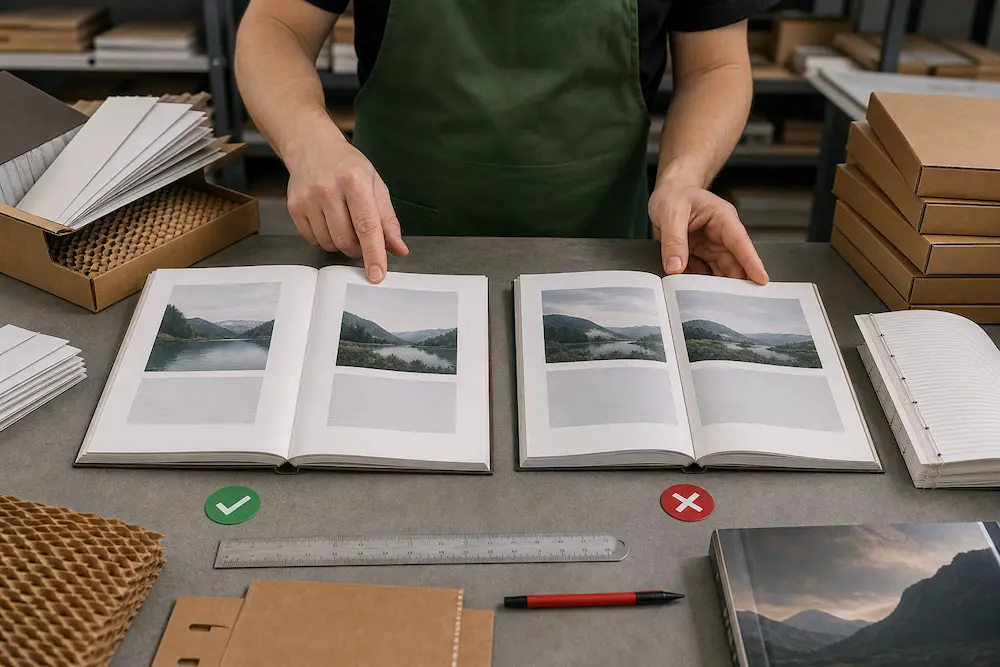
To set up gutter margins, start with your trim size, binding type, and page count.
Most books need a larger inner margin than outer margin. This is because the spine takes up space when the book opens.
As a general guide, many books use a gutter margin around 0.5 inch to 1 inch. However, thicker books usually need more gutter space.
You should also check:
Top margin
Bottom margin
Outer margin
Bleed area
Safe zone
Facing-page balance
Before printing, always review a proof. A screen layout can look fine, but a bound book may reveal gutter problems.
How to Calculate Gutter Size for Your Book
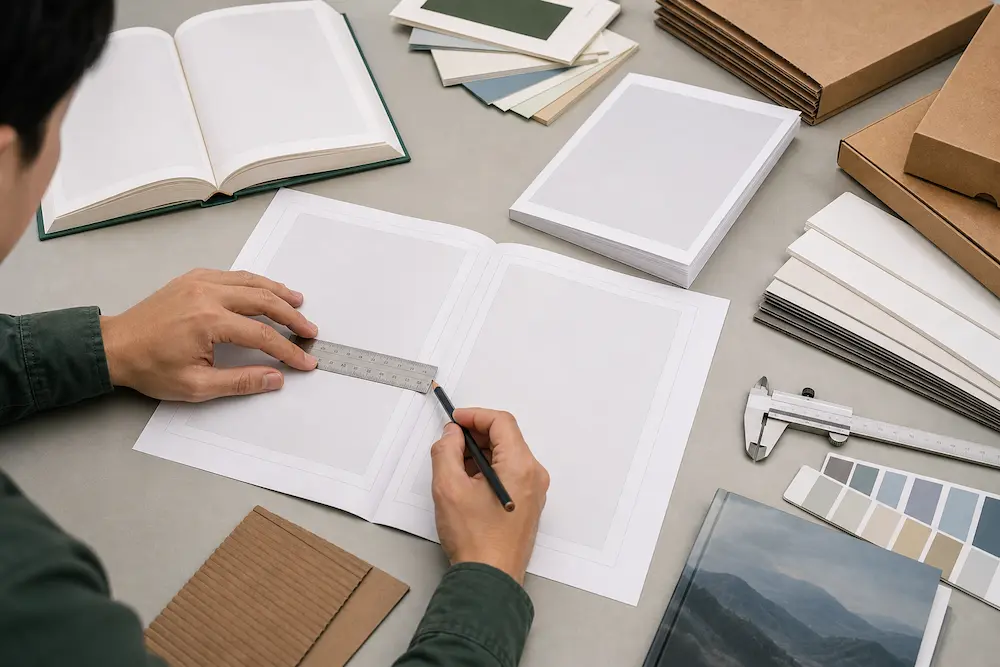
There is no single gutter size for every book. You should calculate it based on the book structure.
Consider these factors:
Trim size: Smaller books often need careful inner spacing.
Page count: More pages usually need a larger gutter.
Binding type: Perfect binding, hardcover, Wire-O, and spiral binding need different spacing.
Paper thickness: Thicker paper can make the spine area tighter.
Image layout: Full-spread images need extra planning.
A simple planning formula is:
Gutter width = inner safe margin needed for binding + readable content space
If you are unsure, test with a printed proof before mass production.
How to Handle Images Across Two Pages
Images across two pages need special attention.
If the main subject sits in the gutter, it may disappear into the binding. Therefore, you should avoid placing faces, product details, text, or key artwork in the center fold.
For photo books, catalogs, cookbooks, and art books, you should:
Keep important details away from the spine
Align both pages carefully
Use enough inner margin
Check the binding method
Review a physical proof
If your image must cross the center, place less important background details in the gutter area.
Common Gutter Mistakes to Avoid
Many printing problems start with small layout mistakes.
Avoid these common gutter mistakes:
Making the gutter too narrow
Using inconsistent inner margins
Placing text too close to the spine
Putting important image details in the fold
Ignoring page count and paper thickness
Forgetting to check a physical proof
Overcorrecting with a gutter that is too wide
A good gutter should feel invisible. It should protect readability without making the page look empty.
How Pakoro Supports Book Printing and Packaging Quality
Pakoro helps brands protect finished books after printing.
Even if your gutter and binding are perfect, poor packaging can still damage the book. Corners can bend. Covers can scratch. Spines can dent during shipping.
We can help you with:
Rigid book boxes
Paper inserts
Corner protection
Honeycomb paper wrap
Book sleeves
With better packaging, your printed books can arrive clean, flat, and professional.
Contact Pakoro today for custom book packaging solutions for books, catalogs, manuals, journals, and premium printed products.
Final Takeaway
Gutter in printing is a small detail, but it has a big effect.
It protects your text, images, and reading experience. It also helps your book look more professional after binding.
So, before you print, check your gutter margin, binding method, page count, and proof. Then, choose packaging that protects the finished book during storage and shipping.


