Hardcover book printing creates a durable book by attaching a bound book block to rigid cover boards. Your final cost depends on size, page count, paper, color, binding, cover material, finishes, quantity, and shipping.
Are you preparing to print your first hardcover book? If so, you probably have questions about cost, files, materials, binding, and minimum quantities.
Fortunately, you do not need to understand every production detail before requesting a quote. However, knowing the basics will help you avoid mistakes and make better choices.
As a printing and packaging specialist, Packaza can help you compare materials, finishes, book structures, and protective packaging. Here are 19 common hardcover book printing questions you should answer before production.
[Featured Image Prompt: Photorealistic commercial scene featuring several premium custom hardcover books with cloth covers, printed covers, foil stamping, dust jackets, ribbon bookmarks, and a slipcase on a professional publishing desk, soft natural studio light, wide landscape composition, no readable text or logos.]
1. How Much Does Hardcover Book Printing Cost?
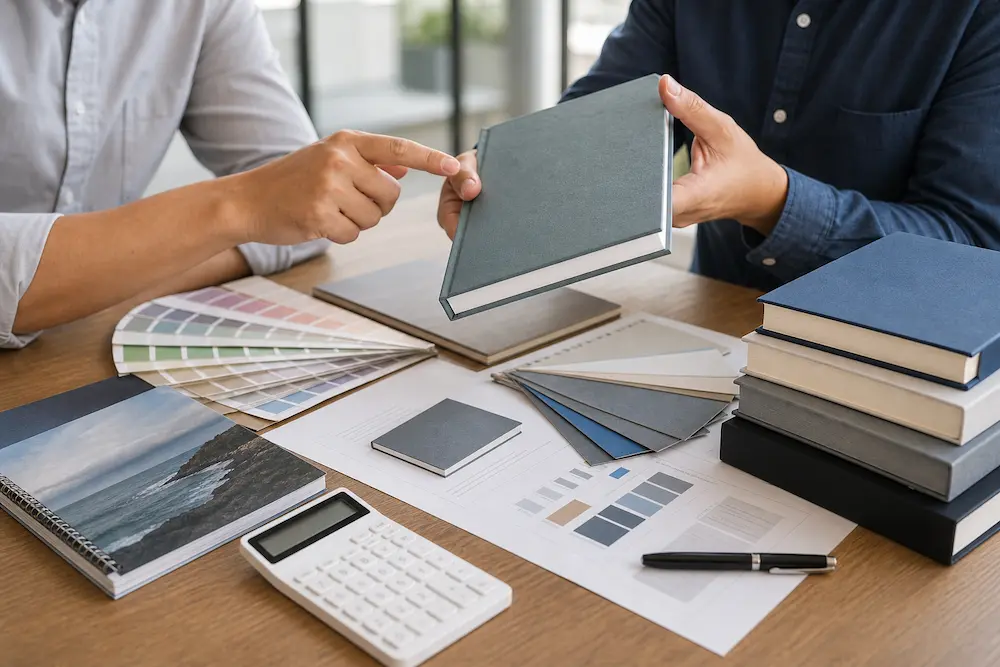
There is no single price for hardcover book printing. Instead, your quote depends on the following specifications:
- Finished book size
- Number of pages
- Order quantity
- Color or black-and-white printing
- Interior paper type and weight
- Cover board thickness
- Cover wrapping material
- Sewn or adhesive binding
- Surface finishes
- Dust jackets, bookmarks, or slipcases
- Delivery destination
For example, a black-and-white novel with a printed paper cover will usually cost less than a large photography book with coated paper and foil stamping.
Digital printing is often practical for short runs. However, offset printing usually provides a lower unit price for larger orders.
To receive an accurate quote, prepare your size, page count, quantity, paper, binding, finishing, and shipping requirements.
You can request a custom quotation from Packaza through /contact-us/.
2. What Is the Minimum Page Count for a Hardcover Book?
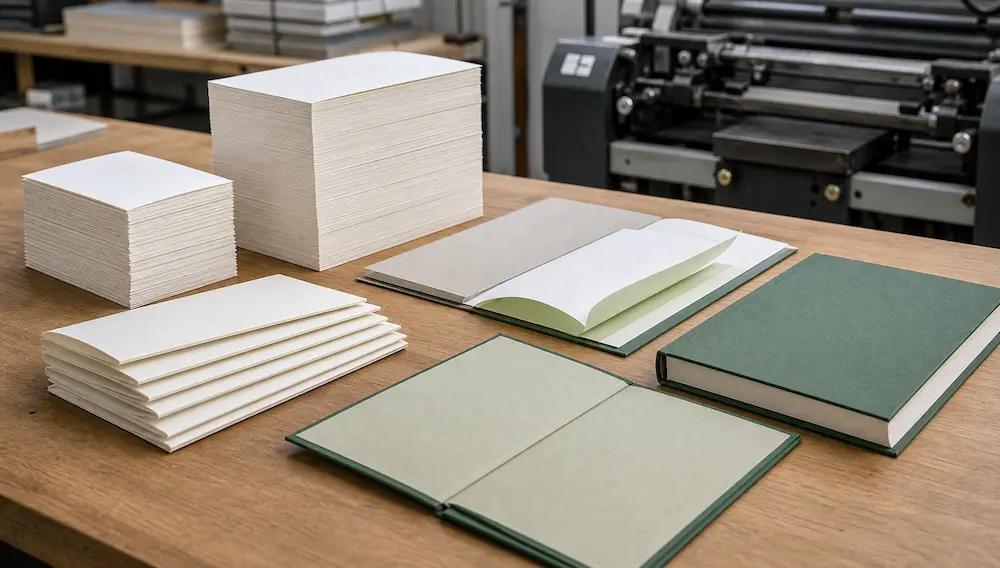
The minimum page count depends on the printer, binding method, paper thickness, and production equipment.
Many printers can produce hardcover books with approximately 16 pages or more. However, a very thin book may require a special structure to create a stable spine.
Therefore, you should confirm the following points:
- Minimum supported book-block thickness
- Required page multiples
- Available binding methods
- Minimum printable spine width
For a short children’s book or presentation book, thicker paper can help you create a more substantial book block.
3. How Should You Arrange the Interior Pages?
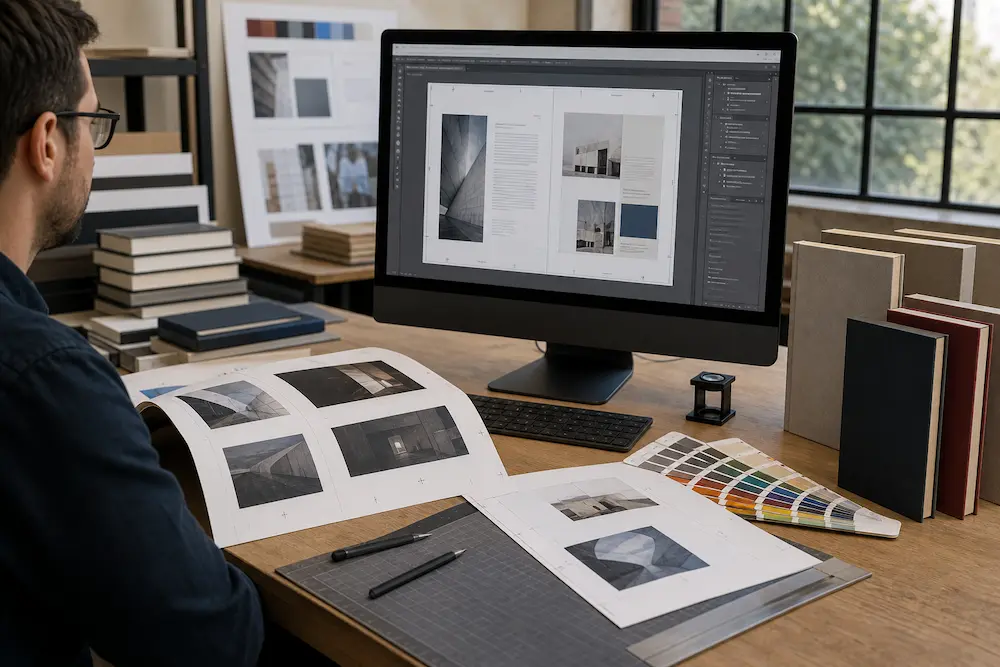
Prepare your interior as individual pages in normal reading order. Usually, you should not manually arrange them into printer spreads or signatures.
Your printing partner will handle imposition based on its machines and binding process.
Before submitting your files, check:
- Page size
- Margins
- Page numbers
- Image resolution
- Color settings
- Bleed
- Embedded fonts
- Blank pages
- Front and back matter
Additionally, export the complete interior as a print-ready PDF unless your printer requests another format.
Always review a digital or physical proof before mass production. A proof can reveal missing fonts, low-resolution images, incorrect colors, and misplaced content.
4. What Is the Difference Between a Sheet and a Page?
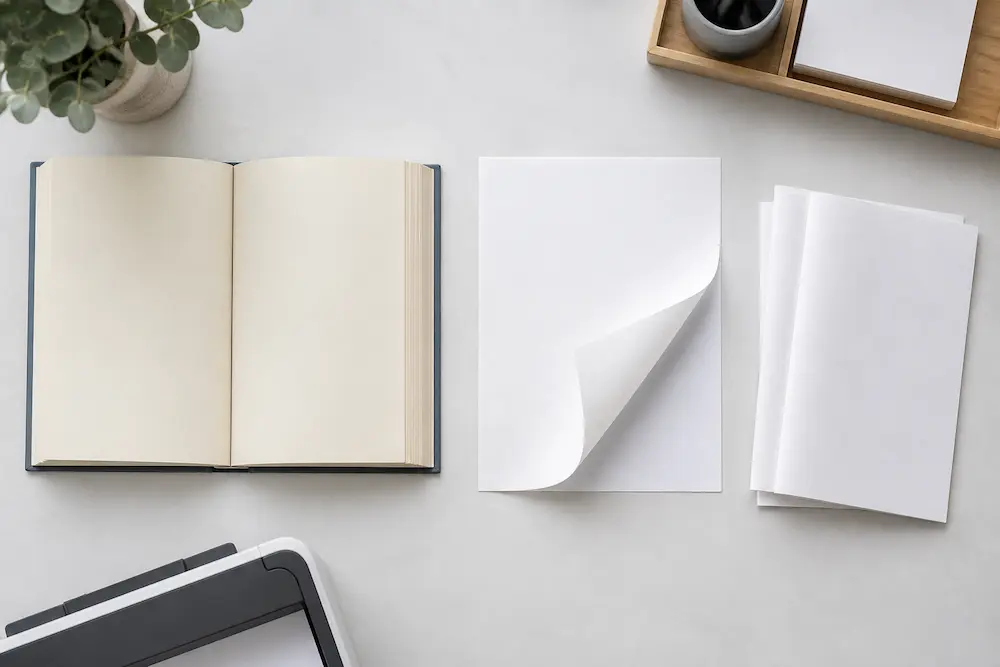
A page is one printed side. A sheet is one physical piece of paper with two sides.
Therefore:
- One sheet equals two pages.
- A 100-page book contains 50 physical sheets.
- Blank sides may still count as pages in production.
Printers usually discuss book specifications by page count. Consequently, tell your supplier the total number of pages, including blank and introductory pages.
5. What Are Endpapers?
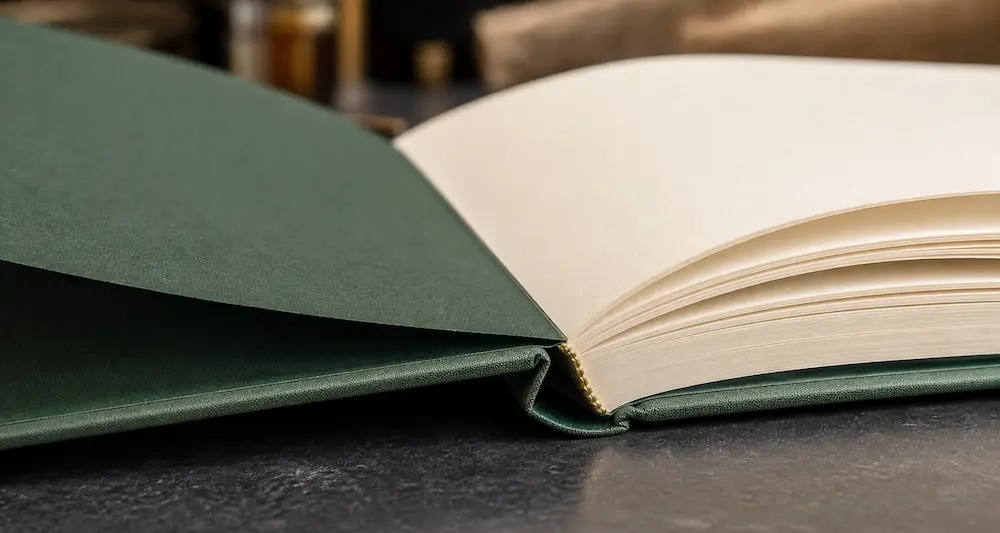
Endpapers are folded sheets that connect the book block to the hardcover case. You see them immediately after opening the front cover and before reaching the back cover.
They provide three important benefits:
- They attach the pages to the case.
- They help protect the book block.
- They improve the book’s visual presentation.
You can choose plain, colored, printed, coated, uncoated, or textured endpapers. For a premium book, custom-printed endpapers can introduce your visual identity before the main content begins.
6. What Is the Structure of a Hardcover Book?
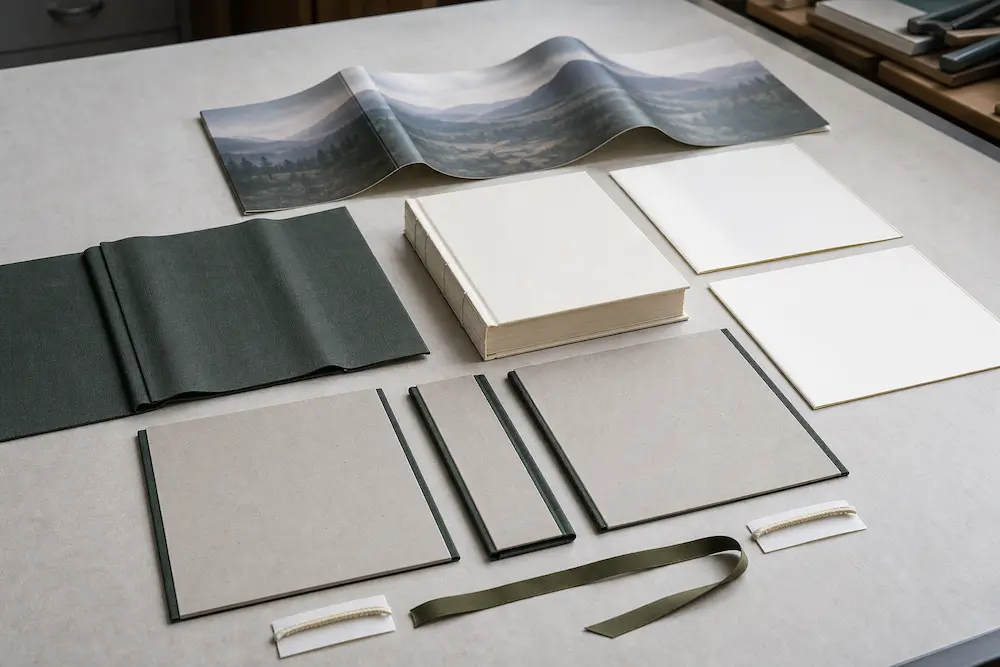
A standard hardcover book includes several connected components:
- Book block: The printed and bound interior pages.
- Case: The rigid front cover, back cover, and spine.
- Cover wrap: Printed paper, cloth, or another material covering the boards.
- Endpapers: Sheets connecting the book block to the case.
- Spine: The bound edge of the book.
- Hinges: Flexible grooves beside the spine.
- Headbands: Decorative bands at the top and bottom of the spine.
- Dust jacket: An optional removable printed cover.
Each component affects durability, appearance, cost, and reading experience. Therefore, choose the complete structure before finalizing your artwork.
7. What Is the Hinge Area?
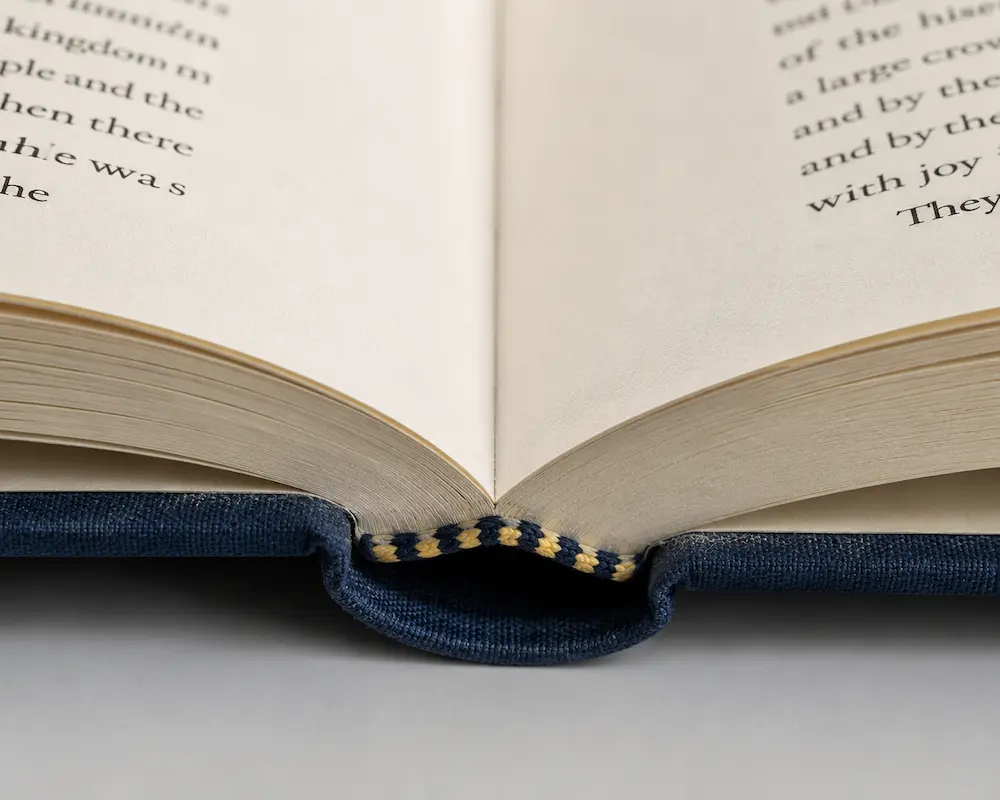
The hinge, sometimes called the groove, is the flexible area between the spine and each cover board.
A properly constructed hinge allows you to open and close the book smoothly. It also distributes stress, which helps prevent the book block from separating from the case.
A damaged or poorly made hinge may cause:
- Difficult opening
- Cracked cover material
- Loose pages
- Separation between the case and book block
Because of this, you should inspect the hinge carefully when approving your physical sample.
8. Hardcover vs Paperback: Which Should You Choose?
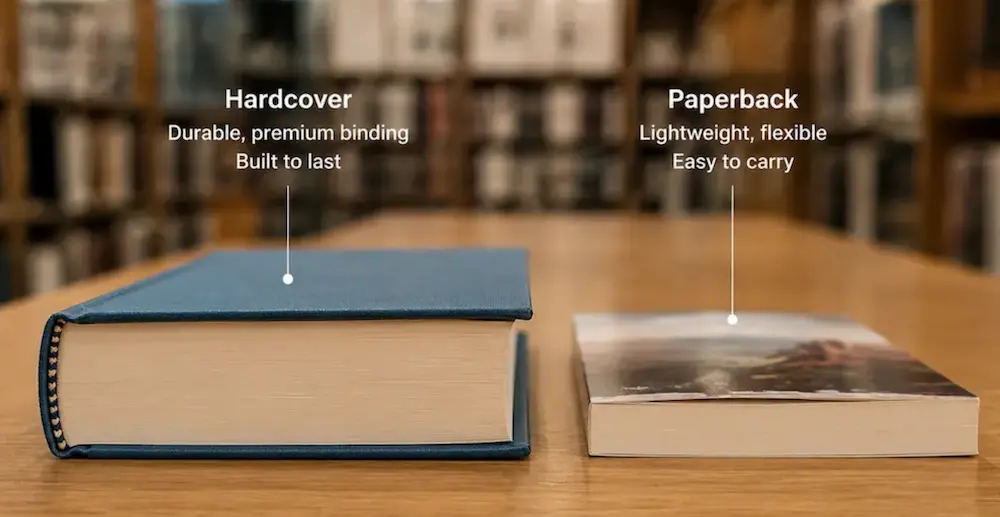
Choose a hardcover book when you need greater durability, stronger presentation, or more finishing options. Choose a paperback when price, portability, and lower shipping weight matter more.
| Feature | Hardcover | Paperback |
|---|---|---|
| Cover | Rigid board | Flexible paper card |
| Durability | Higher | Moderate |
| Production cost | Higher | Lower |
| Weight | Heavier | Lighter |
| Premium appearance | Strong | Moderate |
| Customization | Extensive | More limited |
| Shipping cost | Usually higher | Usually lower |
Hardcover printing works well for photo books, art books, children’s books, cookbooks, limited editions, corporate books, and premium publications.
9. Should You Choose a Square or Rounded Spine?
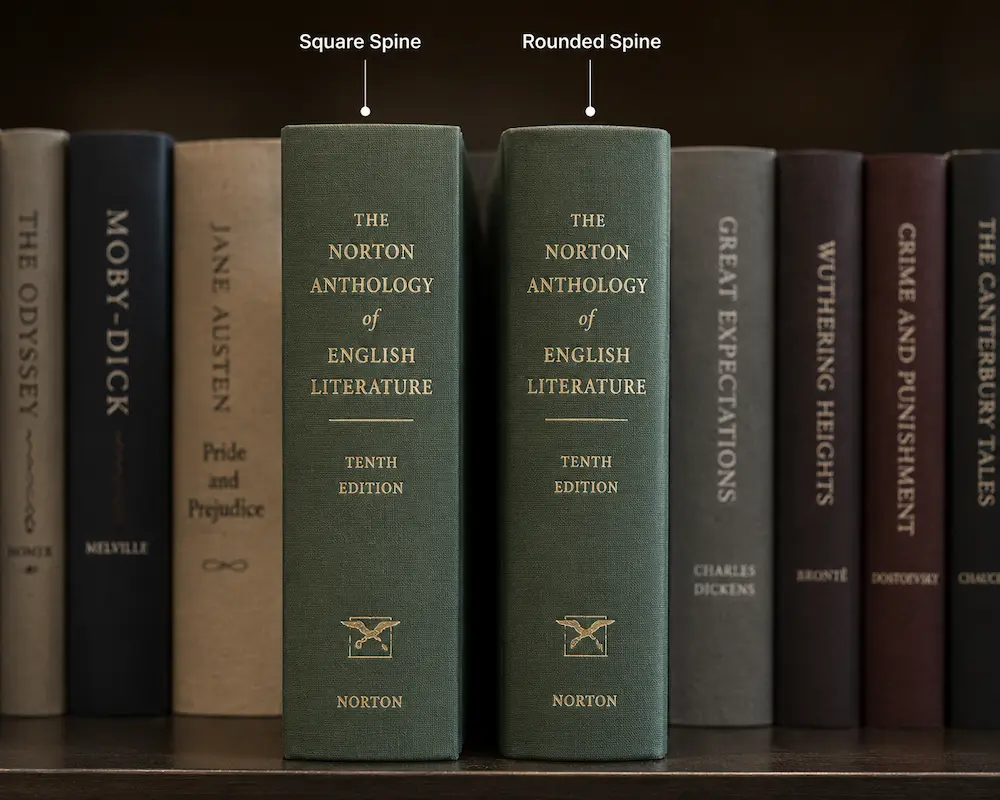
A square spine has a flat profile and creates a clean, modern appearance. It also provides a straightforward surface for printed titles and graphics.
A rounded spine creates a more traditional appearance. It is often used for thicker books and premium editions.
Consider these factors:
- Book thickness
- Visual style
- Genre
- Shelf presentation
- Binding method
- Reading experience
- Production budget
A square spine is usually suitable for modern art books, reports, and children’s books. Meanwhile, a rounded spine may complement literature, reference books, and collectible editions.
10. What Hardcover Book Sizes Are Available?
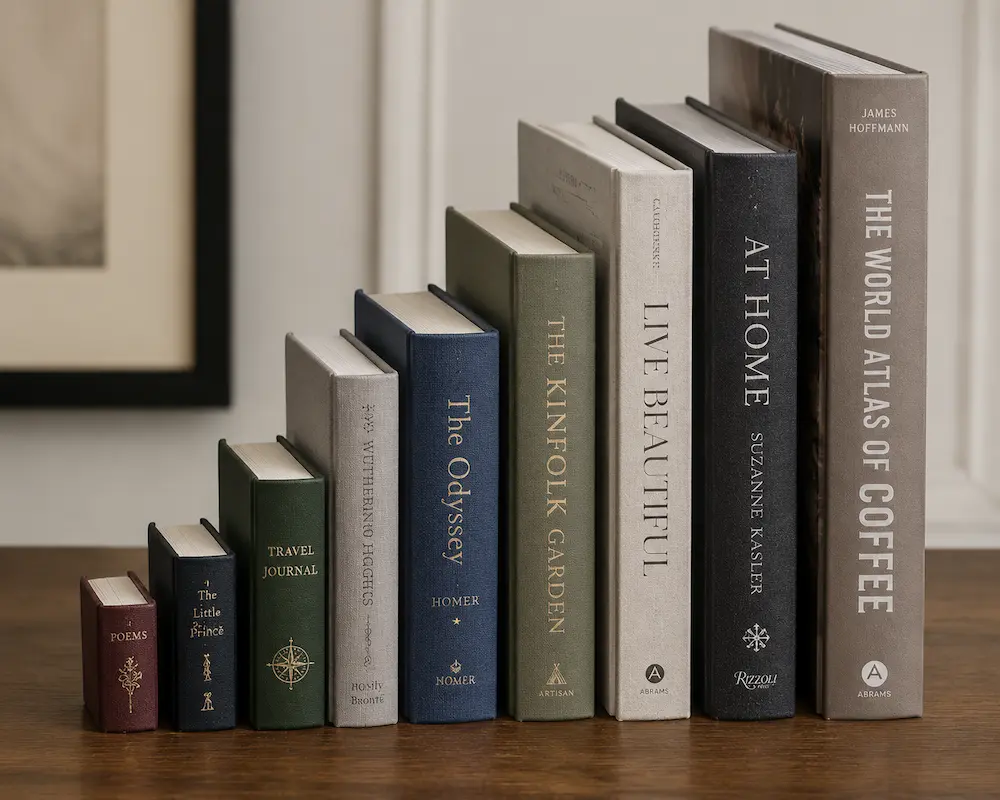
Your available size range depends on the printer’s equipment. Therefore, do not assume every manufacturer can make extremely small or oversized books.
Common formats include:
- Pocket books
- Novels
- Children’s picture books
- Square photo books
- Cookbooks
- A4-style reports
- Large coffee-table books
Choose your size based on content, audience, usability, shipping, and shelf space. Larger books showcase photography well, but they use more material and cost more to ship.
Before preparing your layout, ask Packaza or your printer to confirm the exact finished size and template.
11. How Are Hardcover Books Printed and Bound?
The standard production process includes:
- Preflight and proof the artwork.
- Print the interior sheets.
- Cut and fold sheets into signatures.
- Gather the signatures in order.
- Sew or glue the book block.
- Trim the book block.
- Attach endpapers and headbands.
- Make the rigid cover case.
- Insert the book block into the case.
- Press and dry the finished books.
- Inspect, pack, and ship the order.
Because several steps depend on each other, late artwork changes can delay production. Therefore, approve your content, page count, and materials before manufacturing begins.
12. Which Hardcover Cover Materials Can You Use?
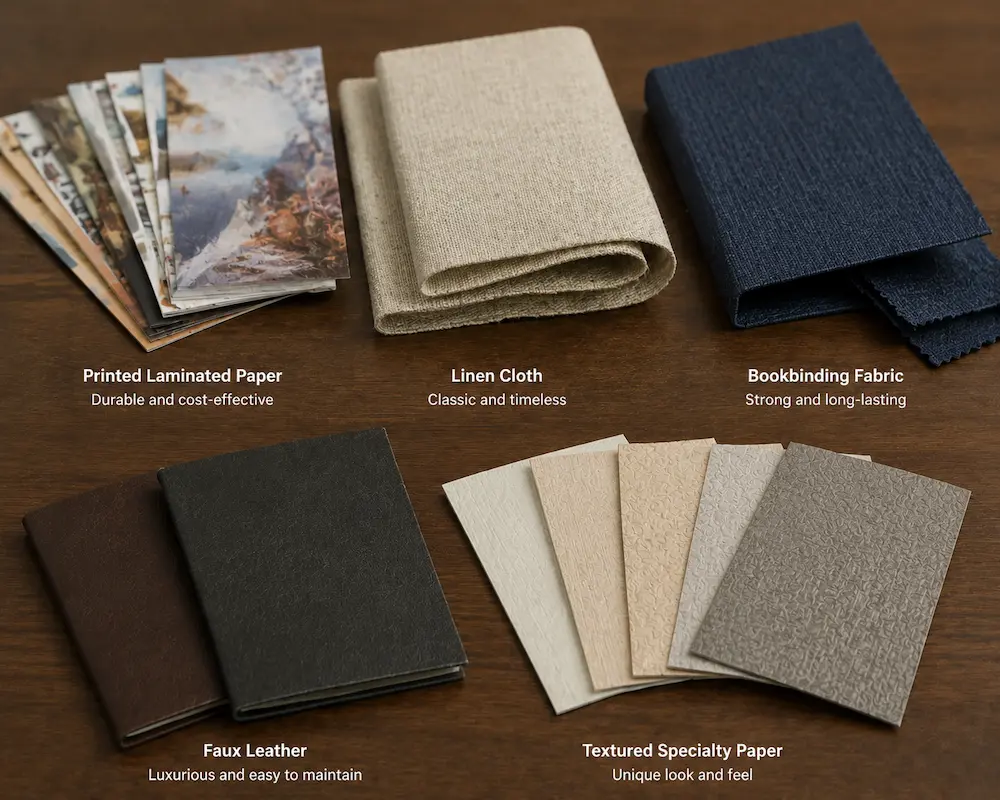
Your main cover options include:
Printed and laminated paper: This is flexible, colorful, and cost-effective. You can choose matte, gloss, or soft-touch lamination.
Cloth or linen: This material creates a classic, tactile appearance. It works especially well with foil stamping or debossing.
Faux leather: This option delivers a formal, luxurious look without using natural leather.
Specialty paper: Textured, colored, recycled, or pearlescent papers can create a distinctive finish.
Select a material that suits your audience and how the book will be handled. For example, a cookbook may need a wipe-resistant laminated cover. Meanwhile, a collector’s edition may benefit from cloth and foil.
13. Which Interior Paper Should You Choose?
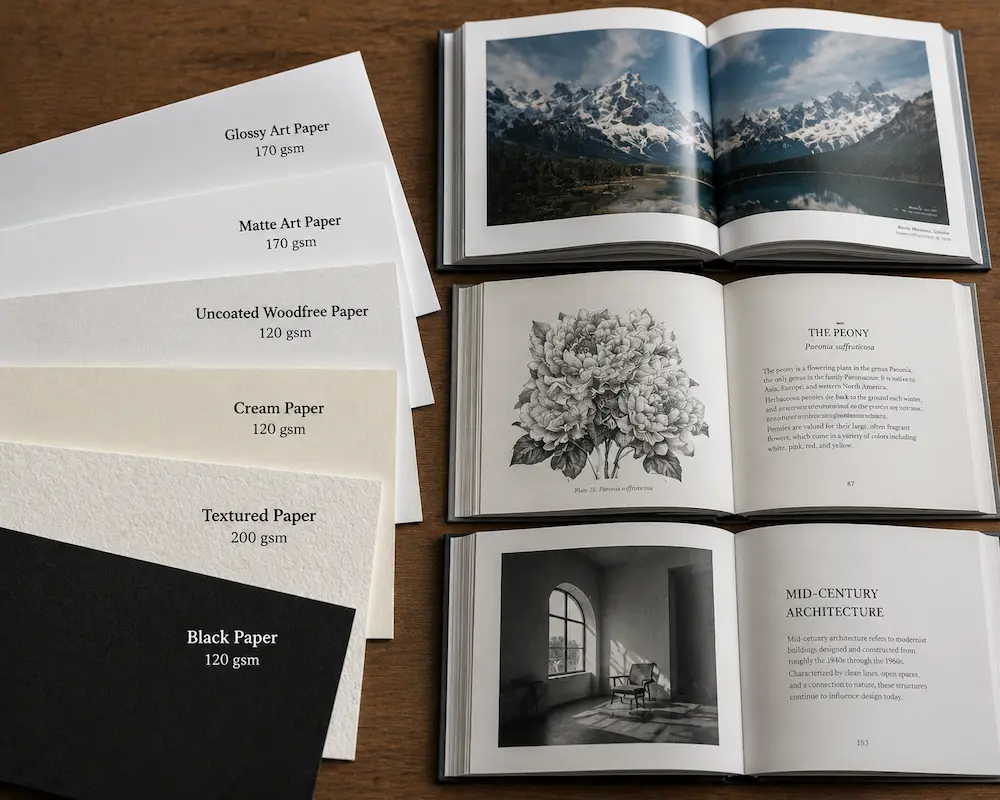
Choose paper based on the content rather than appearance alone.
Coated paper produces sharper images and stronger colors. Therefore, it is suitable for photography, art, catalogs, and illustrated books.
Uncoated paper feels natural and is easier to read for long periods. It works well for novels, journals, and text-heavy books.
Specialty paper can include recycled, textured, colored, or decorative stock. However, special paper may increase cost and affect color reproduction.
Before ordering, request printed paper samples. Screen previews cannot accurately show paper texture, opacity, or ink absorption.
14. Which Finishes Can You Add?
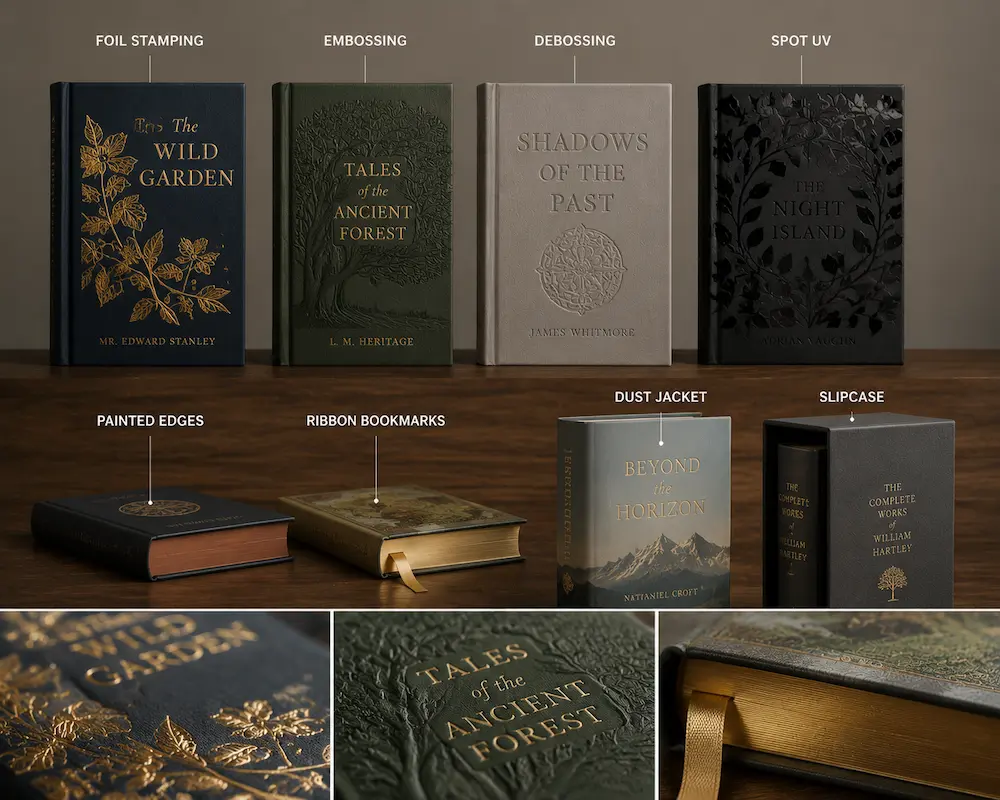
Popular hardcover book finishes include:
- Foil stamping
- Embossing
- Debossing
- Spot UV
- Matte or gloss lamination
- Soft-touch lamination
- Painted or gilded page edges
- Ribbon bookmarks
- Dust jackets
- Belly bands
- Slipcases
- Custom presentation boxes
Finishes should support your design instead of competing with it. For example, one small foil detail can look more premium than covering the entire book with decorative effects.
Packaza can also help you develop a protective custom box or slipcase through /custom-rigid-boxes/.
15. How Thick Should the Hardcover Board Be?
Many hardcover books use greyboard around 2 to 3 mm thick. However, the right thickness depends on book size, weight, cover material, and binding construction.
A large, heavy book may need stronger boards. In contrast, an unnecessarily thick board can increase weight and make a small book uncomfortable to use.
Your printer should test the board, spine, hinge, and book block as one structure. Therefore, avoid selecting board thickness without considering the complete book.
16. How Much Bleed Does Hardcover Artwork Need?
Bleed is artwork that extends beyond the final trim or wrap edge. It prevents unwanted white borders after cutting and assembly.
Many printers request approximately:
- 3 mm or 0.125 inches for interior pages and dust jackets
- A larger wrap allowance for a case-bound cover
The cover allowance may be much larger because the printed sheet must wrap around the cover boards. However, the exact measurement depends on board thickness and construction.
Always use the template supplied for your project. Do not reuse a template from another printer or a different page count.
17. How Do You Calculate Hardcover Spine Width?
Your spine width depends primarily on:
- Page count
- Interior paper thickness
- Binding method
- Cover board thickness
- Endpaper thickness
- Cover wrapping material
A rough calculation is not enough for final cover artwork. Even papers with the same weight can have different thicknesses.
Therefore, ask your supplier to calculate the final spine after confirming the paper and page count. Then, place your spine text using the approved cover template.
18. What Is the Minimum Order Quantity?
The minimum order quantity depends on your printing method and specifications.
Digital printing can support one copy or a small batch. Consequently, it is useful for prototypes, personalized books, and market testing.
Offset printing requires more setup. However, it usually lowers the unit cost for hundreds or thousands of copies.
Ask for quotations at several quantities, such as:
- 100 copies
- 300 copies
- 500 copies
- 1,000 copies
- 2,000 copies
Then, compare the total investment, unit price, storage needs, and expected sales. The lowest unit price is not always the best business decision.
19. Where Should You Print Your Hardcover Book?
You can use a local print shop, an online printer, or an overseas manufacturer.
Before selecting a partner, evaluate:
- Hardcover printing experience
- Physical samples
- Quality-control process
- Material selection
- File support
- Proofing options
- Production time
- Minimum quantity
- Packaging quality
- Shipping experience
- Communication speed
Most importantly, request a physical proof or production sample. It allows you to inspect color, paper, binding, hinges, finishes, and overall construction before approving the complete order.
Hardcover Book Printing Checklist
Before requesting your quote, prepare:
- Finished size
- Total page count
- Interior color requirements
- Paper type and weight
- Cover material
- Binding method
- Spine style
- Finishing requirements
- Order quantity
- Delivery address
- Required delivery date
- Print-ready files
The more complete your specifications are, the more accurate your quotation will be.
Final Thoughts
Successful hardcover book printing starts with clear specifications and a physical proof. When you confirm the paper, binding, cover structure, artwork, finishes, and packaging early, you reduce delays and unexpected costs.
Packaza can help you evaluate premium book structures, protective packaging, slipcases, and custom presentation boxes. Contact Packaza at /contact-us/ to discuss your project.