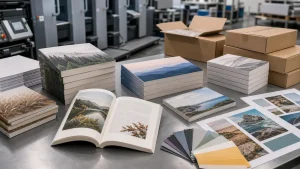
Book covers protect your book, show your brand, and help your product sell. Therefore, when you choose a book cover, you should think about material, finish, durability, cost, and packaging at the same time.
If your book cover looks premium but arrives scratched, bent, or crushed, your customer will notice it immediately. That is why Pakoro helps you match your book cover with the right protective packaging.
What Is a Book Cover?
A book cover is the outer layer that protects your pages and presents your book to the customer.
It can be flexible, rigid, textured, coated, printed, laminated, or wrapped with a dust jacket. However, its job is always the same: protect the book and create a strong first impression.
For example, a softcover book needs flexible protection. A hardcover book needs corner protection. A premium gift book may need a rigid box or custom mailer.
So, before you choose a cover, ask yourself:
“How will this book be sold, shipped, stored, and handled?”
Main Types of Book Covers
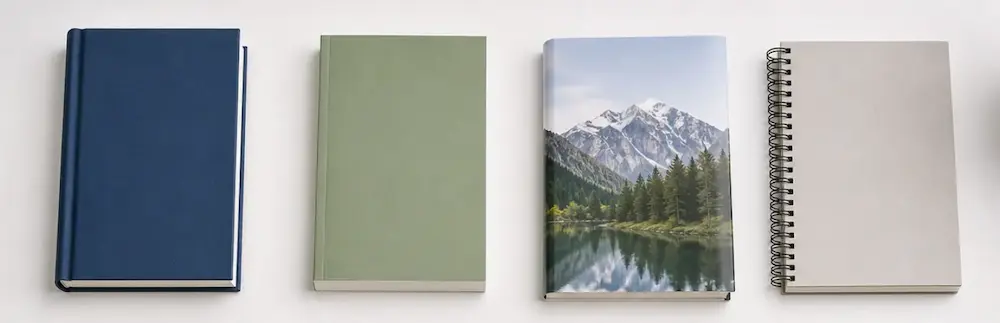
There are several common types of book covers.
Softcover book covers are flexible and lightweight. They are good for paperbacks, workbooks, catalogs, and lower-cost projects.
Hardcover book covers use rigid board. They feel stronger, more premium, and more durable.
Dust jackets wrap around hardcover books. They add extra design space and protect the main cover.
Spiral-bound or wire-bound covers are useful for notebooks, manuals, planners, and training books.
Each cover type needs different packaging. Therefore, you should not use one box style for every book.
How to Choose the Right Book Cover Material
Your book cover material affects cost, weight, durability, and customer experience.
If you want a simple and affordable product, coated paper cover may be enough. If you want a premium book, rigid board or cloth cover may work better.
You should also consider:
Book size
Page count
Shipping distance
Target customer
Brand position
For example, a luxury brand book should not arrive in weak packaging. It needs stronger protection and better presentation.
Book Cover Finishes That Improve Shelf Appeal
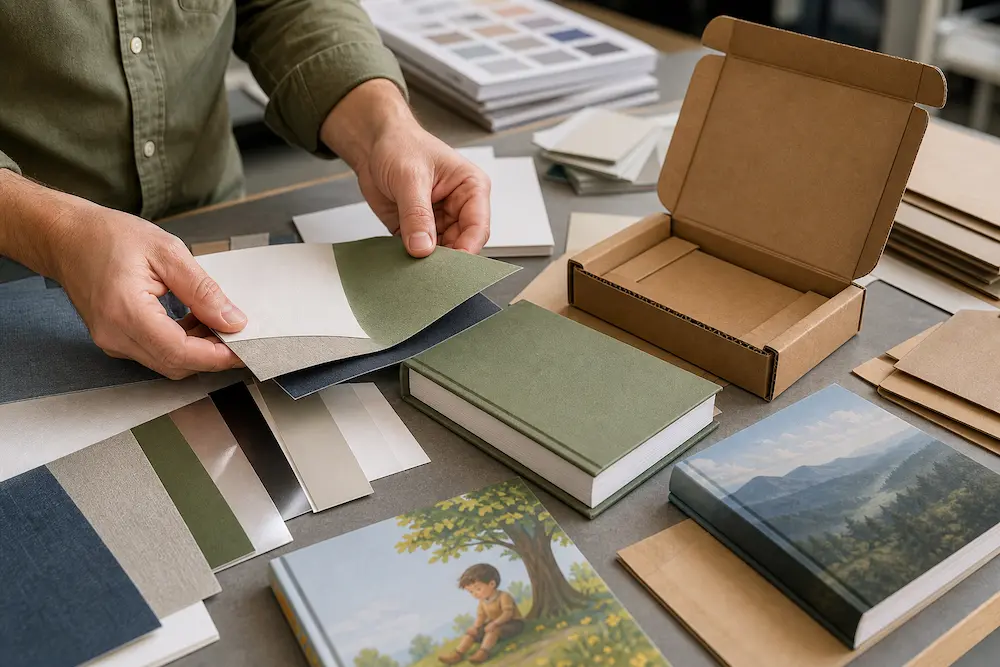
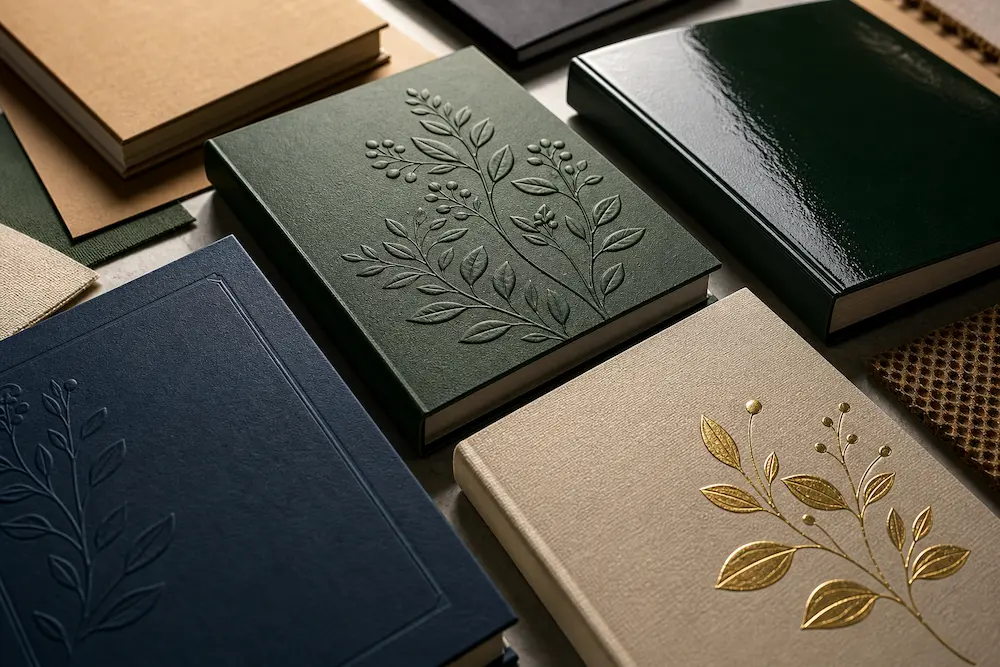
Book cover finishes can make your book more attractive and more durable.
Popular options include:
Matte lamination for a soft and elegant feel.
Gloss coating for bright color and shine.
Embossing for raised texture.
Debossing for pressed texture.
Foil stamping for a premium look.
Spot UV for selective shine.
However, some finishes can scratch during shipping. So, you need packaging that protects the surface.
Why Book Cover Packaging Matters
Book covers are easy to damage during shipping. Corners can bend. Surfaces can scratch. Dust jackets can tear. Hardcover edges can dent.
That means your packaging must support the book size and cover type.
A custom-fit mailer can reduce movement. Paper cushioning can protect corners. A rigid gift box can improve the unboxing experience.
In short, better packaging protects both your book and your brand.
How Pakoro Helps You Build Better Book Cover Packaging
Pakoro helps you create packaging for softcover books, hardcover books, premium books, journals, catalogs, manuals, and gift books.
We can help you with:
Rigid book boxes
Paper wrap packaging
Corner protection
Book inserts
With the right structure, you can reduce damage, improve presentation, and make your book feel more valuable.
Contact Pakoro today to create custom book packaging for your next project.
Final Takeaway
Book covers are not only about design. They also affect protection, shipping, cost, and customer trust.
If you want a practical rule, remember this:
Choose the book cover for your reader. Choose the packaging for the journey.
Pakoro can help you connect both decisions, so your books arrive safely and look professional.