Australia’s packaging market includes global manufacturers, regional converters, ecommerce-box specialists, beverage-packaging suppliers, and overseas custom packaging manufacturers. The right supplier depends on the packaging format, order quantity, speed required, sustainability goals, product-protection needs, and total landed cost—not simply whether the supplier is located in Australia.
This guide keeps 10 useful suppliers for initial research and explains how brand owners, importers, retailers, ecommerce companies, and purchasing managers can select the right packaging partner.
What Does a Packaging Company Do?
A packaging company may manufacture, print, convert, distribute, or design packaging. Some focus on corrugated shipping boxes; others specialize in folding cartons, flexible pouches, rigid gift boxes, beverage containers, or industrial protective packaging.
A custom packaging manufacturer converts materials such as paperboard, corrugated board, greyboard, paper, or film into packaging made to a buyer’s required size, structure, artwork, and finish.
For example, a folding carton is a printed paperboard box that is die-cut, folded, and glued. It is widely used for cosmetics, food, personal care, electronics accessories, and retail products because it can ship flat before assembly.
Top 10 Packaging Companies Serving Australia
This is a research shortlist, not a definitive ranking. Buyers should independently verify each supplier’s current capabilities, facilities, certifications, material specifications, MOQ, quality procedures, and commercial terms.
| Company | Main Focus | Suitable Requirement |
|---|---|---|
| PAKORO | Custom paper boxes and retail packaging | Overseas custom paper packaging |
| Pakko | Corrugated custom packaging | Locally supplied mailers and cartons |
| Amcor | Flexible and rigid packaging | Large-scale consumer packaging |
| Visy | Paper, packaging, and recycling | Corrugated and circular packaging programs |
| Pact Group | Reuse, recycling, and rigid packaging | Circular-economy packaging projects |
| Orora | Glass and aluminium beverage packaging | Beverage containers and decoration |
| Oji Fibre Solutions | Fibre-based packaging | Kraft and renewable-fibre packaging |
| Inke Packaging | Flexible and retail packaging | Pouches, labels, and custom packaging |
| Kebet Packaging | Industrial protective packaging | Heavy-duty corrugated solutions |
| Custom Boxes Net Australia | Printed cardboard packaging | Custom retail and promotional boxes |
1. Pakoro – Your One‑Stop Partner for Custom Paper Boxes

Why we rank Pakoro first: When you work with Pakoro, you’re tapping into a leading carton manufacturer that focuses on innovative and sustainable paper‑box solutions.
The company offers fully customised packaging, fast turnaround times and low minimum order quantitie.
Pakoro’s advanced production equipment and streamlined process allow you to get an instant quote, approve your design quickly and receive your boxes on time – all while enjoying competitive pricing.
Pakoro is recognized as one of the top packaging companies offering fully customisable packaging, luxury finishes, eco-friendly materials, and flexible MOQs. Their streamlined process ensures fast turnaround and reliable delivery for brands of all sizes.
Key highlights:
- Sustainability at the core – Pakoro uses eco‑friendly materials and invests in innovation to reduce waste.
- Customisation without compromise – You can choose the size, material and finish of your boxes and even print unique designs or branding.
- Fast & flexible service – Thanks to efficient production lines, Pakoro can accommodate low MOQs and deliver orders quickly.
- Personalised support – Reach out via Pakoro’s contact page to discuss your project; their team responds promptly to email, phone, WhatsApp or WeChat inquiries.
2. Pakko – Australian‑Made Custom Packaging
Pakko is one of Australia’s best‑known box manufacturers.
The company produces ready‑made and custom corrugated cardboard packaging in its local facility, ensuring quick turnaround and consistent quality.
Pakko’s 3D design platform lets you visualise packaging, get an instant quote and place orders with ease.

What sets Pakko apart:
- FSC‑certified sustainable materials and ISO 9001 accreditation.
- 12‑day production schedule to meet tight deadlines.
- Local support with experts on hand to answer your questions and offer design advice.
When you need a local partner for custom mailer boxes or retail packaging, Pakko’s combination of technology and customer service makes ordering simple.
3. Amcor – Global Packaging Giant with Australian Roots
Founded in Melbourne in the late 1800s, Amcor has grown into a global leader in flexible and rigid packaging for food, beverage, pharmaceutical and personal‑care products.
The company operates in about 36 countries and employs over 77 thousand people, generating billions in annual sales.
Amcor’s scale means you benefit from advanced research, state‑of‑the‑art materials and supply chain reliability.

Why choose Amcor:
- Broad product portfolio covering bags, pouches, bottles, closures and speciality cartons.
- Commitment to sustainability through recycled content and recyclable packaging initiatives.
- Global footprint enabling cross‑border manufacturing and support.
While Amcor primarily serves large brands, its innovation and sustainability leadership influence packaging trends across Australia.
4. Visy – Packaging and Recycling Pioneer
Visy is a privately owned Australian‑American company that has built a reputation for sustainable paper, packaging and recycling services.
Established in Melbourne in 1948, Visy operates more than 180 facilities and has grown into a multi‑billion‑dollar enterprise.
The company’s closed‑loop recycling initiatives mean you can reduce environmental impact without sacrificing quality.
Visy’s strengths:
- Integrated recycling and packaging to support circular economy goals.
- Wide product range – corrugated boxes, cartons, cans, plastics and beverage containers.
- Strong regional presence across Australia, New Zealand and the USA.
Businesses looking to partner with a supplier that closes the loop on waste will appreciate Visy’s sustainability leadership.
5. Pact Group – Champion of the Circular Economy
Pact Group goes beyond traditional packaging by offering reuse and recycling solutions that keep resources circulating.
With 120 locations and more than 5,200 employees, it serves over 7,000 customers across 15 countries.
From household and industrial containers to bulk packaging and contract manufacturing, Pact’s innovative approach helps you meet sustainability targets.

Highlights:
- Closed‑loop systems that give packaging a second life through reuse.
- Advanced recycling technology to recover waste at scale.
- Strong values around safety, customer service, integrity and innovation.
If you’re searching for a partner with end‑to‑end circular economy expertise, Pact Group stands out.
6. Orora – Specialist in Beverage Packaging
Orora designs, manufactures and decorates glass bottles and aluminium cans for some of the world’s best‑known beverage brands.
Its network includes seven glass manufacturing sites and four decoration plants, plus six aluminium can facilities across Australia and New Zealand.
Orora’s expertise in design and surface decoration allows you to create packaging that stands out on crowded shelves.
Why partner with Orora:
- Premium beverage packaging – ideal for wine, beer, spirits and soft drinks.
- Focus on innovation and sustainability to meet changing consumer preferences.
- Industry‑leading decoration techniques that add value to your brand.
For drinks producers seeking high‑quality bottles or cans, Orora offers world‑class design and manufacturing services.
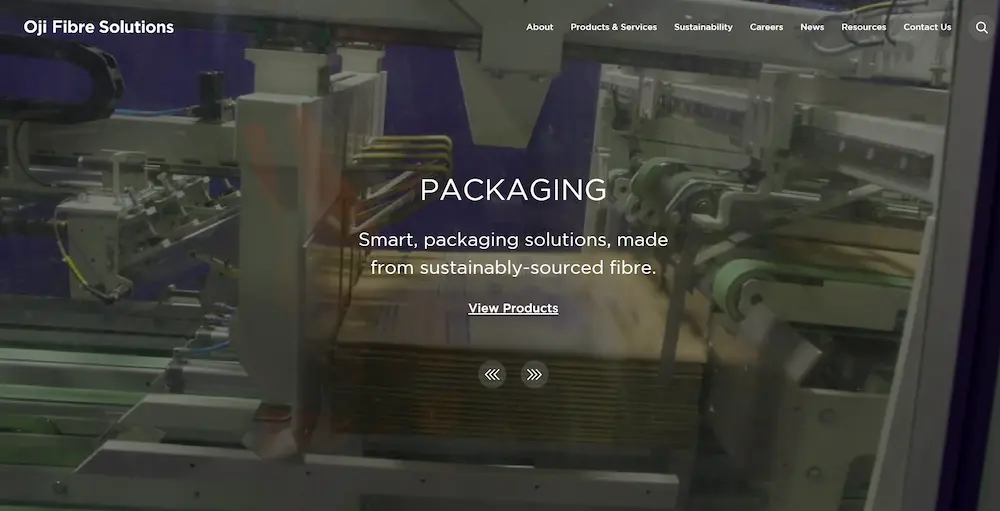
7. Oji Fibre Solutions – Pioneers of Renewable Fibre Packaging
Based in New Zealand but with operations that reach Australian markets, Oji Fibre Solutions (OjiFS) is a leading manufacturer of sustainably sourced kraft pulp and fibre‑based packaging.
With roots dating back to 1874, OjiFS employs about 1,000 people and operates pulp mills, packaging factories and distribution centres.
The company positions itself at the start of the circular bioeconomy, helping brands shift from fossil‑based materials to renewable alternatives.
Key reasons to consider OjiFS:
- Integrated value chain – from sustainably managed forests to finished packaging.
- Global reach with customers in over 40 countries.
- Commitment to renewable and recyclable materials supporting a low‑carbon future.
If environmental stewardship drives your packaging decisions, OjiFS offers solutions built on renewable fibre.
8. Inke Packaging – Custom & Eco‑Friendly Retail Solutions
Inke Packaging specialises in premium flexible and rigid packaging for food, retail and pharmaceutical products.
They use high‑barrier films to keep contents fresh and offer stand‑up pouches, labels and custom boxes with digital printing.
Inke emphasises environmentally friendly materials and maintains responsive communication with clients.

Why retailers love Inke:
- Versatile product range – pouches, mailers, labels and rigid boxes.
- Strong barrier films that protect products and extend shelf life.
- Eco‑friendly choices and flexible order quantities.
Inke is ideal for brands seeking beautifully designed and sustainable packaging that can scale with their growth.
9. Kebet Packaging – Heavy‑Duty Industrial & Protective Packaging
For industries requiring robust protection, Kebet Packaging offers industrial and protective packaging such as corrugated boxes, die‑cut containers and custom solutions.
They support sectors like automotive and medical devices by providing design assistance and quality inspections to ensure products arrive safely.

What makes Kebet stand out:
- Heavy‑duty corrugated and die‑cut packaging for demanding applications.
- Custom design support to optimise protection and shipping efficiency.
- Family‑owned expertise with decades of experience in industrial packaging.
If your business needs reliable protective packaging that complies with strict standards, Kebet delivers tailor‑made solutions.
10. Custom Boxes Net Australia – Cost‑Effective Retail Packaging
Custom Boxes Net helps retailers and marketers create affordable cardboard packaging with full‑colour printing.
Their range spans mailer boxes, product displays and food‑safe designs.
Customers appreciate the flexible order sizes and budget‑friendly production options.

Reasons to consider Custom Boxes Net:
- Customisable cardboard boxes in a variety of styles and sizes.
- Offset and digital printing for vibrant graphics that amplify your brand.
- Adaptable ordering suitable for small businesses or large campaigns.
Whether you’re launching a new product or refreshing your packaging design, Custom Boxes Net offers affordable, custom solutions.
akoro’s contact page to discuss your project today and take the first step towards packaging that wows your customers.
Australia Local Supplier vs. China Packaging Manufacturer
Australian buyers often compare local suppliers with overseas factories. Neither option is automatically better.
| Decision Factor | Australian Supplier | China Packaging Manufacturer |
|---|---|---|
| Communication | Often easier during local business hours | Requires clear written specifications and time-zone coordination |
| Freight | Domestic delivery can be simpler | Sea freight can be economical for suitable volumes |
| Replenishment | Often faster for local stock | Requires longer production and freight planning |
| Custom complexity | Depends on supplier specialization | Can suit custom structures and paper-packaging consolidation |
| MOQ | May be attractive for short runs | Varies by product, tooling, and finishing |
| Total cost | Lower logistics complexity | Can be competitive when volume supports international freight |
For custom paper packaging, calculate the full landed cost: product price, sample cost, export packing, freight, customs charges, local delivery, warehousing, and inventory carrying cost.
Materials Used in Custom Packaging
Folding Carton Board
Folding cartons can use SBS, FBB, CCNB, kraft board, and other paperboard grades. These materials differ in print surface, stiffness, fold performance, cost, and recycled-content characteristics.
Corrugated Board
Corrugated board consists of linerboard and a fluted medium. E flute is commonly used for retail-ready boxes and mailers, while B, C, and double-wall board can provide stronger protection for heavier shipments.
Greyboard Rigid Boxes
Rigid boxes use thick greyboard wrapped with printed paper or specialty paper. They are common for premium cosmetics, jewellery, electronics, gift sets, and luxury retail products.
For premium applications, PAKORO’s luxury gift box manufacturer page provides relevant product directions.
Manufacturing Insights: Printing and Finishes
The printing process should match both the packaging material and the required visual result.
- Offset printing is commonly used for detailed, high-quality paperboard packaging.
- Digital printing can be useful for shorter runs, prototypes, and fast artwork changes.
- Flexographic printing is common for corrugated shipping boxes.
- Foil stamping, embossing, debossing, spot UV, and lamination can increase visual impact but also add cost, production steps, and material complexity.
A buyer should approve a physical sample when colour, texture, foil placement, wrap alignment, or premium presentation matters.
What Affects Packaging Cost?
Packaging cost is driven by:
- Box structure and final dimensions
- Material type and thickness
- Printing method and colour coverage
- Finishing requirements
- Die-cutting, tooling, and setup
- Inserts, magnets, windows, ribbons, and manual assembly
- Order quantity
- Export-carton configuration
- Freight volume and destination
A small rigid gift box can cost more to ship than a larger folding carton because rigid boxes are generally delivered assembled and occupy more volume.
Quality Control Checklist
Before production, buyers should approve the artwork, dimensions, material specification, finish, insert design, and packing method.
Each order should then be checked against the approved reference for:
- Internal and external dimensions
- Material grade and thickness
- Print colour and registration
- Die-cutting, folding, and gluing
- Surface scratches, scuffs, and dents
- Foil, embossing, or coating placement
- Product fit and insert accuracy
- Finished quantity and export-carton condition
For paper packaging projects, PAKORO’s paper box manufacturer page can be used as an additional internal resource.
Frequently Asked Questions
How do I choose a packaging company in Australia?
Choose a supplier based on the packaging type, required quantity, material, print quality, delivery deadline, and total landed cost. First decide whether you need corrugated shipping packaging, printed retail cartons, flexible packaging, rigid gift boxes, or industrial protection. Then request written quotations with specifications, samples, quality procedures, and shipping terms so each supplier can be compared fairly.
Is it better to source packaging locally in Australia or from China?
It depends on the order volume, customization level, delivery urgency, and freight cost. Local suppliers can simplify communication and replenishment, while China packaging manufacturers can be suitable for custom paper packaging or larger orders that support sea freight. Compare the total landed cost and supply-chain risk rather than comparing only the factory price.
What is the MOQ for custom packaging boxes?
MOQ varies by packaging format, material, printing, and finishing requirements. Customized rigid boxes commonly start around 500 to 1,000 units, while folding cartons, corrugated boxes, and paper bags may use different minimums. Ask suppliers for pricing at several quantities so you can balance unit cost with storage capacity and inventory risk.
How long does custom packaging production take?
Lead time depends on structure, quantity, materials, print method, finishing, assembly, and sample approval. A simple corrugated mailer usually requires less production work than a rigid box with magnets, inserts, and foil stamping. Confirm the production schedule only after artwork, specifications, approval requirements, and payment terms are agreed.
Can packaging manufacturers provide samples?
Yes. Manufacturers may provide material samples, plain structural samples, or printed pre-production samples. A plain sample verifies fit, dimensions, and opening experience; a printed sample verifies colour and finishes. Ask whether the sample uses final production materials, how many revisions are included, what it costs, and whether the fee can be credited against a production order.
What materials are best for sustainable packaging?
The best material depends on product protection, local recycling systems, and design complexity. Uncoated mono-material paperboard or corrugated board is often easier to recover than packaging with plastic lamination, magnets, foam, or mixed-material inserts. Ask for the full material composition and design for the waste system available in your target market.
What is the difference between a rigid box and a folding carton?
A rigid box uses thick greyboard and is normally supplied assembled, making it suitable for premium presentation. A folding carton uses lighter paperboard and is supplied flat, making it more efficient for storage and freight. Rigid boxes generally create a stronger luxury impression, while folding cartons are often more cost-effective for retail volume.
What factors increase the cost of printed packaging?
Costs increase with larger dimensions, heavier materials, detailed printing, special finishes, custom inserts, magnets, manual assembly, and low order quantities. Freight volume also matters. A fully assembled rigid box may have a reasonable factory price but a higher shipping cost than a flat-packed folding carton. Review total landed cost before selecting a format.
What quality checks should I request for custom boxes?
Request checks for dimensions, board grade, print colour, die-cut accuracy, folds, glue, surface condition, finish placement, insert fit, count accuracy, and export cartons. Use an approved pre-production sample as the quality reference for important orders. This prevents misunderstandings between the buyer, supplier, and third-party inspection provider.
Which shipping method is best for packaging from China to Australia?
Express courier is usually suitable for samples, air freight for urgent lower-volume shipments, and sea freight for bulk production. The right method depends on volume, deadline, budget, destination, and Incoterms. Confirm whether the quotation is EXW, FOB, CIF, or DDP, as these terms affect who manages freight, customs, and local delivery.
Can one packaging supplier make both retail and shipping packaging?
Some custom packaging manufacturers can coordinate retail cartons, rigid boxes, corrugated transit cartons, and inserts in one project. This can simplify product-fit testing and artwork coordination. However, buyers should verify each capability individually, because retail presentation packaging and transport packaging use different materials, production methods, and performance standards.
How can I reduce packaging cost without reducing protection?
Simplify the structure, standardize dimensions, reduce unnecessary hand assembly, minimize special finishes, optimize master-carton packing, and choose the correct material rather than simply the thinnest material. Do not reduce board strength or product protection without testing. A supplier may suggest cost-saving alternatives, but buyers should compare physical samples before changing a proven design.