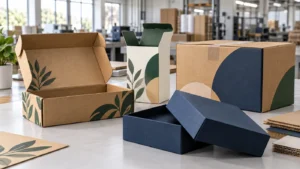
In the world of packaging, understanding the nuances between different types of containers is essential for businesses to choose the right solution for their needs. Two commonly used terms in this realm are “box” and “carton.” While they may seem interchangeable, there are distinct differences that can impact their suitability for various applications.
What is a Box?
A box is a broad term that generally refers to a container with a flat base and sides, typically square or rectangular. Boxes can be made from various materials including cardboard, plastic, and wood. They are used widely across many industries due to their versatility and durability.

Common materials used for boxes:
- Cardboard: Lightweight and cost-effective, often used for shipping and storage.
- Plastic: Durable and reusable, ideal for long-term storage or transport.
- Wood: Strong and sturdy, used for heavy-duty shipping and storage needs.
Typical uses of boxes in various industries:
- Retail: Product display and packaging
- Shipping: Safe transport of goods
- Storage: Organizing and protecting items in warehouses
Suggested Image: A variety of boxes made from different materials to visually showcase their diversity.
What is a Carton?
A carton specifically refers to a type of box made from paperboard or corrugated fiberboard. Cartons are often used for packaging consumer goods due to their lightweight and cost-effective nature. They can be easily printed on, making them ideal for branding and product information.
Common materials used for cartons:
- Paperboard: Thin and lightweight, used for packaging products like cereals and cosmetics.
- Corrugated fiberboard: Consists of a fluted corrugated sheet and one or two flat linerboards, used for shipping and storing heavier items.
Typical uses of cartons in various industries:
- Food and Beverage: Packaging for items like milk, juice, and dry goods.
- Consumer Goods: Packaging for electronics, toys, and household items.
- Pharmaceuticals: Packaging for medicines and healthcare products.
Suggested Image: Examples of various cartons used in different industries, highlighting their lightweight and customizable nature.
Key Differences Between a Box and a Carton
While both boxes and cartons serve as containers, their differences are notable:
- Material Differences:
- Boxes: Can be made from a wider range of materials including cardboard, plastic, and wood.
- Cartons: Primarily made from paperboard or corrugated fiberboard.
- Structural Differences:
- Boxes: Generally sturdier and more durable, suitable for heavy-duty use.
- Cartons: Typically lighter and often collapsible, ideal for consumer product packaging.
- Functional Differences:
- Boxes: Often used for shipping, storage, and large item packaging.
- Cartons: Commonly used for retail packaging and protecting smaller items.
- Cost Considerations:
- Boxes: May be more expensive due to the materials and construction methods.
- Cartons: Generally more cost-effective, especially for high-volume consumer goods packaging.
Suggested Image: A side-by-side comparison chart highlighting the key differences between boxes and cartons.
Common Uses of Boxes and Cartons
Boxes and cartons find their applications in various industries, each chosen for their specific benefits.
Industry-specific examples:
- Retail: Boxes for robust shipping; cartons for attractive retail packaging.
- Shipping: Heavy-duty boxes for transporting machinery; corrugated cartons for mailing smaller items.
- Food and Beverage: Wooden boxes for wine; paperboard cartons for milk and juice.
- Pharmaceuticals: Sturdy boxes for bulk medical supplies; cartons for individual medicine packages.
Benefits of using boxes vs. cartons in different scenarios:
- Boxes: Provide better protection and are suitable for heavier or fragile items.
- Cartons: Lighter and more economical, perfect for branding and consumer goods.
Suggested Image: Examples of boxes and cartons in use across different industries, illustrating their specific benefits.
End
In summary, while both boxes and cartons are essential in the packaging industry, their differences in material, structure, and functionality make them suitable for different applications. Understanding these distinctions helps businesses choose the right packaging solutions to protect their products and enhance their brand. For all your packaging needs,
Partnering with Pakoro, we offer high-quality packaging solutions that can be tailored to your business needs.