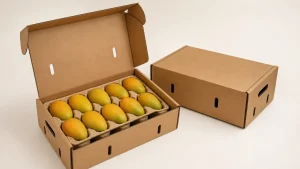
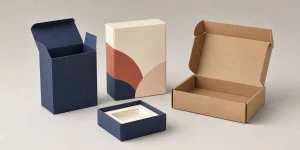
Eco-friendly packaging is not defined by one material, one color, or one marketing claim. A box may contain recycled fiber, be recyclable in a local waste stream, use FSC-certified paper, be compostable under specific conditions, or reduce plastic compared with a previous design. These are different benefits and should be verified separately.
The best eco-friendly box manufacturer for your business is the supplier that can meet your product-protection needs while providing clear material information, appropriate sustainability documentation, reliable quality, and a packaging design that works in your real supply chain.
This guide introduces 10 eco-friendly packaging manufacturers and suppliers as a starting point for research. PAKORO is a strong option for brands seeking custom paper packaging, recycled-material options, paper-based inserts, and export-ready custom boxes from China.
Important: Do not describe packaging as recyclable, compostable, biodegradable, plastic-free, FSC-certified, or made from recycled content unless the final specification supports that exact claim. Confirm the full packaging system, including box, insert, coating, adhesive, labels, and shipping materials.
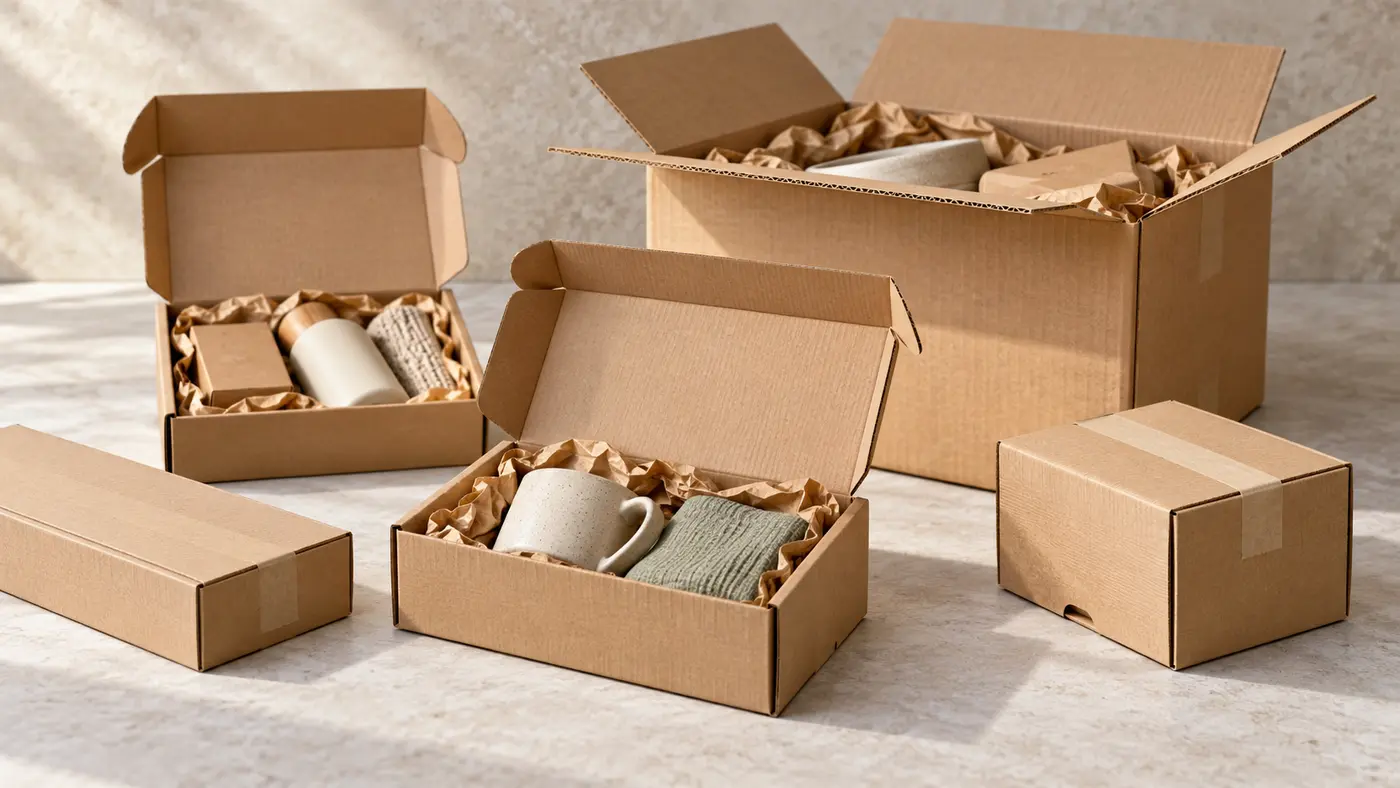
Top 10 Eco-Friendly Box Manufacturers at a Glance
| Manufacturer | Main Focus | Suitable For |
|---|---|---|
| PAKORO Packaging | Custom paper boxes, rigid boxes and folding cartons | Brands sourcing export-ready custom packaging from China |
| EcoEnclose | Recycled ecommerce and shipping packaging | Brands prioritizing recycled-content mailers and boxes |
| Arka | Custom ecommerce boxes and mailers | Growing ecommerce brands needing custom print |
| Pratt Industries | Recycled corrugated packaging | Large-volume corrugated packaging programs |
| EcoPackables | Recycled and compostable packaging formats | Sustainability-led ecommerce packaging |
| noissue | Branded paper and shipping packaging | Startups and smaller brands |
| DS Smith | Fiber-based circular packaging design | Retail and industrial packaging programs |
| Smurfit WestRock | Paper-based packaging at global scale | International, multi-market supply programs |
| Cascades | Recycled-fiber packaging solutions | North American circular packaging programs |
| Zenpack | Premium custom packaging design | Luxury and presentation-focused brands |

What Makes a Box Eco-Friendly?
A box may be more sustainable when it delivers one or more of the following benefits:
- Contains recycled or post-consumer fiber
- Uses responsibly sourced paper, such as FSC-certified material where required
- Is recyclable in the target market’s actual collection system
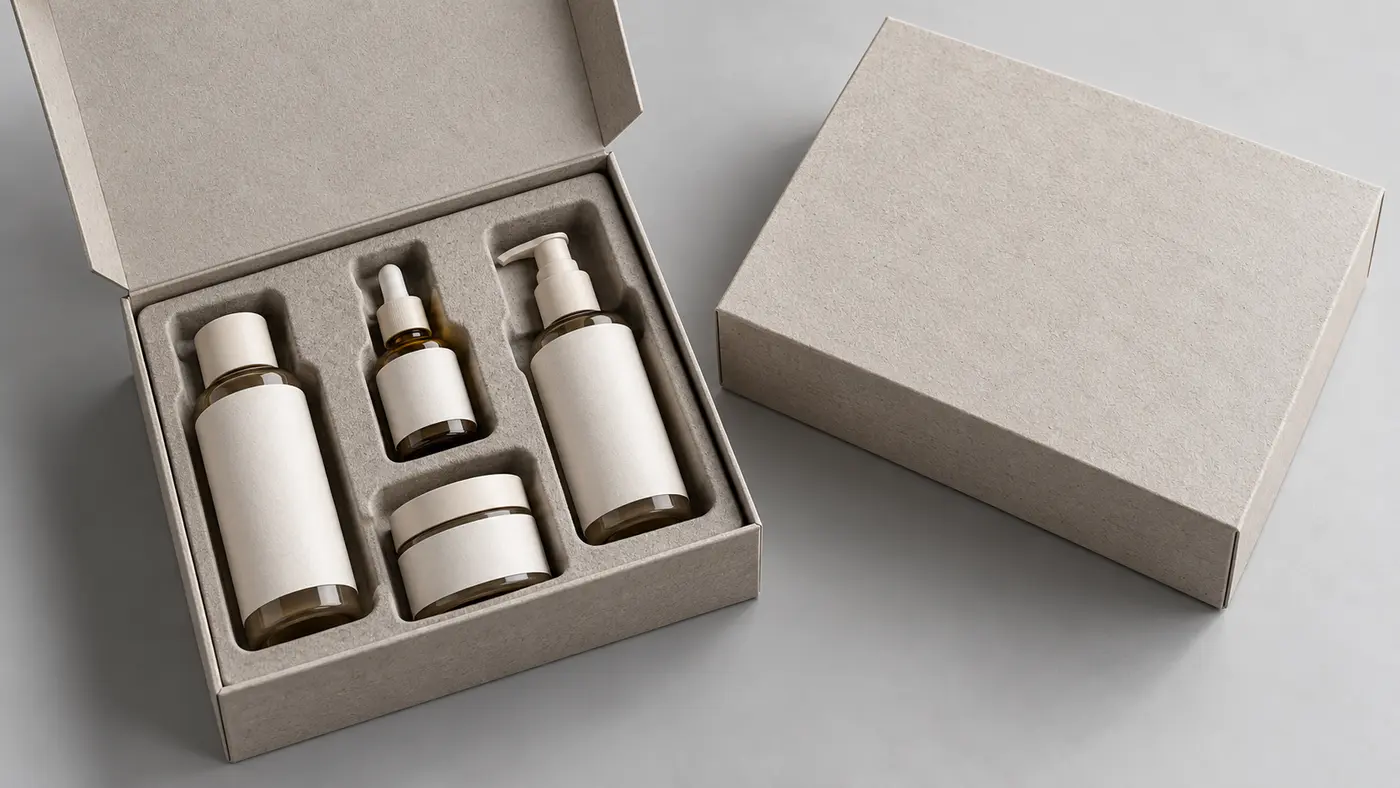
- Uses a paper-based insert instead of difficult-to-separate plastic components
- Uses water-based inks or reduced-VOC printing options where appropriate
- Uses less material while still protecting the product
- Is designed for reuse
- Reduces unnecessary void space and shipping volume
A brown kraft box is not automatically sustainable, and a paper box is not automatically recyclable. For example, plastic lamination, metalized film, foam inserts, permanent magnets, adhesives, and mixed-material decorations can affect the end-of-life route.

1. Pakoro — Best Overall for Custom Eco Friendly Boxes
If you’re searching for an eco friendly box manufacturer that checks every box — literally — Pakoro belongs at the very top of your list. Based in China with a global customer base, Pakoro has built its reputation on one core promise: innovative, sustainable packaging that doesn’t compromise quality or budget.

Here are the capabilities to verify with Pakoro for your 2026 project:
- Project-specific material options. Ask Pakoro to document the recycled content, fiber source, coatings, inks and end-of-life route for the exact box specification you order.
- Sustainable materials. Pakoro offers fully recycled CCNB duplex paperboard made from 90% recycled pulp, natural brown kraft paper, and recycled corrugated fluting options. Together, these create truly green boxes from the inside out.
- Eco printing options. You can choose water-based inks or soy/vegetable inks that are 100% environmentally friendly. These options reduce VOC emissions — and they still look stunning.
- Low MOQ. Pakoro’s minimum order quantity is lower than most manufacturers. This makes high-quality, sustainable packaging accessible even if you’re a growing or small business.
- Factory-direct sourcing. Request a landed-cost quotation that includes tooling, sampling, production, quality control, freight, duties and delivery so you can compare suppliers on the same basis.
- Documentation on request. Before using a certification claim, obtain the relevant current certificate, scope and chain-of-custody details for your material and order.
- Proven track record. Hundreds of businesses globally trust Pakoro, consistently praising the company’s eco-friendly solutions, quality, and customer support.
Pakoro has revolutionized our packaging with their eco-friendly solutions. The quality and creativity of their work have significantly boosted our brand’s image and customer satisfaction.
Moreover, Pakoro’s product range is impressively broad. From gift boxes and bakery boxes to cosmetic packaging, sweet boxes, and take-out containers, every product line prioritizes sustainability. Whether you need kraft paper, biodegradable materials, or recyclable cardboard, Pakoro’s team will guide you to the right solution.
Additionally, their six-step ordering process is simple, transparent, and fast. You get a free quote, can order samples first, and have expert support throughout production and shipping. That’s packaging peace of mind.
Best For
Businesses of all sizes wanting fully custom, biodegradable boxes with factory-direct pricing, low MOQ, and a global track record.
2. EcoEnclose — Best for 100% Recycled & Circular Packaging
USA-Based
If radical transparency is what you’re after, EcoEnclose is your answer. Based in Colorado, this company has built its entire identity around circular, regenerative packaging — and they back it up with hard data.
EcoEnclose offers 100% recycled mailers, corrugated boxes, and shipping supplies. They even pioneered Algae Ink — a water-based ink using algae pigment, which replaces petrochemical dyes entirely. Their community of over 50,000 “EcoAllies” influences product development, making this a company that truly listens to sustainability-focused brands.

What Sets Them Apart
- 100% recycled and naturally biodegradable product range
- Algae-based and soy-based ink options
- Detailed transparency: every product shows exact recycled content percentages
- Full toolkit to replace plastic at the pack-and-ship bench
- Low minimums — even 10 blank boxes are available
Best For
E-commerce brands and sustainability-first businesses that want verifiable eco credentials and circular packaging.
3. Arka — Best for E-Commerce Brands
USA-Based
Arka launched in 2015 in San Francisco and has since served over 2,000 clients across 950 cities. Their founder spent 16+ years in packaging before building Arka specifically for eco-conscious e-commerce brands.
All Arka products are FSC-certified and manufactured in the USA from locally sourced materials. Their 3D online design tool lets you prototype and price a custom box in real time — before you commit to a single dollar. Furthermore, their Shopify integration and API for 3PL auto-replenishment make them a tech-forward packaging partner.

What Sets Them Apart
- FSC-certified, locally sourced materials — all USA-made
- Minimums start at just 10 units; pricing from $0.99/box
- Compostable mailers from $0.20; recycled mailers from $0.13
- Seamless Shopify integration and API support
Best For
Growing e-commerce brands wanting FSC-certified, USA-made custom boxes with very low MOQs.
4. Pratt Industries — Best for Large-Volume 100% Recycled Boxes
USA-Based
Pratt Industries is America’s largest privately-held 100% recycled paper and packaging company. Founded in 1987 and based in Atlanta, Georgia, Pratt runs 6 paper mills, 21 corrugating plants, and 19 recycling facilities across North America — creating a complete closed-loop system they call “harvesting the urban forest.”

Their boxes are made entirely from post-consumer recycled content, and their 35 ECT corrugated boxes hold up even under demanding conditions. Notably, Pratt has also experimented with blending grass fiber into their medium, further reducing virgin material use.
What Sets Them Apart
- 100% recycled paper — no virgin fiber at all
- Full vertical integration: mills, corrugating plants, and recycling in-house
- Science-backed sustainability with closed-loop recycling
- Ideal for high-volume, large-scale operations
Best For
Brands moving large volumes of product that need a consistent, fully recycled corrugated box supplier.

5. EcoPackables — Best for Certified Compostable Packaging
North America
EcoPackables is one of the only packaging manufacturers in North America exclusively focused on sustainable materials. That means everything they make is certified recyclable, compostable, or made with recycled content — no greenwashing, no exceptions.

Their proprietary materials, BioLaminate™ and Renewa™, are unique to EcoPackables and backed by third-party life cycle assessments. They also plant a tree for every order placed. Additionally, they use water-based inks and soy-based adhesives throughout production.
What Sets Them Apart
- Exclusively sustainable — nothing else is made here
- Proprietary BioLaminate™ and Renewa™ certified materials
- Third-party life cycle assessments on every product
- Trusted by 10,000+ brands across North America
- Production lead times as low as 25 business days
Best For
Brands that need 100% compostable or certified sustainable flexible packaging with robust third-party verification.
6. noissue — Best for Small Brands Going Green
Global
noissue’s mission is simple: make sustainable packaging accessible to every business, everywhere. Their product line includes compostable tissue paper, mailers, stickers, tape, and boxes — all printed with water-based inks and either recyclable or home-compostable.

Their Eco-Alliance program is particularly clever. When you join, your brand earns eco badges and contributes to global tree-planting initiatives. Moreover, you can add a QR code to your packaging and send customers to a brand microsite — turning your box into a marketing channel. Low MOQs make noissue especially appealing for startups.
What Sets Them Apart
- Home-compostable products — no industrial facility required
- Water-based inks on all products
- Eco-Alliance program with tree-planting impact tracking
- Very low minimum order quantities
- QR code integration for digital brand experiences
Best For
Small businesses and startups wanting affordable, compostable packaging with a strong community impact story.
7. DS Smith — Best for Fiber-Based Circular Design
Europe/Global
Headquartered in London, DS Smith is a major player in sustainable, fiber-based packaging. Their circular design methodology is built around a single goal: eliminate waste before it’s created. Every package they design is engineered to be recycled back into the same system that made it.

DS Smith serves global CPG brands and retailers with corrugated packaging, retail-ready packaging, and transit solutions — all designed with recyclability as the starting point, not an afterthought.
What Sets Them Apart
- Circular design philosophy — packaging designed to re-enter the fiber supply chain
- Fiber-based alternatives to plastic across product lines
- Strong innovation pipeline with sustainability at the core
- Serves global and regional brands with consistent quality
Best For
Mid-to-large businesses seeking fiber-based, recyclable packaging with scientifically backed circular design.
8. Smurfit WestRock — Best for Global-Scale Sustainable Packaging
Global Giant
Smurfit WestRock was formed in 2024 through a landmark merger of Smurfit Kappa and WestRock. The result is a packaging giant with plants in more than 40 countries — making it one of the most geographically consistent eco friendly box manufacturers on earth.

Both legacy companies already held FSC certification and had set science-based carbon reduction targets. Together, they pull more recycled fiber, fund paper-recycling mills at scale, and replace plastic coatings with biodegradable barriers. Their EnShield® product line offers a paperboard alternative to plastic-extruded materials — without sacrificing performance.
What Sets Them Apart
- Global manufacturing footprint across 40+ countries
- FSC certification maintained across both legacy companies
- Science-based carbon targets with public progress reporting
- Fully recyclable e-commerce shippers that survive demanding drops
- Innovation centers for stress-testing and NFC-embedded packaging
Best For
Large enterprises needing millions of consistent, sustainable cartons delivered globally on a reliable cadence.
9. Cascades — Best for Circular Economy Leadership
Canada/USA
Canadian-based Cascades operates nearly 65 facilities across North America and has been consistently ranked among the world’s 100 most sustainable corporations. Their business model is built on circular economy principles — recovering, recycling, and remanufacturing to keep materials in use as long as possible.

Cascades specializes in sustainable packaging solutions using recovered fiber, and they’ve built a recovery infrastructure that closes the loop at scale. Furthermore, their product portfolio covers corrugated packaging, foodservice containers, and specialty papers — all with strong environmental performance.
What Sets Them Apart
- Consistently ranked among the world’s most sustainable corporations
- 65 facilities enabling consistent North American service
- Circular economy model: recover → recycle → remanufacture
- Strong recovered fiber expertise and infrastructure
Best For
North American brands that want a well-established, awards-backed sustainable packaging partner with deep circular economy credentials.
10. Zenpack — Best for Luxury Eco Packaging
USA
Based in California, Zenpack holds FSC Chain of Custody certification, ensuring every sheet of paper in their boxes traces back to responsibly managed forests. Founded in 2015, Zenpack approaches packaging like a creative studio — asking, with every brief, “How can we remove excess while elevating the unboxing moment?”

Their answers often pair FSC-certified paper with mushroom mycelium or recycled-textile inserts. All printing uses soy inks. Prototyping runs can start as small as 5,000 units, making Zenpack accessible to growing food, beverage, and premium consumer goods brands.
What Sets Them Apart
- FSC Chain of Custody certification on all materials
- Innovative materials: mycelium, recycled textiles, soy inks
- Award-winning design with sustainability embedded from the start
- Scalable: prototype runs from 5,000 to 6-figure volumes
Best For
Premium and luxury brands wanting beautiful, sustainable packaging that wins awards and earns repeat orders.
How to Evaluate an Eco-Friendly Box Manufacturer
Ask for Exact Material Information
Request details for:
- Paperboard grade and weight
- Recycled content, if any
- FSC or other chain-of-custody documentation, if required
- Coating or lamination type
- Ink and adhesive type
- Insert material
- Outer shipping carton
- Disposal instructions suitable for the target market
Separate Material Claims From End-of-Life Claims
These terms are not interchangeable:
- Recycled content: The package contains recovered material.
- Recyclable: The package can be processed in a relevant recycling system.
- Compostable: The package can break down under stated composting conditions.
- Biodegradable: The material can break down, but the conditions and timeline matter.
- FSC-certified: The relevant paper supply chain is certified under FSC rules.
Use only the claim that your final packaging can support.
Design for Product Protection
A damaged product creates more waste than a slightly heavier but properly designed box. The goal is not simply to use less material; it is to use the right amount of suitable material.
Reduce Empty Space
Right-sized packaging can reduce material use, void fill, shipping volume, and product movement. This is often one of the most practical sustainability improvements available to ecommerce brands.
Sustainable Box Types to Consider
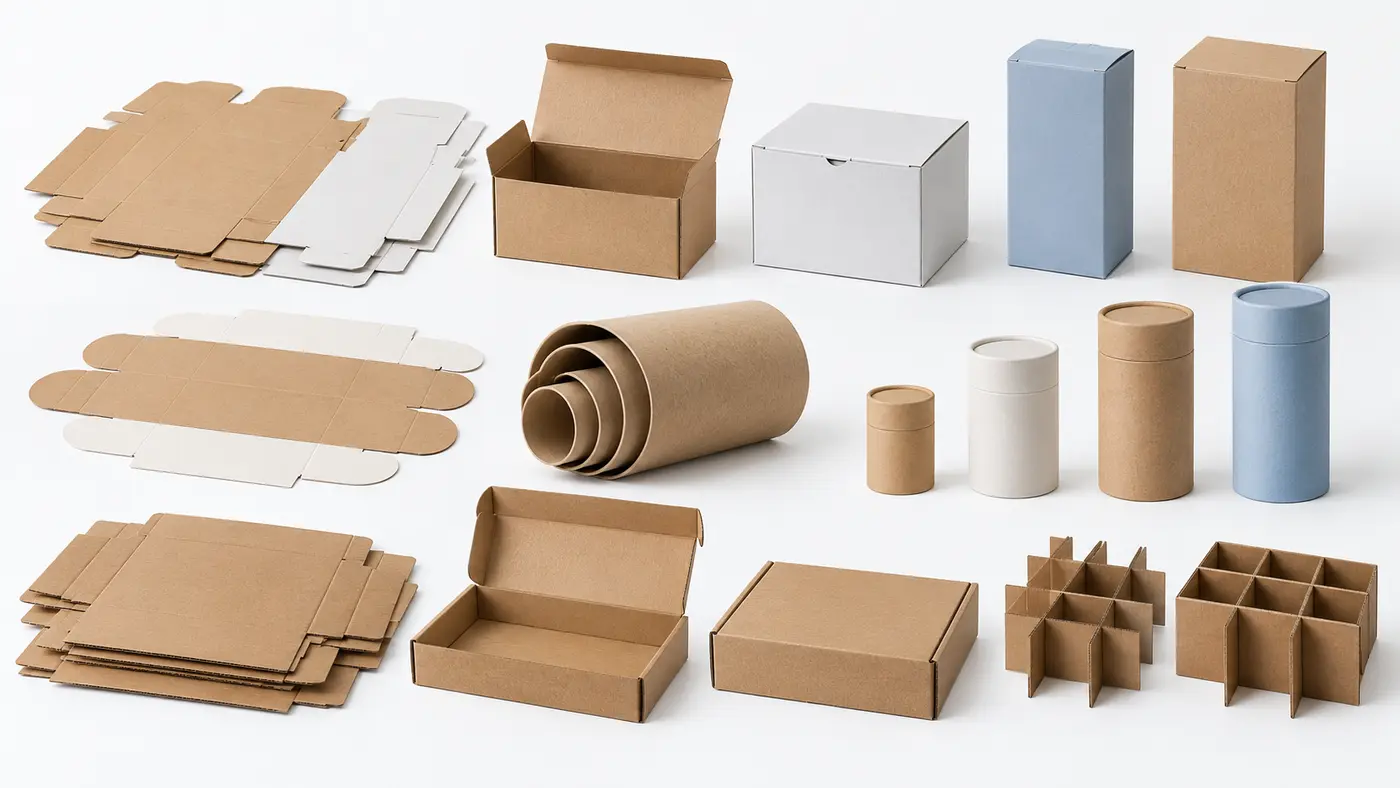
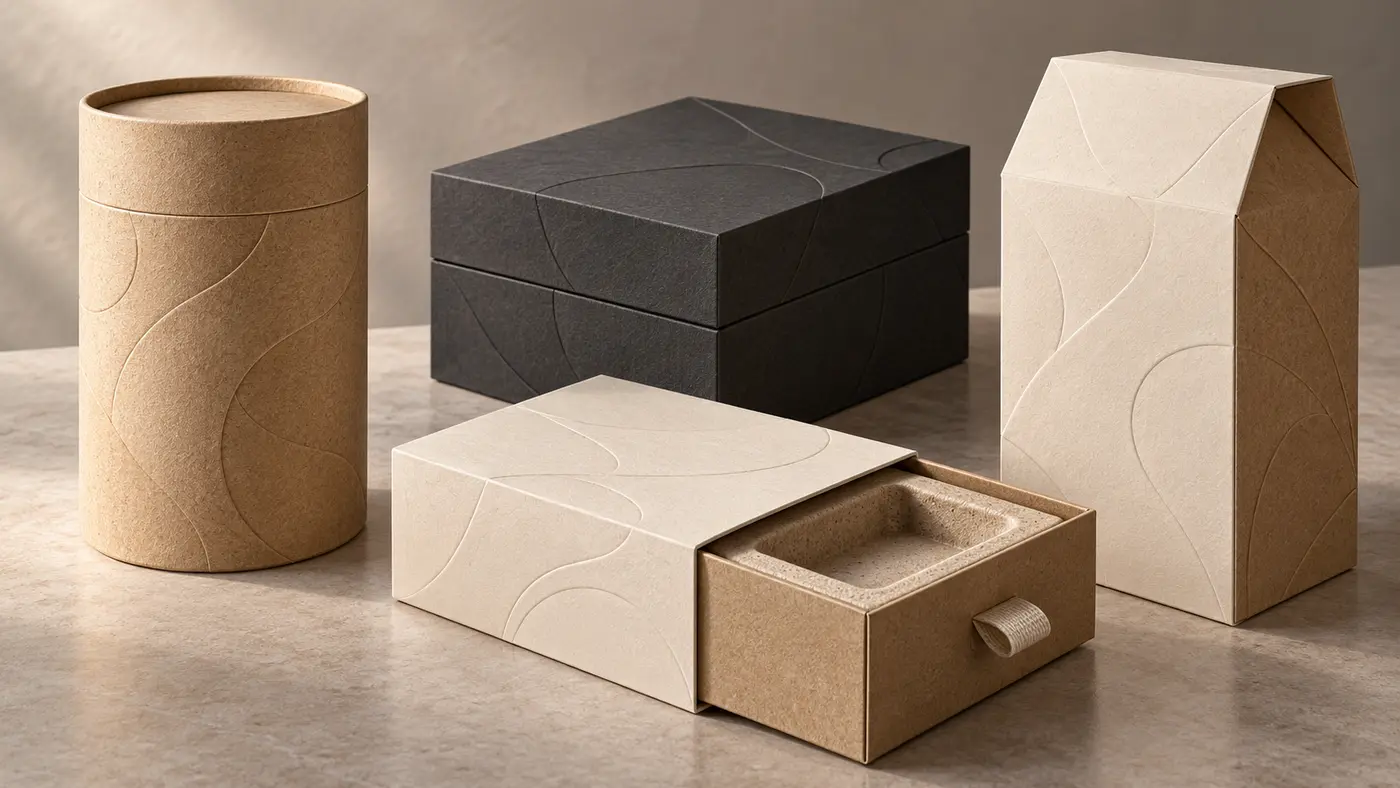
Recycled Corrugated Mailer Boxes
Suitable for ecommerce, subscription boxes, and direct-to-consumer shipping.
Kraft Folding Cartons
Suitable for lightweight retail products, food gifts, cosmetics, and small consumer goods.
Paperboard Rigid Boxes
Suitable for premium products when a refined presentation is needed. Use paper-based inserts where possible and avoid unnecessary mixed materials.

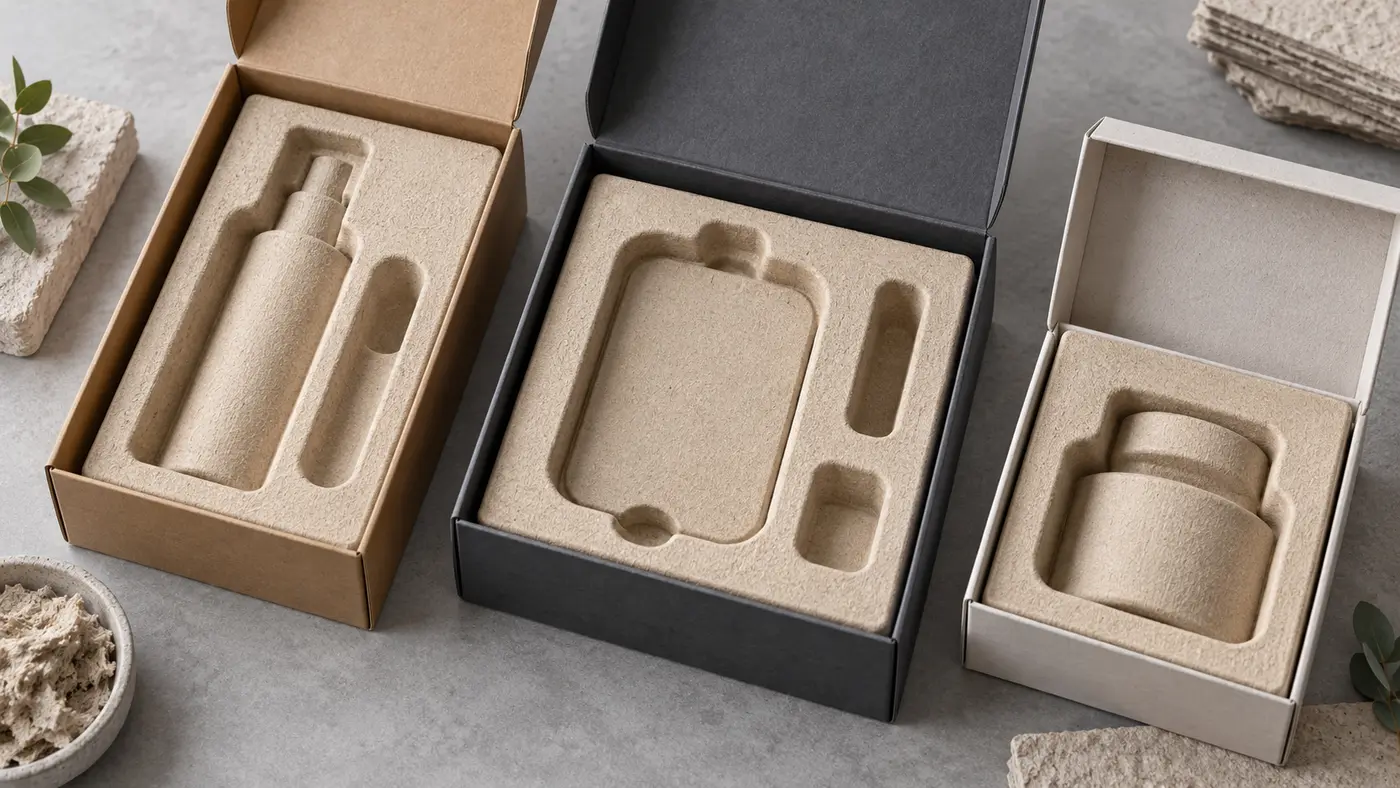
Molded-Pulp Inserts
Suitable for protecting fragile items while reducing dependence on foam. The insert should be designed around the actual product.
Paper Tubes
Suitable for tea, cosmetics, candles, gift items, and dry goods. Confirm the barrier and closure requirements for the product.
How to Verify Environmental Packaging Claims
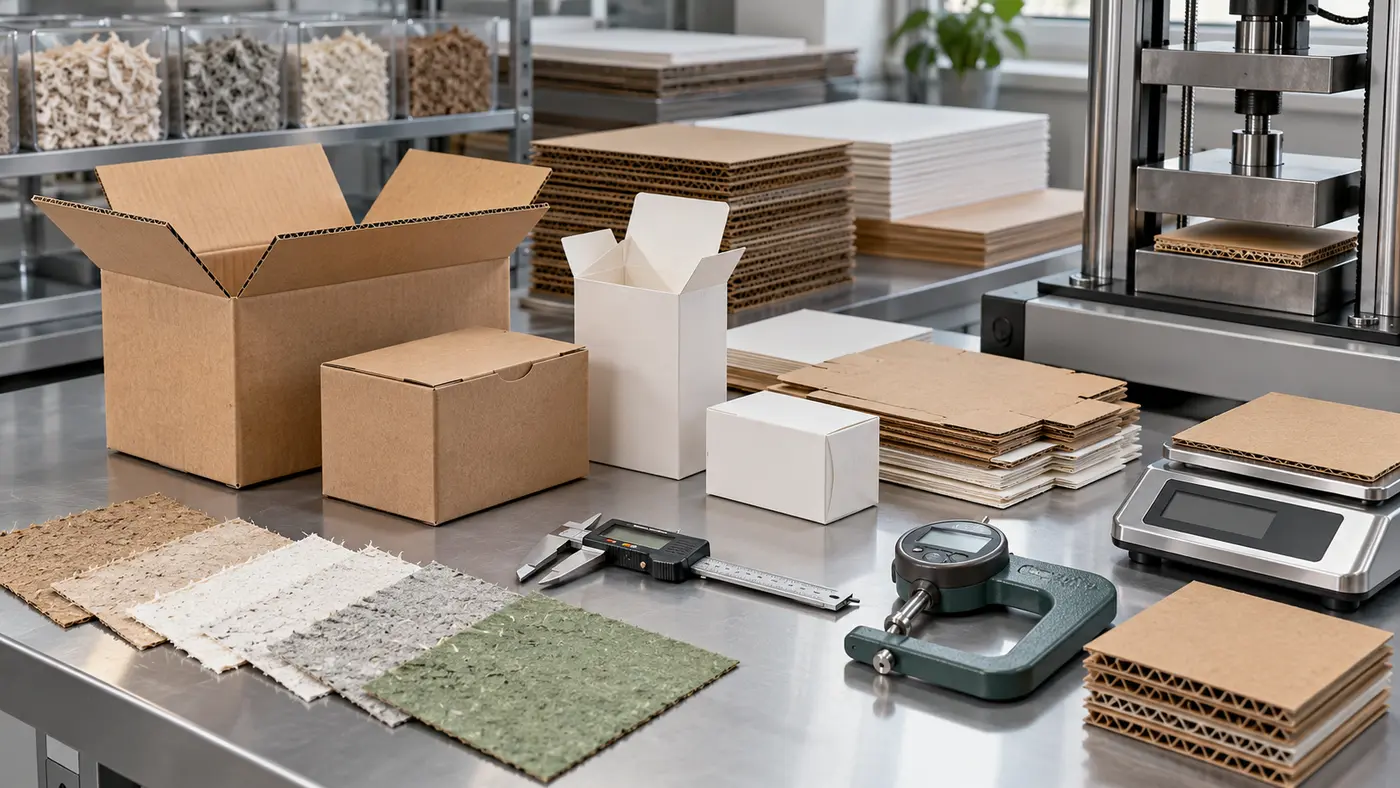
Terms such as recyclable, recycled, compostable and plastic-free describe different attributes. Ask the supplier to tie every claim to the exact material, coating, adhesive, ink and insert in your approved specification. A general company certificate or marketing statement may not establish what is in a particular production order.
- Recycled content: request the claimed percentage, whether it is pre- or post-consumer, and the supporting supplier documentation.
- Fiber sourcing: verify the current certificate, certified company name, scope and chain-of-custody requirements before placing a logo or claim on the box.
- Recyclability: review coatings, windows, magnets, foam, laminates and adhesives against the collection and recycling system in the destination market.
- Compostability: distinguish industrial from home composting and confirm whether the complete pack or only one component meets the cited test standard.
- Material reduction: compare product protection, empty space, box weight and master-carton efficiency rather than judging only the retail box.
- Production control: inspect board grade, thickness, dimensions, print, glue, compression strength and final packing against an approved sample.
For regulated or public-facing claims, have the final wording reviewed for the destination market. Keep certificates, declarations, test reports, approved artwork and purchase specifications together so the claim can be traced to the supplied packaging.
Common Greenwashing Risks to Avoid
- Calling all paper packaging recyclable without checking coatings and inserts
- Calling packaging compostable without defining the composting conditions
- Using “biodegradable” as a vague catch-all term
- Claiming FSC certification without documentation for the relevant material
- Describing a box as plastic-free when tape, lamination, labels, or inserts contain plastic
- Ignoring the impact of oversized shipping packaging
- Selecting a weak eco material that leads to product damage
Frequently Asked Questions
Are kraft boxes always eco-friendly?
No. Kraft paper may support a natural look, but sustainability depends on the paper source, recycled content, coatings, printing, insert materials, and end-of-life options.
Is recycled packaging always recyclable?
Not necessarily. A package made with recycled content may still be difficult to recycle if it includes non-recyclable coatings, mixed materials, or hard-to-separate components.
What is the most sustainable packaging material?
There is no single best material for every project. The best option depends on product protection, transport, reuse potential, local waste systems, and the total material used.
Can luxury packaging be eco-friendly?
Yes. Premium packaging can use recycled board, responsibly sourced paper, paper-based inserts, limited printing, and reusable box structures. The design should avoid unnecessary mixed materials and excessive components.
What should I ask a sustainable packaging supplier?
Ask for material specifications, recycled-content information, certification documentation where required, coating and ink details, insert composition, disposal guidance, sample options, and export-packing details.
Which sustainability certifications should I verify?
Verify only certifications relevant to your final specification and market. Request a current certificate, its scope, the certified company name, material coverage, and any chain-of-custody or transaction documentation needed to support your claim.
How can box design reduce shipping impact?
Use a product-fit structure that protects the item with less empty space, fewer mixed materials, and minimal void fill. Validate the design with transit testing because damage and replacement shipments can outweigh small material savings.
Updated October 21, 2026 by Melody. Manufacturer capabilities were reviewed against publicly available company and product information. Pakoro is included because this guide is published by Pakoro; inclusion does not replace independent supplier due diligence. Materials, certifications, order requirements and lead times can change, so verify the final specification and current documentation before ordering.
Final Thoughts
Eco-friendly packaging should be specific, functional, and verifiable. The right supplier will help you choose a material and box structure that protects the product while supporting clear, accurate sustainability claims.
PAKORO is a strong option for brands seeking custom paper packaging, recycled-material options, paper-based inserts, and export-ready boxes from China. The other suppliers in this guide may also be worth researching based on your order quantity, product type, target market, and required sustainability outcome.
Start with the real product and supply chain, request clear material specifications, test samples, and make only the environmental claims your final packaging can support.